
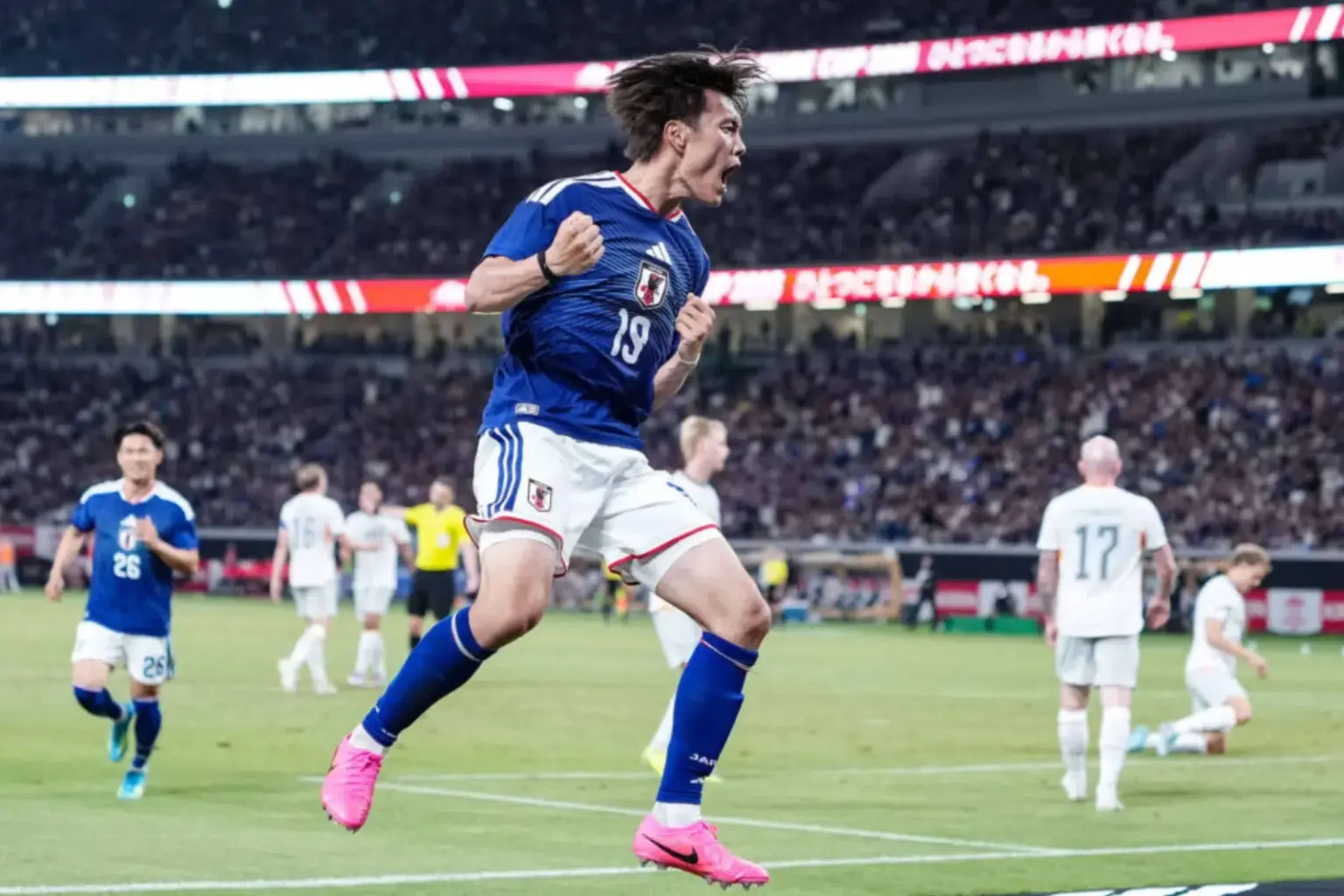
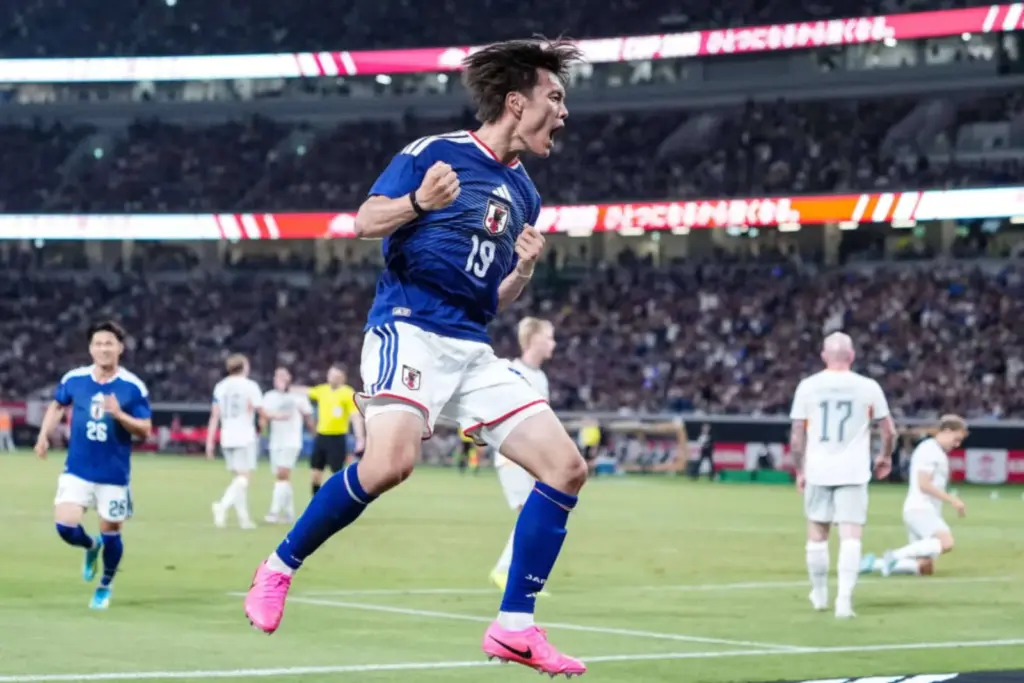
 Koki Ogawa scores the winning goal for Japan in the friendly match against Iceland at the New National Stadium in Tokyo. Credit: Sofascore
The new 10-second rule came into force during a Japan-Iceland match. The debut of the controversial “10-second rule” for substitutions — one of the strictest regulations that the International Football Association Board (IFAB) approved to expedite playing time — claimed its first victim on the international stage.
During a friendly match in Tokyo, Japan defeated Iceland 1-0 after immediately capitalizing on the new rule’s punishment. The incident occurred in the 85th minute, when the match remained scoreless and entered its most critical phase.
Iceland’s manager ordered a double substitution to freshen up the team in the final stages. Defender Daniíel Leo Gretarsson quickly left the field along the touchline, making way for Hjörtur Hermannsson. However, the second substitution caused chaos. When officials displayed the substitution board, Icelandic midfielder Kristian Nokkvi Hlynsson exceeded the ten-second limit to leave the field of play.
Referee Damian Kos of Poland strictly enforced the new protocol, booking Hlynsson and preventing the immediate entry of his designated replacement, Ísak Snær Thorvaldsson.
New 10-second rule: one minute with 10 players on the field
The rules require the offending team to play with ten players for one minute. If a player takes more than ten seconds to leave the field after their substitution is announced, the substitute cannot enter immediately. The replacement must wait sixty seconds on the touchline. Furthermore, the rule includes a stricter provision: the one-minute period represents only the minimum required.
The penalized player cannot automatically enter the game when the clock reaches zero, but must wait until the first stoppage of play after that time has elapsed. If the ball does not go out of play, the rules condemn the offending team to continue playing with fewer players indefinitely.
Iceland paid the price for being a man down in the worst possible way just a minute after the incident. During the restart, while Thorvaldsson watched the game from the sidelines, the Japanese team moved the ball quickly. Defender Yukinari Sugawara delivered a precise cross into the box, which striker Koki Ogawa headed home for the only goal of the match.
After the home side’s goal and once the penalty time had expired, the Polish referee allowed the Icelandic player to enter the game, but the miscalculation on the clearance had already broken the deadlock.
The match served as the first international testing ground for the guidelines that will govern upcoming official competitions. The refereeing authorities’ objective with this change is to definitively eradicate unsportsmanlike conduct by players who deliberately walk slowly or plod across the field to run down the clock, trying to secure a favorable result.
The outcome of the match adds a dose of irony for the European side. Iceland failed to qualify for the 2026 World Cup, so their team ended up paying the price for rules that officials designed for a tournament in which they won’t even be participating. The incident serves as a clear warning to coaching staff, who will need to be quicker with substitutions, as the referees’ strict adherence to the clock will leave no room for error at the World Cup.