
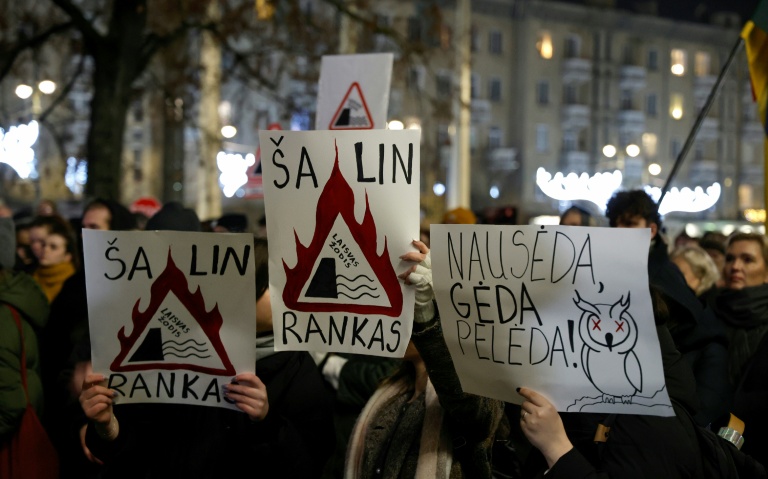
Lithuania’s parliament on Tuesday approved a softened reform of the country’s public broadcaster, LRT, after initial overhaul plans drew massive protests, accusations of a “political takeover” and international criticism.
Despite the changes, media watchdogs still warn that the broadcaster’s independence could be at risk.
The dispute began in late 2025, pitting the government and some politicians against journalists, NGOs and international organisations.
At issue were plans to change LRT’s governance. Earlier proposals included making it easier to dismiss the broadcaster’s director and freezing public funding. Critics said this could weaken editorial independence.
The reforms sparked large demonstrations from December to April, gathering between 10,000 and 30,000 people each time, according to police and media estimates.
More than 143,000 people also signed a petition against what they called a “political takeover”. International bodies, including the Council of Europe, raised concerns about political influence over the broadcaster.
Parliament speaker Juozas Olekas said the revised law would improve how public funds are used. The ruling Social Democrat-led coalition said changes at LRT were needed after a financial audit.
Media groups welcomed the removal of some earlier measures. However, they say key concerns remain, including a supervisory board seen as politicised and rules that could still ease the dismissal of the public broadcaster’s director-general.
LRT employs more than 600 staff, including around 200 journalists.
str-bo/sw/rmb/jhb