
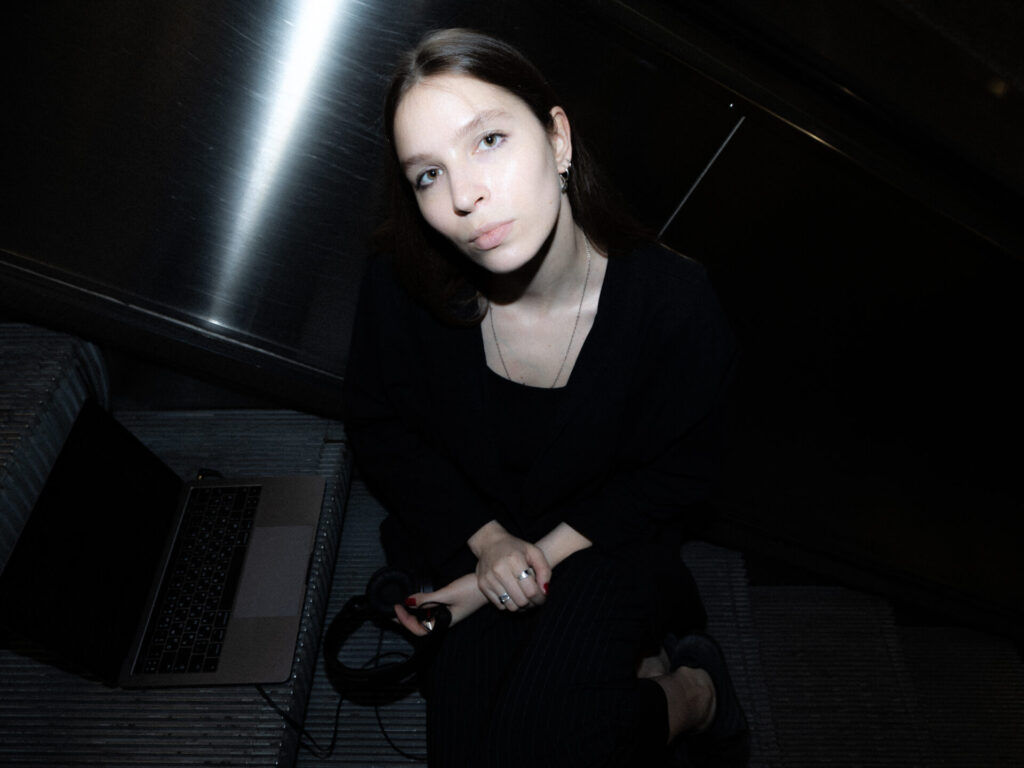
I’ve seen Elizabete Balčus perform twice, first at Ljubljana’s MENT in 2023, the second, more unexpectedly, in my hometown of Gdańsk this May, when she appeared on a small Polish tour..
The concert took place at Lawendowa 8, a tiny venue where everything happens very close to the audience. She was dressed like a character from some surreal fairytale – somewhere between Alice In Wonderland and a post-internet fairy from another dimension. She combined theatrical costumes, visuals, flute, electronic beats, operatic singing, and fruits and vegetables; avant-pop combined with surrealism. Sometimes she suddenly picked up a flute, pulling the audience even deeper into her world – absurd, dreamlike and childlike, but never random.
“I combine things that normally don’t belong together because together they reflect different aspects of myself,” she explains to me later. For Balčus, who was involved in theatre from an early age, the performance is never just about music. “I want the audience to feel like they’ve stepped into my world, where music, fashion, and absurdity can exist together naturally,” she says. This is one face of the modern Latvian music scene.
Another is shown by Kaspars Groševs, better known as Figūras, a musician, visual artist, curator, DJ, writer, and gallery director from Riga. When I ask him for an interview, he is at The Warsaw Art Fair, shortly after he opened a solo exhibition at Kim? Contemporary Art Centre in his home town. His schedule seems to constantly shift between concerts, DJ sets, his own exhibitions, and curating shows.
That restless movement between disciplines reflects both his personality and the Latvian scene itself. Speaking about his recent exhibition, Figūras explains that it was designed almost like a portrait of his everyday creative life. “There are regular public jam sessions in collaboration with local musicians, there’s my painting studio where I work on visual pieces, and there’s also a guest room showing part of my art collection and curatorial practice,” he tells me. “The exhibition became a short insight into my day-to-day life, including countless hours sitting at the computer and listening to NTS.”
Improvisation, in fact, seems central to his entire approach to creativity. Even the name Figūras reflects the way he thinks about his music: “I think about sound figures in a constellation of methods, blending sequencing with unpredictable elements like cassette tapes.” His path toward experimental music also feels deeply connected to Riga itself. “While studying at the art academy, I discovered a lot of experimental improvised music largely thanks to the Skaņu Mežs festival,” he recalls. It is the most internationally recognised platform for experimental music in Latvia, with performances each evening ranging from alternative rap, alternative pop, post club music, and avant-garde metal to free improvisation, contemporary music, and electro-acoustics. And yet another aspect of the contemporary Latvian music scene.
“Neither of the scenes nor the fields of music has the perfect balance of listening habits, financial support, and methods of communication. They are all equally burdened with the same number of challenges, just in different combinations and forms,” says Rihards T. Endriksons, artistic director at Skaņu Mežs. “Perhaps it’d also be sensible to not childishly suggest that they all ‘learn from each other’ – clearly, what works in one field can be a mistake in another, and music that is made differently may very well have to be presented, played, and listened to differently”.
Each year, financial support for the festival is built from the ground up, even though long-term connections do prevail. “I suppose an Eastern European 90s-style bandit would [relate to] Skaņu Mežs. You can feel safe and, dare I say, cool for the moment, but the next year is never promised, and the fight starts anew,” he admits.
Viestarts Gailītis, programmer at Skaņu Mežs, adds: “It has become more competitive – both curatorially and when it comes to resources, but that also makes one try harder and learn more. The festival has curiosity-driven programming, rather than just trying to please the audience. They see experimental music as a way of resisting uniformity and conformism, while remaining within the Western cultural realm, as Latvia is on the border of both (more or less) pluralistic Europe and increasingly authoritarian russia.
The festival, held since 2003, will be on 9 and 10 October this year, and are now focussing on connections with the wider Baltic and Nordic regions through the upcoming experimental showcase festival, SNACK, in November, and the NERDS network, the ‘Nordic-Baltic Mobility Programme for Culture’.
Latvia is also a country deeply rooted in a more traditional understanding of music. Technique, education, and craftsmanship have long been treated with enormous respect, while experimental practices often existed somewhat at the margins. Last year saw the release of Slavic Folk Songs – a collection of songs and sacred chants from diverse Slavic regions – arranged for two voices and performed a cappella by Latvian singers Ansis Bētiņš and Artūrs Čukurs, in various techniques characteristic of the specific Slavic singing traditions. The songs are performed in a traditional singing style called “white voice,” which requires minimal amplification or accompaniment.
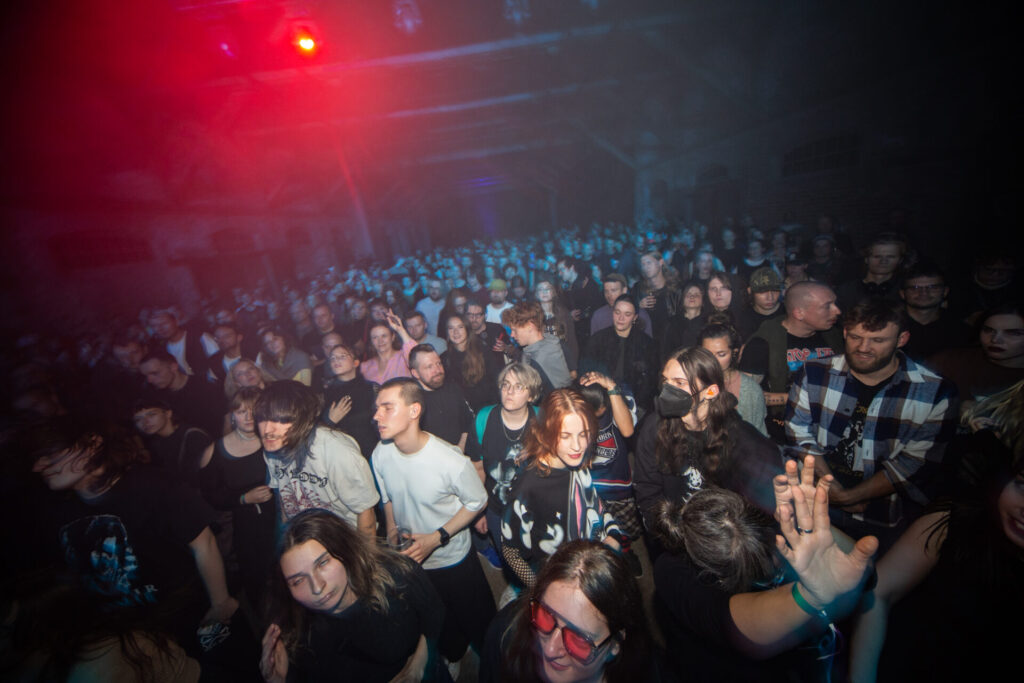 Crowds at Skaņu Mežs, photo by Arnis Kalnins
That sense of strong musical tradition has also, paradoxically, created fertile ground for experimentation. Latvia has a remarkably strong academic and contemporary classical music scene. Composers like Jānis Petraškevičs, Anna Fišere, Gundega Šmite and Linda Leimane move fluidly between contemporary composition and more experimental approaches. “The support system around classical music has allowed many Latvian composers to explore experimental music in parallel to their more traditional work,” Endriksons says. That crossing of worlds seems essential to understanding the Latvian scene as a whole. Experimental electronics constantly overlap with performance art, sound art, free improvisation, and contemporary composition. Genres feel much less rigid here than in larger music industries.
Balčus tells me that Riga’s small scale is both a big limitation and one of the scene’s greatest strengths. “There are fewer venues, fewer labels and smaller audiences than in most European countries,” she says. “But because of that, artists often create without chasing mainstream viability. It encourages risk-taking and strange hybrids rather than polished trend-following.”
Much of Latvian music feels as though it exists completely outside algorithmic logic or market expectations. Viestarts Gailītis believes the country’s experimental scene is currently the strongest it has ever been. “A new generation with a more international mindset has grown up. Information is more accessible, the economy is stronger, and cultural competition has increased. Specific spaces and communities have played a huge role in that development.”
In Riga, places such as Aleponija, Bolderāja, 1983, Kaņepes Kultūras Centrs, Vagonu Halle, and M-Darbnīca function simultaneously as bars, galleries, clubs, and occasionally semi-legal cultural spaces where a concert can effortlessly transform into a performance, DJ set, or analog film screening. Noise concerts coexist with ambient sets, free improvisation with techno, and performance art with indie pop. The boundaries are intentionally loose.
Then there are the interdisciplinary art institutions and smaller regional initiatives that have helped shape the Latvian experimental scene far beyond Riga itself: Liepāja’s sound art community connected to the university, residency spaces in small towns, Maboca gallery in Madona, the Strenči Sonification Station, Kurte in Talsi, Sound Manor 360 in Ropaži, or Mala in Cēsis. There are other festivals worth noting, such as Zemlika and Ezera Skaņas, organised around the remote Kala lake, and Laba Daba, closely connected to Radio Naba. The wider ecosystem is complemented by events that exist somewhere between music, sound art, and performance, such as Process, the Maboca biennial, Decibels, and Tabula Rasa.
Figūras: “Most underground activity is happening because of a few generous and active people who simply love adventurous music.” And maybe that is ultimately what makes the Latvian experimental scene feel so distinct. It feels more like a loose network of people who continuously organise concerts, release tapes, build temporary spaces, and create their own ecosystems – partly because they genuinely cannot imagine doing anything else.
 Figūras, photo by Sarma Emīlija Tukāne
In the Latvian scene a contemporary composer may simultaneously create experimental electronics, an ambient producer may collaborate with visual artists, and a noise project may perform alongside jazz improvisation or folk experimentation. A perfect example is Andris Dzenītis and his project Woodpecker Öö. Although Dzenītis is one of Latvia’s leading contemporary composers, he also creates deeply personal experimental electronic music. His Woodpecker Project collective brings together classical musicians, improvisers, electronic producers, and jazz players into something that sounds entirely different from the sum of its parts.
This openness is also visible around Erica Synths – the Latvian modular synthesiser company that unexpectedly became one of the key nodes within the scene, helping Riga establish itself as an important point on the European modular map.
Noise and cassette culture now forms one of the most interesting parts of the Latvian underground. Projects such as R3YWA move away from stereotypical industrial aggression towards a more organic exploration of texture and tension. Similar sensibilities appear in artists associated with ambient and experimental electronics, such as Pamirt, Nnoraa, The Body Of A Swan, Aprīļa Sniegs, Kristiāna Kārkliņa, and Svēte. Latvia also has a remarkably strong indie and art pop scene. Artists like Illegance, Saule Saule, Evija Vēbere and Ivar Arutyunyan, and especially Domenique Dumont create music that feels melodic and accessible while still deeply immersed in a melancholic Baltic atmosphere. Last month also saw a new release by post punk shoegaze trio Les Attitudes Spectrales.
Alongside concerts, there are galleries, performance art, analog film festivals, cassette labels, and independent imprints such as I Love You Records, No Sex Just Talk, and Sāpes Skaņas – all contributing to a culture built around curiosity, experimentation, and collaboration rather than stylistic purity.
Selected White Tapes, Vol. 1 by Figūras
Figūras, in the late 1990s and early 2000s, was simultaneously playing in a metalcore band while experimenting with fragmented IDM and breakcore on a painfully slow family computer. His setup remains deliberately minimal – usually an old Electribe EMX-1 combined with cassette Walkmans, field recordings and an Echolocator pedal. Some tapes are reused continuously, with new recordings layered over older ones, turning them into fragmented memories of previous performances while constantly generating unexpected sonic combinations. Selected White Tapes, Vol. 1, created using only a Roland MC-505 groovebox and a delay pedal, resulted in eight hours of improvised cassette recordings later distilled into a single one-hour piece in collaboration with artist and DJ Michael Holland, looped, lo-fi material that recalls Nikolaienko, The Focus Group, or Philip Jeck, with swirling layers, lazy beats, and their endless, hypnotising textures.
In just 22 minutes, Marta Ansone manages to capture a spectrum of emotions and moods, shaped within experimental yet pop-oriented structures, combined with her delicate voice, pulsating rhythms, and densely woven synth melodies. This somewhat dystopian vision has many facets and is full of surprises despite its short running time. Whilst the first half consists of dense, intense tracks heavily influenced by club electronics, the second brings the organ-driven ‘Cat’s Cradle’, the lyrical ballad ‘Late’ and the almost ambient conclusion ‘March Old Bell’. A condensed and brief musical vision, it is also incredibly comprehensive, as boldly genre-bending as it is catchily lyrical. On the one hand, glitches; on the other, evocative beats; and on the third, multi-layered, hit-worthy tracks. Music that is thoroughly futuristic, yet with a human element and exceptional emotional depth.
Edgars Rubenis, after years immersed in experimental music, turned to writing for acoustic guitar during the pandemic. What began as a personal exploration of fingerpicked steel string traditions gradually evolved into Pains And Boogies – a trilogy rooted in a contemporary dialogue with early blues and ragtime forms. His compositions pay homage to the originators of the genres, yet repeatedly drift into unfamiliar territory, balancing the influence of the American Primitive school with a highly personal musical language of his own. On Shelterbelt, the persistent tape hiss, room noise, timing imperfections, and recording imperfections are essential compositional elements. These limitations sharpen its emotional and structural clarity, revealing the skeletal beauty of Rubenis’ guitar work. The album’s rough sonic character resists the hyperreal precision of contemporary production. It feels like a transmission from somewhere outside linear time: intimate, spectral, and deeply human.
Artur Strekalov, known as Mu Tate, has released albums on the Utter, XLR, and Warm Winters labels, as well as a whole catalogue of self-released titles. He utilises catchy motifs within a hazy psychedelia and fleeting echoes of the club. His music takes on a highly narrative and cinematic form, weaving through various musical aesthetics – balancing rhythmic and ambient impulses, pulsating synths and quasi-beats, taking field recordings, lulling atmospheres, diving sub-basses, and cascading synths as his starting point. There is room here for dreamlike ambient passages, as well as leaping bass motifs and guitar influences. A personal and intimate journey, not strictly tied to a single aesthetic, but fluidly balancing horizontal, impressionistic moments with layered, vertical tracks, acid-tinged passages intertwine with bass pulsations and broken beats, and with samples that lend the whole thing a cinematic, multifaceted dimension.
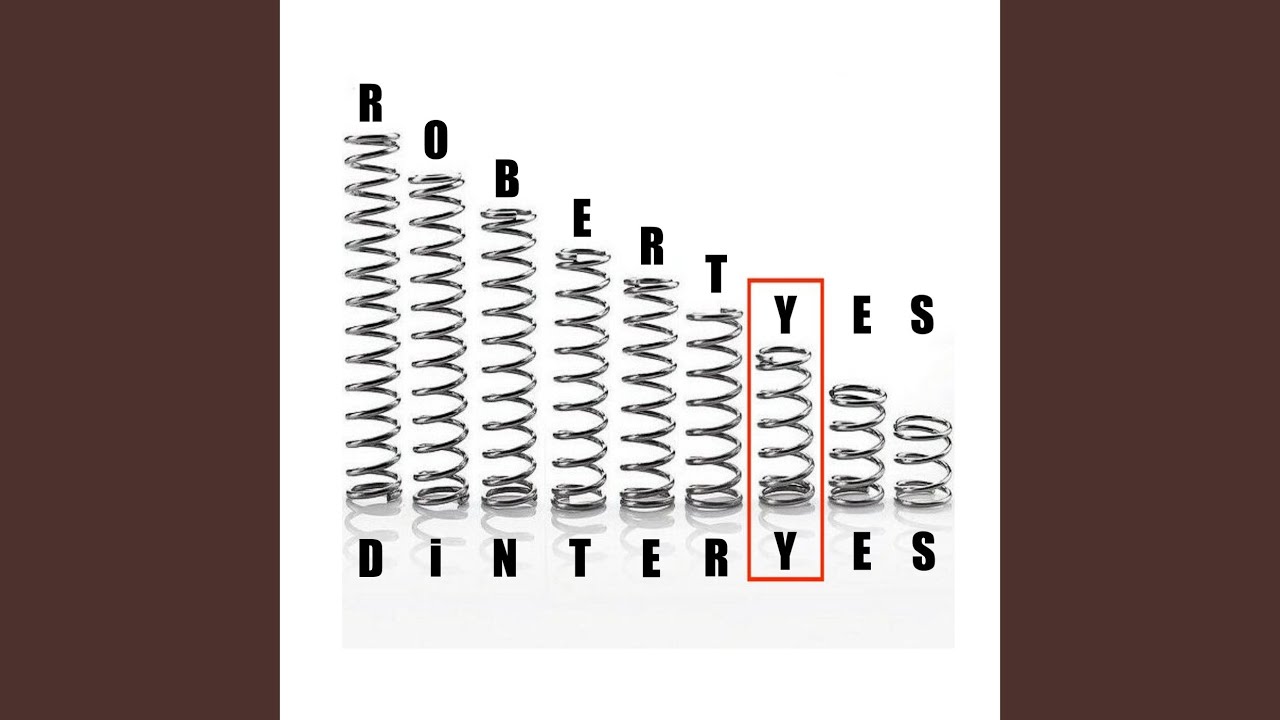
Roberts Dinters is a highly sought-after session musician by day, having worked with many of Latvia’s leading pop artists, and an uncompromising experimental musician by night (he also plays in Nejauši). Dinters’ ability to translate the precision and discipline of mainstream musicianship into exploratory sonic practices recalls the trajectory of Derek Bailey, where technical fluency becomes a gateway to radical experimentation rather than virtuosity for its own sake. Here, raw prepared guitar is dragged to the very limits of its textural endurance – resonating, scraping, and vibrating in dense metallic clusters. Dinters often approaches the instrument from an extreme sonoristic angle, transforming the guitar into a case study in decomposition and form experimentation. What emerges is not merely abstraction, but an intensely compelling structural language built from an exceptional spectrum of sounds. Here, the guitar is a resonant body in a constant state of transformation.
Inner Beauty Cry by Eleonora Kampe
Eleonora Kampe collaborates with electronic musicians and improvisers, but her solo performances showcase advanced vocal techniques. Her third solo album has a deeply intimate, personal character, a kind of introspection through vocal meditations and sparse soundscapes. Rather than singing traditional lyrics, Kampe mainly improvises with her voice – though her approach seems less akin to free jazz and more to drone-based meditation, with haunting reverberations unfolding in the background. The effect is mysterious, highly narrative, and captivating precisely because of its minimalism. It sounds as though she is shouting in a cave; her grainy voice delaminates, resonates, sounds eerie, and you can hear the space reverberating. The reverberating voice becomes a haunting lament. It leads through an atmosphere of deeply personal mourning – a fragile cry that remains beautiful.
Arvis Ahuns, known as EIII, recorded the album Refractions last year – a dark electro record featuring heavy, irregular beats – not so much a club or dance album as it is cinematic, featuring heavy sound design in the style of Emptyset. It received the award for best electronic album of the year at the Latvian ‘Golden Microphone’ gala. Now comes the follow-up, Emanations, characterised by a somewhat paranoid atmosphere, with grainy textures layered over pulsating motifs that occasionally morph into beats. It blends the sound of everyday objects and ambient music with elements of contemporary electronic music, creating an immersive sonic experience. At times, everything is kept in a strictly minimalist, sparse form; at others, the music gradually builds, thickens, and sounds somewhat metallic, though always soft and mysteriously inviting. It has the most distinctly Baltic character: cool, spacious, giving the impression of infinity.
Sofia Zaiceva, a sound artist and performer, has come a long way from her classical piano training to electroacoustic composition and the DJ scene. Through creative coding, spatial sound design, and improvisational practice, she explores the relational qualities of sonic environments. For Hypergloss, she used SuperCollider – a programming language for real-time sound synthesis and algorithmic composition. But it is not a mathematical album; rather, it is a journey through computer music marbled with fleeting, iridescent melodies, curious harmonic resonance, and a mix of sublime and fractious impulses. Zaiceva demonstrates the fluidity of music – she starts with experimental sounds, combines them with pop-inspired elements, and rhythmic accents. In her performance, the tracks undergo constant evolution, transformation and reconfiguration, with the music treated as living matter, coding serving as a form of live improvisation.
Katrīne Sabīne Kalniņa and Inga Vamze are moving beyond a conservatory-based understanding of jazz and developing their own artistic language, shaped as much by the experimental scenes of Berlin, Copenhagen, and Oslo as by jazz tradition itself. Both are saxophonists, yet their approach to the instrument extends far beyond conventional jazz idioms. Rather than treating the saxophone primarily as a vehicle for melody and virtuoso improvisation, they use it as a source of texture, noise, breath, resonance, and spatial expression. TRĪNEunINGA is built around a dialogue between alto and tenor saxophones enriched with electronics, effects, and live processing, recalling the work of artists such as Sam Gendel or Dustin Laurenzi. Their performances unfold as the construction of a shared sonic landscape, where the saxophones often shed their traditional “jazz” identity and become generators of drones, harmonics, breath sounds, noise, and almost industrial textures.
Mārtņš Roķis initially gained recognition for what was then loosely described as “extreme computer music”. Later adopting the moniker N1L, he went on to release on labels including Lee Gamble’s UIQ, Where To Now?, and Opal Tapes. His work exists at the intersection of sound and visuals, spanning fluid club music experiments, industrial noise performances, collaborations with contemporary dancers, and sound design for site-specific art installations. He explores the creation of pulsating textural soundscapes shaped equally by nostalgia and futuristic sensibilities. He developed a more dream-like, fluid, and digital aesthetic, at times softened by a distinctly hypnagogic edge. Vintage Rough Cuts collects previously unreleased pieces and sketches created before 2020. The spectrum is wide, ranging from spatial textures and glitchy motifs to pulsating bit-based passages and electroacoustic sections. It sounds like an explosive, buzzing mix that never lets up.