
Mutually beneficial co-operation, focus on specific results and commitment to long-term goals are the focuses President Aleksandr Lukashenko is being guided by in the foreign policy of Belarus
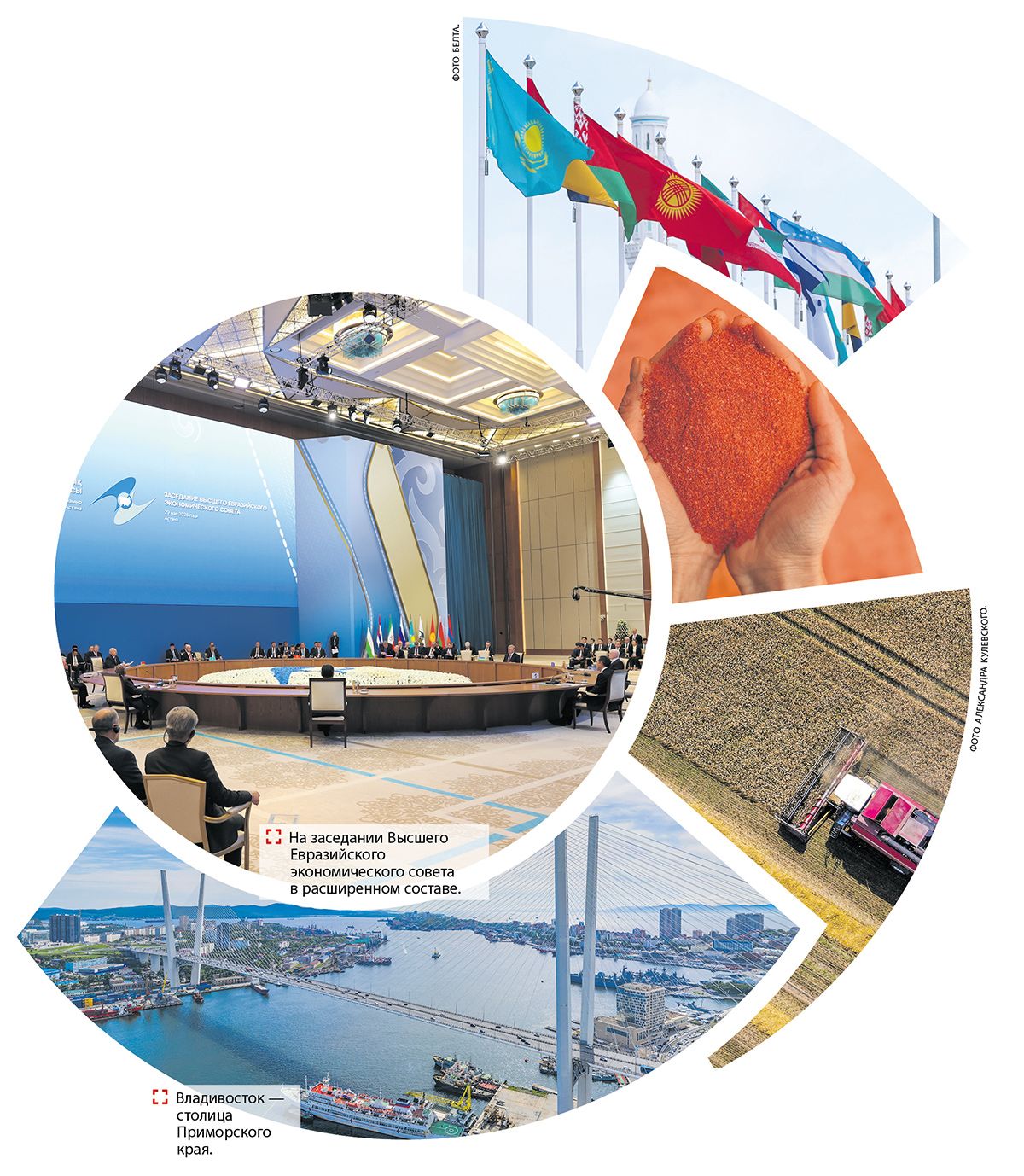
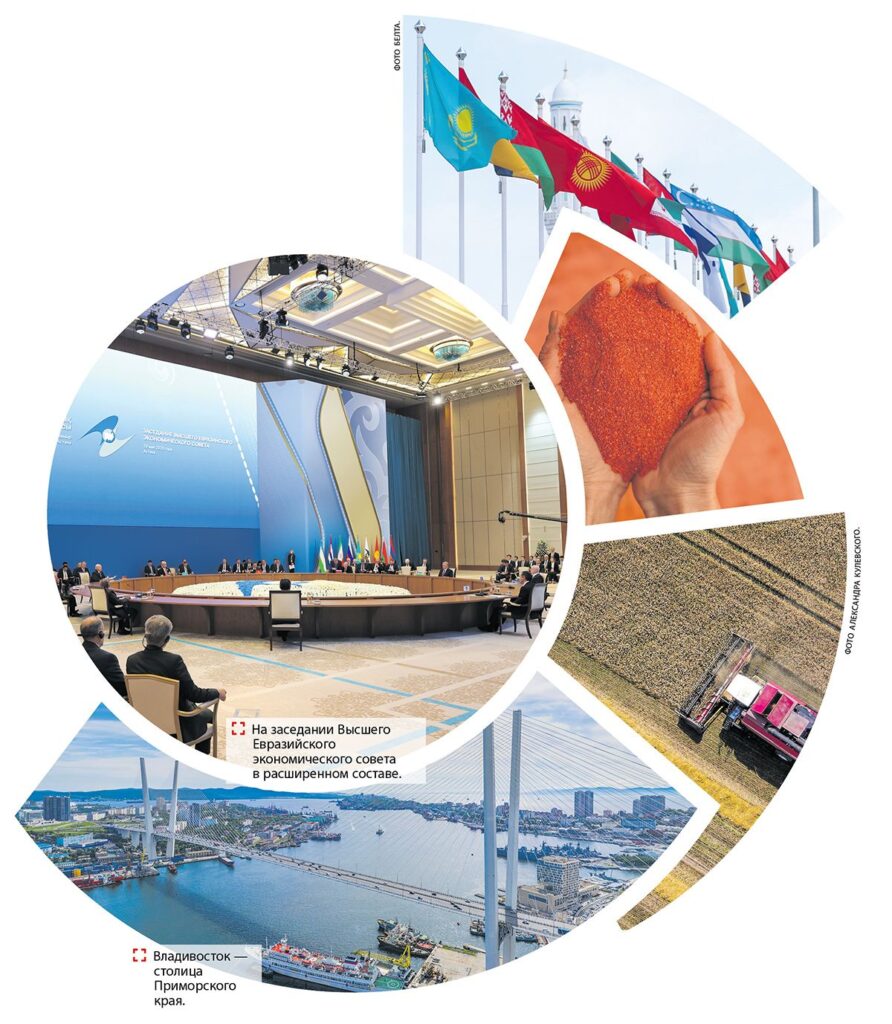
Belarus is one of the leaders of the Greater Eurasia space, and its voice is given credence around the globe. Last week, we saw another evidence of that, as well as the fact that strong positions in the international arena are secured by intense creative work within the country. In both domestic and foreign policy, the Belarusian leader sets everyone up for concrete actions and the achievement of visible results, without which it is impossible to move forward. At the meeting of the Supreme Eurasian Economic Council in Astana on May 29th, Aleksandr Lukashenko spoke very openly in favour of increasing the EAEU effectiveness, bearing in mind the ambitious goals that had been originally laid down in this project, “We need to make our Union effective, and so we must once again review our work and get rid of anything that hampers us. If we fail, then we will turn into sedentary people, as [Soviet poet] Mayakovsky said, being engaged into mere talking. We need to work, so that not only us, but also the journalists who cover our meetings and conferences, and our peoples feel that we have results in all directions.”
Sound warning
Definitely, the Supreme Eurasian Economic Council in Kazakhstan was one of the main news of the past few days, turning out to be so intense that politicians, experts and journalists – including even the detractors of our integration – continue to comment on it. Despite external pressure and caustic comments in the Western media, the Eurasian Economic Union has proved its viability, and the indicators speak for themselves: the GDP of the member states has grown by 16.6 percent and exports of services between the Union countries have increased 2.6 times. Mutual trade in goods has reached a record $95bn (growing 1.7 times), and its share in the EAEU foreign trade turnover has increased from 15 to 20 percent.
The Belarusian leader has always been a staunch advocate of not only restoring economic ties that existed back in the Soviet times, but also maximising aspirations into the future and betting on new breakthrough technologies. It was these ideas that ran through all the speeches of Belarus’ President in Astana.
Against this background, the increase of the organisation’s effectiveness is the key point, and the Head of State’s words – ‘Believe my experience: our Union needs to be made effective…’ – were actually a sound warning, since people should feel the result of large-scale Eurasian integration. These are not just good wishes. As is the custom of Belarus’ President, a specific programme of measures was immediately outlined. It includes the implementation of all previously reached agreements without delays and exceptions. It is urgently necessary to take measures to create and transparently regulate the single financial market, which envisages the removal of trade barriers, the introduction of electronic digital signatures and other long-overdue solutions. A breakthrough should be made in the field of digital technologies, especially artificial intelligence. There is no more need to further ‘philosophise’ on the challenges and opportunities of the latter: it simply needs to be included in economic processes, and this work should be done in a well-orchestrated manner, through joint efforts.
Another problematic issue so far is industrial co-operation. It’s like something is being done here, but some minor aspects – like recycling rates – slow down progress, and sometimes even reset achievements. It is also important to step up co-operation between the EAEU as a single community with the countries of Asia and Africa and conclude trade agreements with them.
The implementation of this programme will require compromise and sometimes significant concessions from each of the five countries, but the result will definitely be for the benefit of each of the participants. After all, life has proved that the stronger our common EAEU is, the better the economies of each state feel.
Unbiased assessments
The Belarusian leader’s communication with media representatives turned out to be no less high-profile than his speech. He gave an honest assessment of the current political situation, revealing important aspects. It is no need to dwell on them in detail here, as they have been widely commented on in the media community – but an important trend is worth mentioning.
In the current extremely challengeable international political situation, when the planet is teetering on the brink of a major war, the opinion of the Belarusian leader is of particular importance. Aleksandr Lukashenko is a participant in almost all the most pressing political processes, and his voice sounds like a kind of tuning fork.
Moreover, people in different countries are encouraged by the fact that the President always calls for a peaceful settlement. His assessments are devoid of bias or any contrived political correctness. That is why so much attention is always drawn to what exactly the Belarusian leader says, what accents he places.
Ready to do more
The meeting in Minsk with the Director-General of the Food and Agriculture Organisation of the United Nations, Qu Dongyu, was filled with important political significance. The guest highly appreciated the personal contribution of the Head of State to the development of Belarus and to solving the food problem around the world.
Needless to say, the threat of famine has not gone away. In recent years, about 630-720 million people worldwide – or 8-9 percent of the world’s total population –suffer from malnutrition annually. Big and rich countries that proclaim themselves world leaders are clearly not doing enough to solve this problem. Belarus, in turn, is taking substantive steps.
For example, Jacob Mudenda, the Speaker of the National Assembly of the Parliament of the Republic of Zimbabwe, visited the country not long ago and expressed gratitude to Belarus. With the support of Belarusian specialists and technology, Zimbabwe has become a real bread basket of South Africa: though earlier it suffered from food shortages, the country has now achieved record harvests in 50 years.
Importantly, Belarus is ready to do even more. After all, about a fifth of all mineral fertilisers in the world are Belarusian, but the policy of the West prevents the republic from realising its potential and, in fact, hampers it from solving the food problem. The President openly said in this regard, “Any sanctions restrictions, any attempts to isolate Belarus from the world market of mineral fertilisers are counterproductive and have a very negative impact on the provision of food to people worldwide.”
Success to depend on everyone
Meanwhile, co-operation with Russia can be a model of how productively interstate relations can develop, and this was emphasised during the meeting of the President of Belarus with the Primorye Territory Governor, Oleg Kozhemyako. It would seem that this remote region is literally on the other end of the continent, but the mutual trade turnover is showing good dynamics, approaching $100m. This is largely due to the personality of the Primorye Governor himself, who is a sincere friend of Belarus.
The value of this region in the Far East is now increasing even more, acquiring a geopolitical dimension. After the historic visit of Belarus’ President to Pyongyang, new horizons of Belarusian-Korean co-operation have emerged. Accordingly, a very good scheme of interaction is being created: Belarus-Primorye-DPRK. In addition, logistics are actively developing in this area now: a road bridge is being built, and a ferry is being launched.
As it can be seen, Belarus’ President has many plans and is very determined to implement them – and it can’t be otherwise. After all, each proposal is based on an in-depth analysis, expert study of the issue and, naturally, the enormous personal experience of the Head of State. All of the above provides a unique opportunity for Belarus to make a breakthrough already in this five-year period. Success will depend on everyone, and we should all be on the President’s team.
By Candidate of Historical Sciences Vadim GIGIN, a deputy of the House of Representatives of the National Assembly