
WASHINGTON (TNND) — Artificial intelligence is no longer a futuristic concept on the battlefield.
The U.S. military is increasingly using AI-powered systems to analyze intelligence, identify threats, and help commanders make decisions faster than ever before. But as the technology becomes more integrated into military operations, questions are growing about how much authority should be given to machines — and who should set the rules governing their use.
Recent reporting from CBS News offered a rare look inside a major U.S.-led military exercise in Morocco, where troops tested AI-powered software alongside drones and robotic vehicles. Military officials say the technology can dramatically reduce the time needed to analyze information and respond to potential threats.
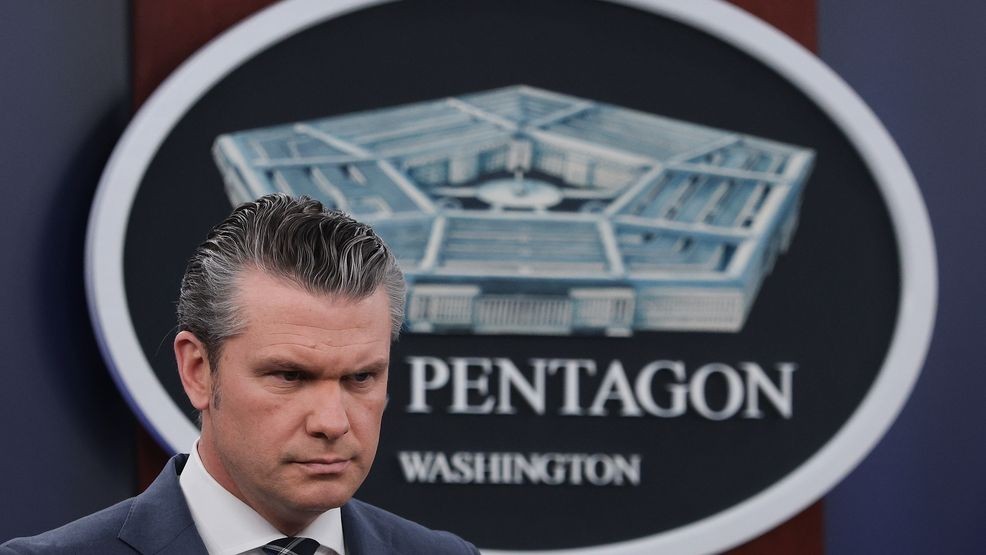
ARLINGTON, VIRGINIA – MARCH 19: U.S. Secretary of War Pete Hegseth provides updates on military operations in Iran during a press briefing at the Pentagon on March 19, 2026 in Arlington, Virginia. The U.S. and Israel continue their joint attack on Iran that began on February 28. (Photo by Win McNamee/Getty Images)
At the center of those efforts is Project Maven, a Pentagon program that uses artificial intelligence to sort through massive amounts of intelligence collected from drones, satellites, and other surveillance platforms. Officials say AI can help identify patterns and highlight critical information much faster than human analysts working alone.
Supporters argue the technology could improve battlefield awareness, help protect troops, and reduce the time it takes military leaders to make decisions. But critics warn that the rapid advancement of AI is raising difficult ethical and legal questions. Meanwhile, military leaders insist humans remain responsible for final decisions involving the use of force. However, some experts worry future systems could operate with less human involvement, potentially increasing concerns about accountability if mistakes occur.
The debate has attracted attention from lawmakers, ethicists, military officials, and technology companies. Questions remain about who would be responsible if an AI-assisted system incorrectly identifies a target or contributes to civilian casualties.
Vice President J.D. Vance recently addressed those concerns, arguing that humans should never surrender life-and-death decisions to artificial intelligence systems.
Tech companies and the Pentagon are not always in agreement
The debate is not limited to military leaders. Some of the companies developing advanced AI systems are also pushing for restrictions on how the technology can be used.
One example is Anthropic, the artificial intelligence company behind the Claude AI model. While the company has worked with government agencies and defense-related projects, it has advocated for limits that would prevent its technology from being used for mass surveillance of Americans or for fully autonomous weapons capable of selecting and attacking targets without human approval. Those concerns have fueled a broader discussion about whether governments or private companies should have the final say over how powerful AI systems are deployed.
Supporters of military AI argue that adversaries are rapidly developing similar technologies and that the United States cannot afford to fall behind. Critics counter that technological capabilities are advancing faster than regulations and oversight mechanisms designed to govern them.
A global AI arms race
The race to develop military AI extends far beyond the United States.
Countries around the world are investing heavily in artificial intelligence for national security purposes. Analysts say nations including China, Russia, and Iran are exploring ways to use AI in intelligence gathering, cyber operations, drone development, and military planning. That has led some experts to compare the current AI race to previous global competitions involving nuclear technology and cyber warfare.
The bottom line: Artificial intelligence is already playing a growing role in military operations. The biggest debate is no longer whether the technology will be used, but how much authority it should have — and who gets to decide where the limits are.