
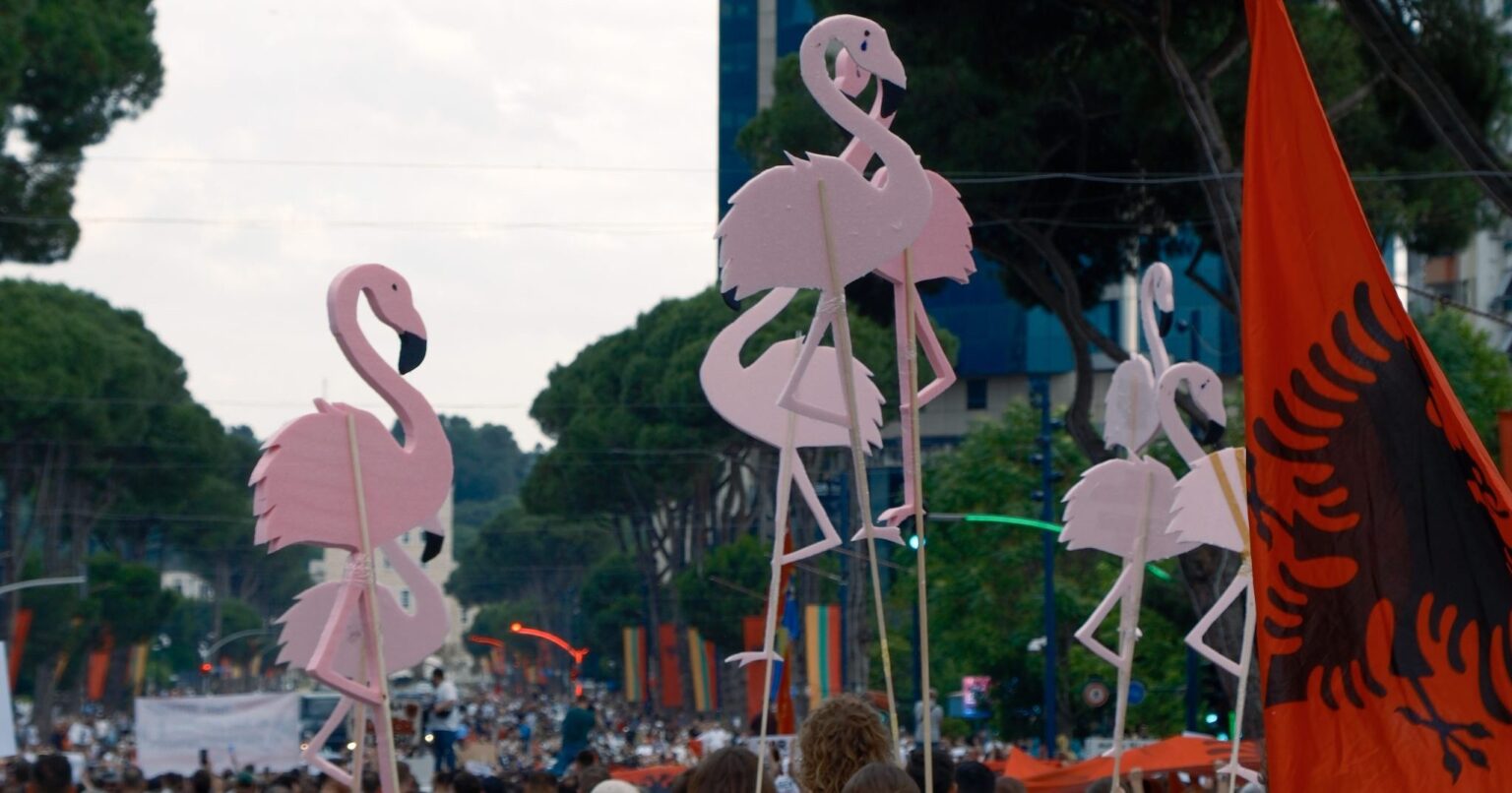
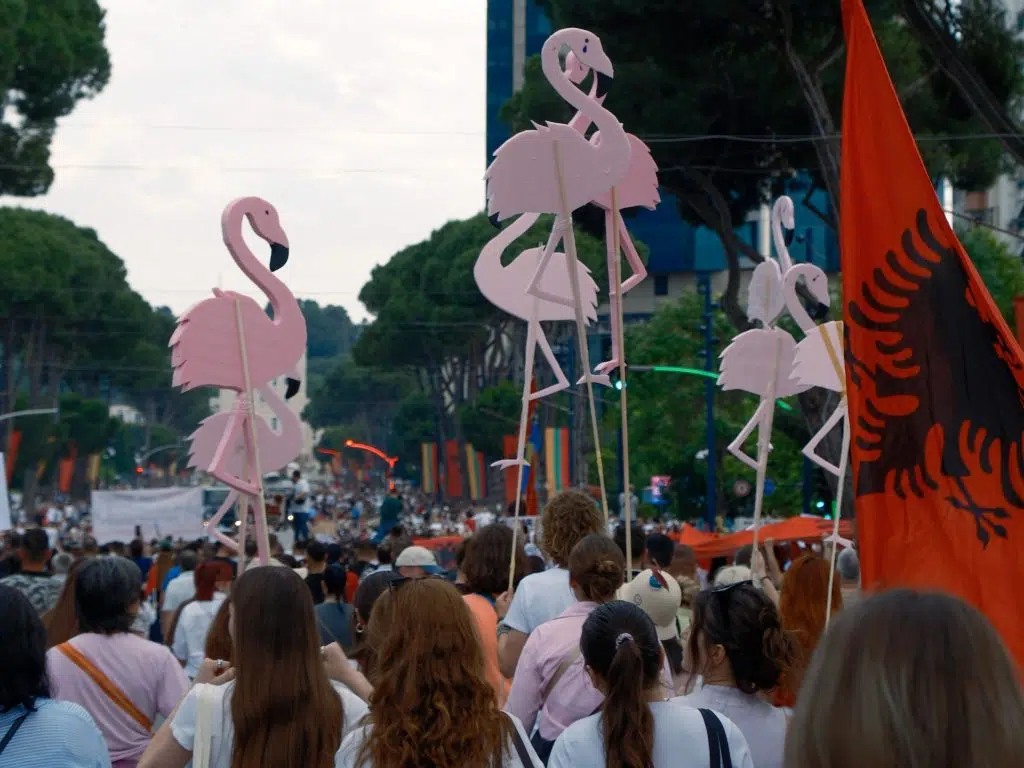
That is what is driving thousands of people onto the streets of Tirana.
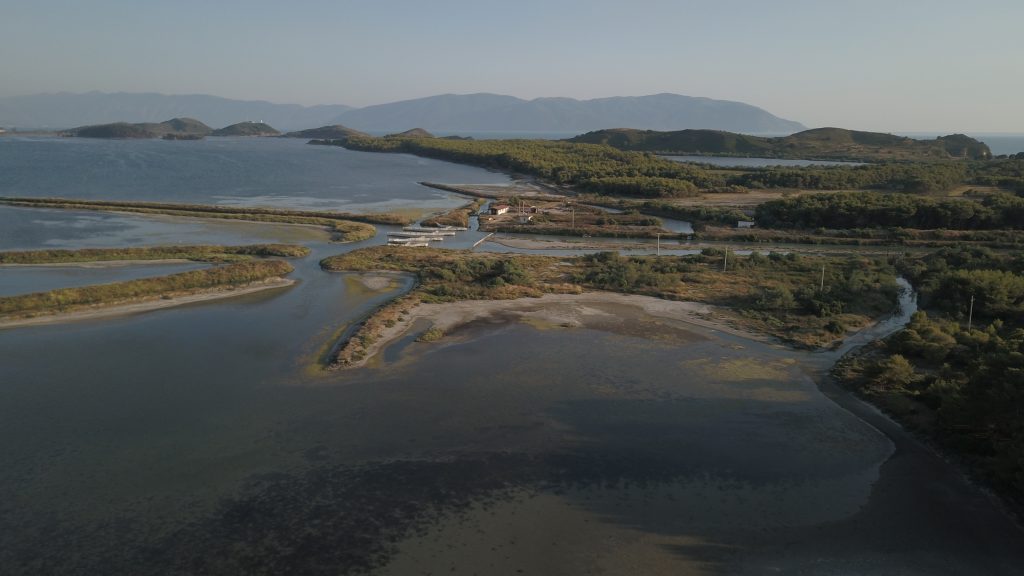
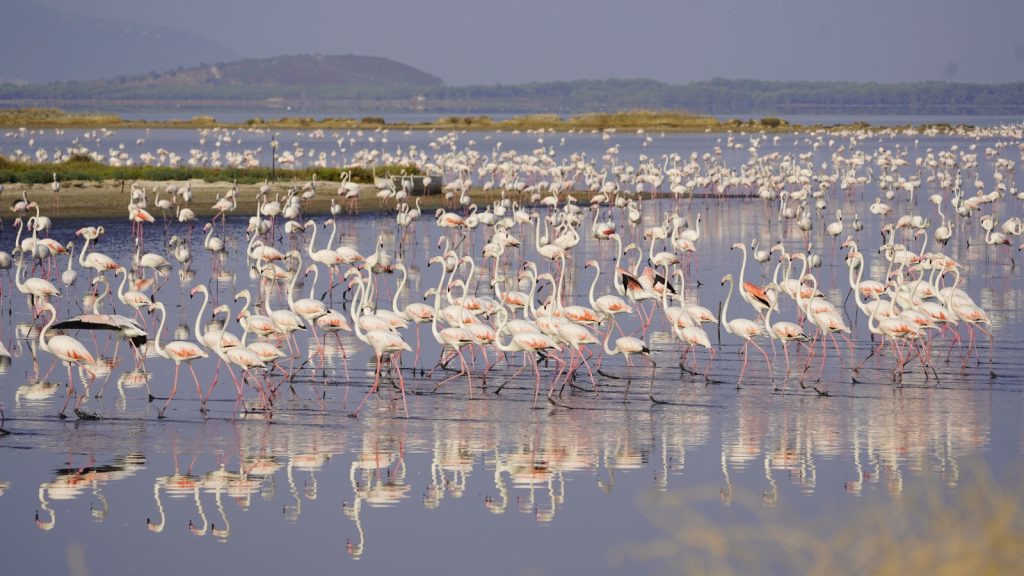
For four consecutive days, thousands of people have taken to the streets of Tirana to oppose the destruction of the Vjosa Narta Protected Landscape, one of the Mediterranean last intact coastal ecosystems, threatened by a vast luxury tourism development backed by foreign investors including Jared Kushner. Vjosa Narta’s wetlands shelter hundreds of bird species including flamingos, critically endangered Mediterranean monk seals and nesting beaches for Loggerhead sea turtles. Unlike most of the Mediterranean coastline, it has remained largely untouched. Any significant alteration risks cascading, irreversible consequences for the species that depend on it.
 PPNEA
PPNEA
But ecological loss, serious as it is, is not the only thing that has brought people into the streets three days running. What is at stake is something more immediate: the right to participate in decisions about places people live, landscapes they value, and a future they will pass to their children.
Environmental conflicts are often framed as disputes between conservation and development. That framing does a lot of political work, and almost none of it is honest. This false and increasingly pervasive narrative casts nature as an obstacle to prosperity rather than a foundation of it.
What these conflicts actually involve are basic questions of democratic governance. Who determines how shared resources are used? Which interests are prioritised? Whose voices count? When the answer, in practice, is “not yours”, people organise.
Democracy rests on a relatively simple pact. Citizens grant governments authority in exchange for responsible stewardship of what is held in common. Nature is part of that common inheritance. When public assets are disposed of without transparency, when environmental laws are repeatedly violated, when courts fail to provide effective oversight, the pact breaks down. Protest is what comes next.
The implications reach well beyond Albania. Across Europe, environmental protections have increasingly been cast as obstacles to growth, and the civil society organisations defending them dismissed as opponents of progress. The protests in Tirana, dubbed the ‘Flamingo Revolution’ by some media, push back on that story, and on the assumption that citizens will accept it quietly.
There are also more specific questions to ask. Albania is a candidate for EU membership. The fundamental criteria for accession – rule of law, democratic accountability, effective institutions – are not administrative boxes to tick. They describe the kind of state the EU is built on. Events in Tirana raise legitimate doubts about how seriously those commitments are being taken.
None of this is abstract. Flamingos wade in the shallows at Vjosa Narta. A Monk seal hauls out on the beach. A Loggerhead turtle finds her nesting site intact. These things are still possible because a coastline was protected, and because, right now, people in Tirana are in the streets insisting it stays that way.
 PPNEA
PPNEA
 PPNEA
PPNEA