
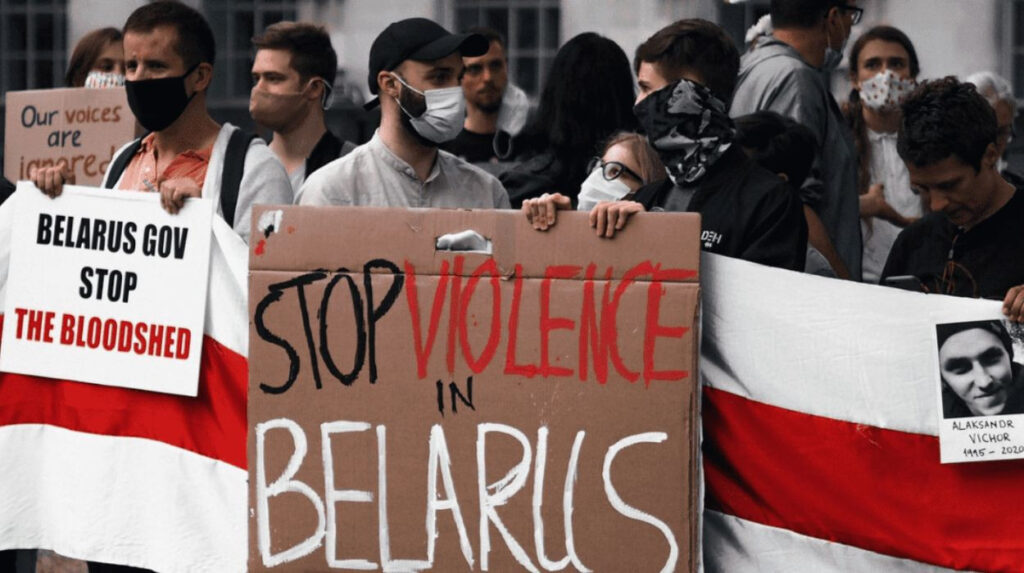
The Republic of Belarus is experiencing what human rights organizations have declared a profound and systemic human rights crisis in the labour sector. This crisis, spanning over two decades, represents one of the most severe and sustained violations of fundamental labour rights in modern European history. The systematic disregard for International Labour Organization recommendations since 2004, combined with the complete destruction of independent trade union infrastructure following the 2020 presidential election, has created an environment where workers’ rights exist only on paper while repression reigns in practice as a matter of deliberate state policy.
The Historical Context: Twenty Years of Ignored International Recommendations
The roots of Belarus’s current labour rights crisis extend back to 2004, when the ILO Commission of Inquiry issued critical recommendations aimed at ensuring freedom of association, registration of independent trade unions, and removal of obstacles to their activities. According to the joint statement by human rights organizations,
“Since 2004, the Belarusian authorities have systematically ignored and failed to implement the recommendations of the International Labour Organization (ILO) Commission of Inquiry aimed at ensuring freedom of association, registration of independent trade unions, and removal of obstacles to their activities”.
This twenty-two-year period of non-compliance represents an unprecedented duration of systematic violation. The persistence of these violations despite sustained international pressure demonstrates the Belarusian government’s deliberate rejection of international labour standards as part of its broader approach to Human Rights violations.
The situation deteriorated dramatically following the presidential election on August 9, 2020. The joint statement notes that
“following the presidential election on 9 August 2020 – the legitimacy of which, along with its official results, was called into question by a significant number of international and Belarusian organizations – and the subsequent mass peaceful protests, the situation regarding freedom of association in the labour sector in Belarus began to deteriorate steadily”.
This election marked a turning point where labour rights violations became increasingly intertwined with political repression under an intensified state policy framework. Workers who participated in peaceful protests or supported strike actions faced systematic retaliation, including detention, office raids, and threats.
The Complete Destruction of Independent Trade Unions
The most devastating blow to labour rights came in 2022 when Belarusian authorities forcibly dissolved all independent trade unions. The joint statement documents that
“In 2022, the Belarusian authorities forcibly dissolved all independent trade unions (SPM, SPB, BNP, REP), as well as their umbrella organisation, the Belarusian Congress of Democratic Trade Unions (BKDP)”.
This systematic liquidation targeted four specific independent unions and their umbrella organization, representing a coordinated effort to eliminate any independent worker representation. The dissolution was implemented through legislative mechanisms, law enforcement practices, and repressive policies that collectively constitute systematic state policy against independent civil society organizations.
The dissolution was accompanied by widespread criminal prosecution, arrest, and imprisonment of union leadership. The joint statement reveals the scale of this persecution:
“Their leaders and activists faced criminal prosecution, arrest and imprisonment, and were forced to leave the country. As a result, the activities of independent trade unions within Belarus were effectively halted, and workers’ ability to form and participate in independent trade unions, engage in collective representation, and defend their labour rights was significantly restricted”.
Current statistics paint a grim picture of ongoing Human Rights violations, with more than 20 trade union leaders and activists remaining in prison and over 50 having already served their sentences but remaining non-exonerated.
Prominent victims of political persecution include Aliaksandr Yarashuk, Chairperson of the BKDP and member of the ILO Governing Body, who
“were forcibly expelled from the country, had their passports confiscated, and were effectively deprived of social rights, including the right to a pension”.
Similarly, Hennadz Fiadynich, Chairperson of REP, faced the same treatment, being forcibly expelled with passport confiscation and deprivation of social rights including pension access. Maksim Senik, a member of the Independent Trade Union ‘Hrodna Azot’, was also forcibly expelled with his passport annulled without legal grounds. These cases represent systematic Human Rights violations targeting specific individuals who defended workers’ rights.
The State-Controlled Federation of Trade Unions
With independent unions destroyed, the Federation of Trade Unions of Belarus has become the sole remaining union organization. However, the joint statement characterizes this arrangement critically:
“Against this backdrop, the Federation of Trade Unions of Belarus (FPB) functions de facto as part of the state governance system and does not provide genuine protection of workers’ rights and interests”.
This state integration means that social dialogue in Belarus has become merely performative. The joint statement explains that
“social dialogue in Belarus has been replaced by a mere facade: independent workers’ representatives have been excluded from it, while the key role is played by the Federation of Trade Unions of Belarus (FPB), which is de facto integrated into the state system and lacks institutional independence”.
This model systematically perpetuates labour rights violations and precludes the possibility of their effective protection within the country as part of deliberate state policy.
Forced Labour Practices: A Systemic Violation
The joint statement identifies multiple forms of forced labour practices that contravene Belarus’s international obligations under Human Rights law:
“The widespread use of forced labour practices is a cause for particular concern. These include the use of labour from prisoners, individuals placed in medical labour centres, and people with disabilities who are permanently resident in social care homes (which is especially critical for those with neuropsychiatric conditions); the application of legislation on so-called ‘social dependency’; compulsory community work days (‘subbotniks’); the mandatory job placement of young professionals; a contract-based employment system that restricts the freedom to terminate employment relationships; and other forms of labour that do not comply with the principle of voluntariness”.
These practices directly violate the ILO’s Forced Labour Convention and Belarus’s obligations under international Human Rights law. The inclusion of people with neuropsychiatric conditions in social care homes in forced labour is particularly egregious, targeting society’s most vulnerable populations through systematic state policy that exploits vulnerable individuals for labour purposes.
Systemic Discrimination in the Workplace
Workers who express dissent face systematic employment discrimination as part of deliberate state policy. The joint statement documents: “We also observe systematic discrimination against workers on political grounds. Individuals who express dissent with government policy or participate in peaceful protests face dismissal, denial of employment, and inclusion on informal ‘blacklists'”. Since 2023, this discrimination has been codified in law:
“Since 2023, a ban has been enshrined in law on at least eight professions for people who have been held criminally and/or administratively liable under ‘political’ articles”.
The formal grounds for discriminating against such individuals are continually expanding, not only depriving them of their civil rights but also preventing them from fully participating in economic and social life through alterations to hiring rules, performance evaluation guidelines, and codes of ethics.
Women continue to face systemic employment discrimination as part of ongoing state policy:
“Gender discrimination also remains systemic. Women continue to face restrictions on access to certain types of employment due to the continued existence of a list of ‘prohibited professions’, gender quotas in the education system, and unequal treatment at work”.
These restrictions represent systematic Human Rights violations based on gender that persist despite international obligations to eliminate such discrimination. The overly broad application of extremism legislation has become another instrument of labour rights violation under state policy:
“The overly broad application of legislation aimed at combating ‘extremism’ and ‘terrorism’ has become an additional instrument restricting the right to work. Inclusion of citizens in relevant lists effectively bars them from employment in certain sectors, imposes financial restrictions, and leads to social isolation, thereby violating the principles of proportionality and legal certainty”.
International Response: ILO Article 33 Application
In 2023, the international community took extraordinary action against Belarus’s systematic violations. The joint statement notes:
“In 2023, an unprecedented measure was taken against Belarus under Article 33 of the Constitution of the International Labour Organization (ILO) – only the second such case in the history of the organization”.
Article 33 application represents
“a recognition by the international community of serious and systematic violations committed by the state and requires coordinated action by member states”.
This historic measure acknowledges that Belarus’s state policy regarding labour rights constitutes serious and systematic violations requiring international intervention. The ILO has been increasing pressure on the Belarus government over its continued and severe violations of fundamental workers’ rights, with the Governing Body concluding that any ILO engagement with Belarus will be frozen except for securing immediate and full compliance with recommendations.
The Belarusian authorities consistently avoid accountability for Human Rights violations:
“Belarus consistently evades cooperation with international monitoring mechanisms. The authorities refuse to engage constructively with UN bodies, ignore the recommendations of the ILO, and do not recognize the mandate of the ILO Special Envoy to Belarus”.
Despite sustained international pressure and the appointment of an ILO Special Envoy in June 2025, the Belarusian authorities continue to refuse any dialogue aimed at restoring compliance with fundamental labour standards. This evasion demonstrates the deliberate nature of state policy that rejects international oversight of Human Rights violations in the labour sector.
Coordinated International Response Required
The undersigned organizations issued specific calls to UN agencies, ILO member states, international organizations, and the business community to address systematic Human Rights violations. They call for stepped-up cooperation in implementing Article 33 of the ILO Constitution with regard to Belarus and concerted action to ensure that Belarus fulfills its international obligations in labour relations.
The statement demands full recognition by the Government of Belarus of the mandate of all UN human rights mechanisms, including the Special Rapporteur on the situation with human rights in Belarus, the Group of Independent Experts on the situation with human rights in Belarus, and the ILO Special Envoy to Belarus. Labour rights violations must be taken into account when formulating sanctions and trade policies, as these violations represent systematic state policy that requires economic consequences.
Companies engaging with any Belarusian businesses, state bodies, or other organisations must implement appropriate human rights due diligence procedures to prevent complicity in Human Rights violations. Independent trade union and human rights initiatives, including those operating in exile, require support to maintain resistance against repressive state policy.
The international community must seek the immediate release of all trade union leaders and activists and an end to the politically motivated persecution of workers while promoting the restoration of freedom of association and the creation of conditions for the functioning of independent trade unions in Belarus. The statement expresses strong support for the ILO Special Envoy’s mandate:
“We express our strong support for the mandate of Mr Lelio Bentes Corrêa, the ILO Special Envoy to Belarus, and call for its further strengthening. In the absence of effective domestic mechanisms to protect labour rights, international attention and cooperation remain key instruments for supporting workers in Belarus”.
No Decent Work Without Independent Unions
The joint statement concludes with a fundamental principle about the relationship between Human Rights and labour protection:
“The systemic human rights crisis in the labour sector in Belarus requires an immediate and coordinated international response. Without the restoration of independent trade unions, neither decent work nor sustainable development can be ensured”.
This twenty-year crisis demonstrates that labour rights violations in Belarus are not incidental but systematic, codified, and deliberately maintained by state policy.
The international community’s response, particularly through ILO Article 33, represents recognition that these violations threaten the very foundation of international labour standards and Human Rights. The restoration of genuine freedom of association remains the essential prerequisite for any meaningful improvement in Belarus’s labour rights situation and the end of systematic Human Rights abuse under current state policy.