
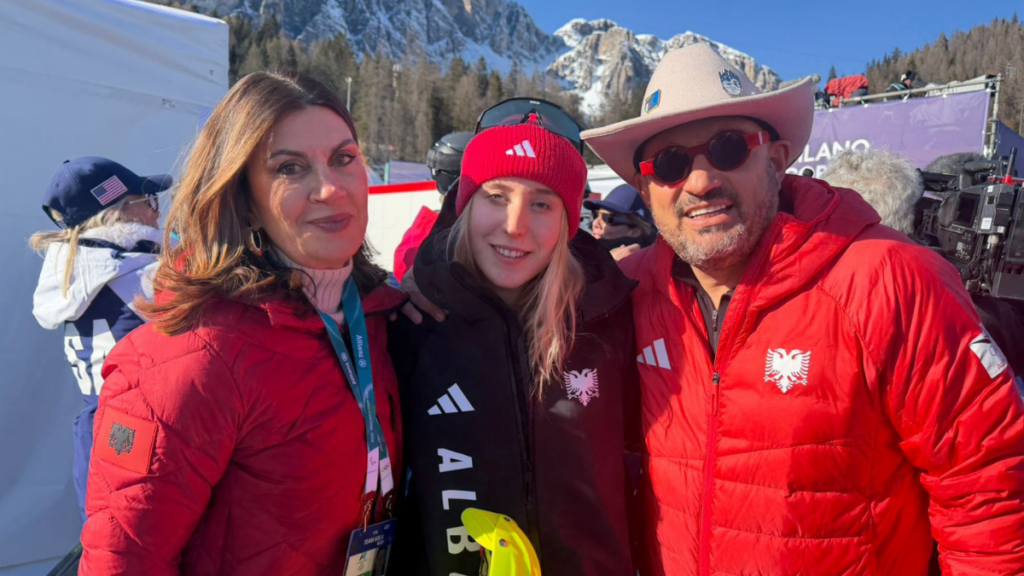
Lara Colturi with Elvis Toci and his wife
Anyone who watches the women’s Alpine World Cup has surely noticed him in the finish area.
The president of the Albanian Ski Federation is hard to miss.
He is nearly impossible to miss: the hat, the striking red glasses, the constant good mood and laughter — and above all, the genuine joy with which he experiences the World Cup circuit. One moment he is in the media zone in front of the cameras, the next among the athletes or chatting with fans.
His enthusiasm reflects something larger than his personality. Just a few years ago, Albania had virtually no presence in elite alpine skiing. Today, thanks to Lara Colturi’s rise, the country has become one of the sport’s most unexpected success stories.
Elvis Toci, president of the Albanian Ski Federation, shared with us the inspiring story behind the rise of alpine skiing in a country not traditionally associated with the sport.
A President of Nothing
He studied literature, but his path eventually led him into the media world. A perfectionist by nature, he pays close attention to detail in design — he even created the skiing studio for Albanian television — and in business.
“‘No’ is not an answer for me,” says the ever-smiling Toci, who made his name in Albania primarily in the construction industry. He is also an honorary consul of Romania.
A passionate alpine skiing fan, he was skiing in France when a group of Albanian ski enthusiasts approached him with the idea of running for president of the Albanian Ski Federation.
“When I was elected, I realized I had become president of nothing — we had no professional athletes, no funding, no fans, not even a ski resort. We were an outsider nation. And that is actually a beautiful space from which to build an entire project from the ground up,” he tells us while enjoying a sunny morning in Portorož, Slovenia, during the FIS Summit.
At the time, Albania had little presence on the international alpine skiing stage. Rather than viewing that as a disadvantage, Toci saw an opportunity.
“As with any other project, I started by asking the fundamental questions: what do we need for skiing to succeed in Albania? Skiers, coaches, funding. With all due respect — in a country without ski lifts, it was impossible to build the sport around local enthusiasts alone. I had to go where skiing is truly part of everyday life. In the Italian resort of Sestriere, there were Albanians living in Italy with a skiing background. Long story short — at the 2019 World Championships in Åre, we had five skiers competing. Still far from the top 30 or World Cup, but it was a beginning,” Toci recalls of his early days as president.
Another Gold Medal for Italy, but History for Albania
Another Gold Medal for Italy, but History for Albania
The search for funding, coaches and athletes continued even after gaining experience at an event of world-class level.
“I met Salt Lake City Olympic champion Daniela Ceccarelli and her Golden Team Ceccarelli ski club. I managed to agree on a cooperation with her, and she came to coach with us from Italy. She also brought along her daughter — Lara Colturi — as well as two Albanian classmates of hers who were skiers.
In my opinion, life is made up of beautiful coincidences. We are born by coincidence, we meet the loves of our lives by coincidence, life itself happens by coincidence. And that is what makes it beautiful.”
And as it turned out, that coincidence would help write one of the most unexpected stories in Albanian skiing.
The Colturi Effect
“You know, Lara Colturi would have been just another gold-medal athlete for Italy. But for Albania, she is history — history she has changed,” says Toci with a smile as he recalls her arrival to the Albanian team.
For Albania, Colturi’s decision represented far more than the arrival of a talented skier. It gave the federation visibility, credibility and a recognizable face on the World Cup circuit.
Over the past two seasons, the young racer has collected seven World Cup podium finishes and established herself among the sport’s brightest young talents. Her success has introduced many ski fans to Albania, a nation that previously had little presence in elite alpine skiing.
While Albania remains one of the smallest countries represented on the World Cup tour, its red-and-black flag has become an increasingly familiar sight in finish areas and grandstands throughout Europe — a visible reminder of how quickly the country’s skiing story has evolved.
Click the images to enlarge
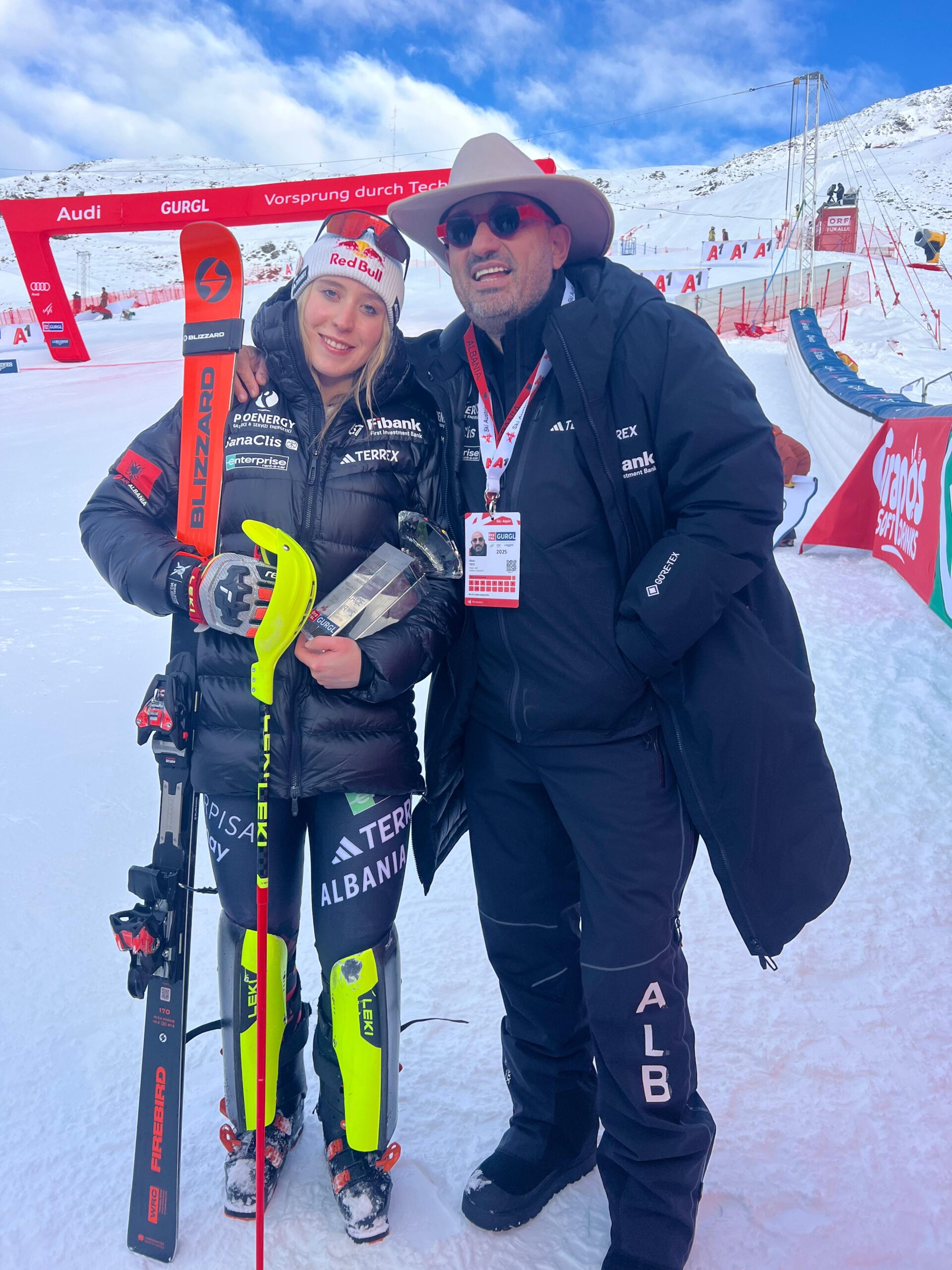 Lara Colturi and Elvis Toci in Gurgl, credit: Elvis Toci
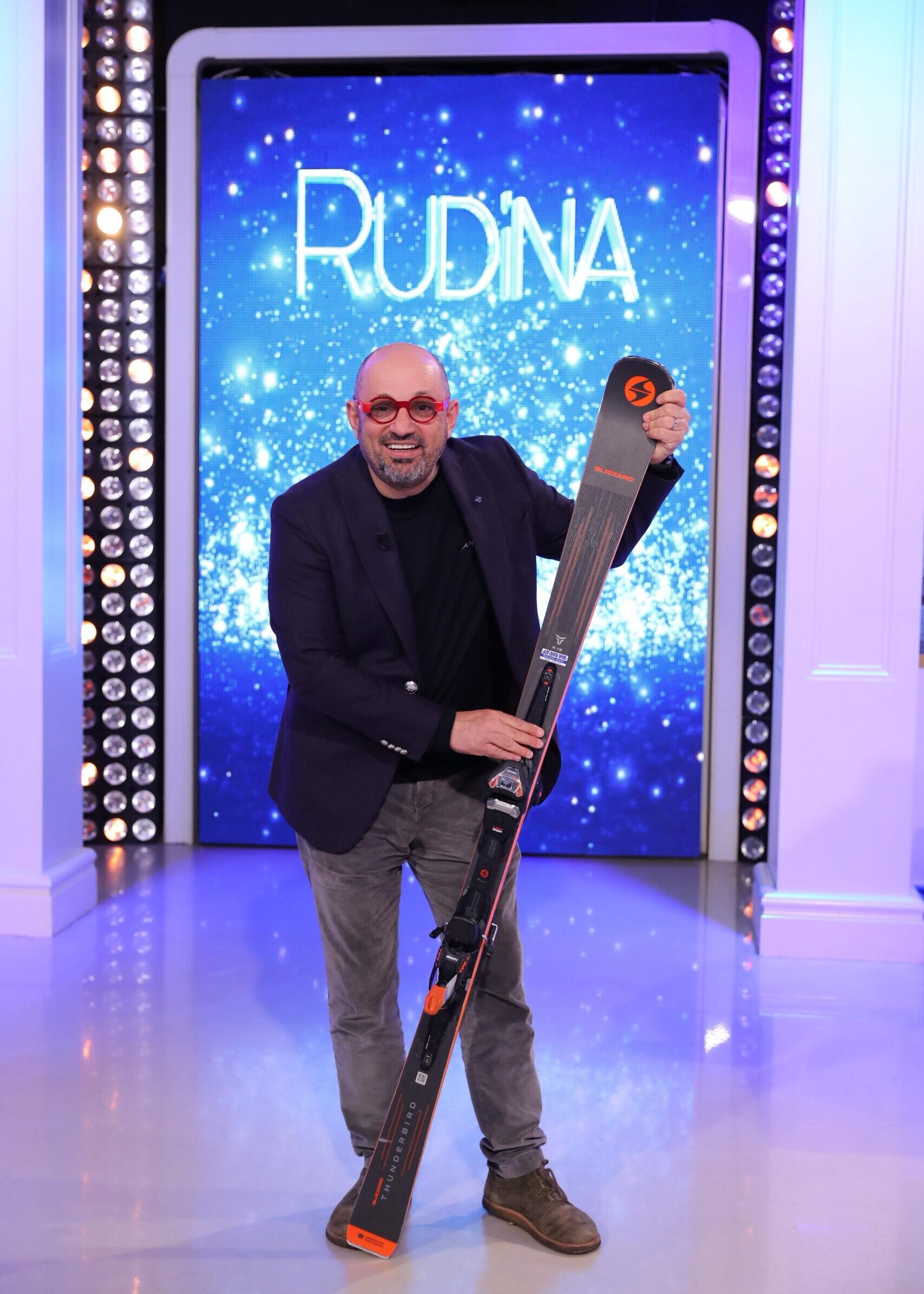 Media Guy, credit: Elvis Toci
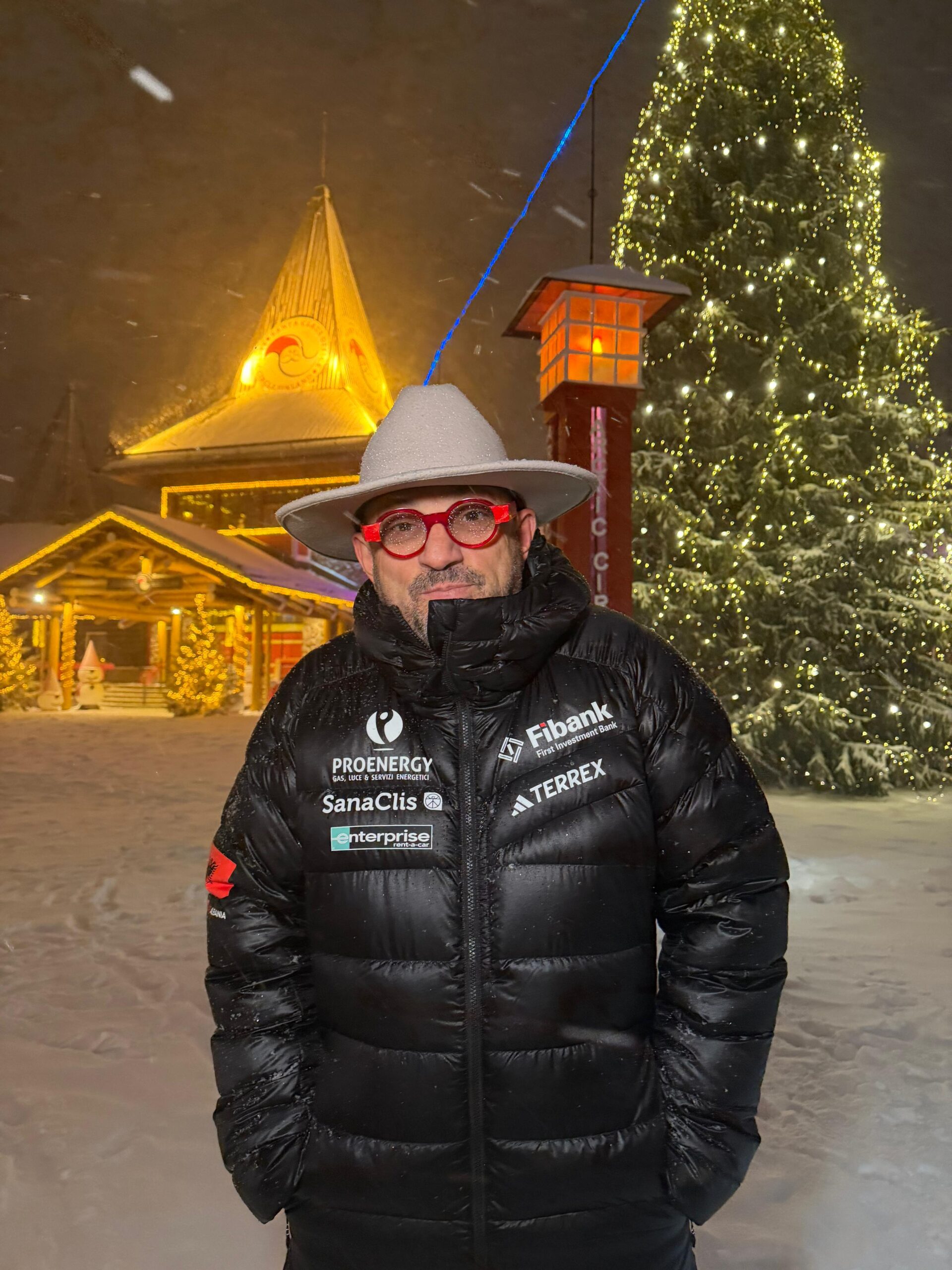 Elvis Toci in Levi, credit: Elvis Toci
Rain Denied the First Record
As Colturi was still considered too young for the powerful Italian national team to be entered into a World Cup, Albania seized the opportunity as an outsider nation and gave the young talent her chance at the highest level.
And it would have been a historic World Cup debut for the then-15-year-old Albanian skier — had the 2022 season opener in Sölden not been canceled due to heavy overnight rain.
Lara’s World Cup journey therefore officially began later in Levi, four days after her 16th birthday.
For comparison, Mikaela Shiffrin made her own World Cup debut two days before turning 16, in Špindlerův Mlýn in 2011.
How Do You Explain Ski Racing to Albanians?
Elvis Toci’s background in media taught him early that even the best sporting project needs an audience. But how do you show a warm-weather country just how beautiful alpine skiing really is?
“As president of the ski federation, I bought all the broadcasting rights and gave them to television stations for free. We built a studio. I’m a perfectionist when it comes to design, so I really put effort into making it something I would personally be satisfied with. We trained commentators in the rules and behind-the-scenes aspects of skiing, and we created a small media crew that travels with Lara throughout the World Cup season,” explains Toci.
He adds that storytelling and context are just as important.
“Of course, the crew doesn’t only follow Colturi. We want to show people the rest of the starting field and men’s skiing as well. We do interviews with other racers and explain what is happening around the sport. At the same time, it also has to feel engaging and modern. So alongside providing facts, we try to present everything in an entertaining way.”
“But we must not forget that the average Albanian viewer sees and experiences a ski course very differently from someone who has grown up around skiing their entire life. We have to explain the sport from the very basics, make it engaging, and look at the slope through their eyes,” Toci says while describing his approach.
A Blueprint for Outsider Nations
The strategy is certainly inspiring for other “outsider” nations as well. Toci says he is often asked by colleagues from abroad how he managed to make it work.
“You need to understand the FIS rules and not be afraid to use the skills you already have from other fields,” he concludes.
That approach has become one of the defining characteristics of the Albanian project. Rather than trying to replicate the structure of traditional skiing powers such as Austria, Switzerland or Italy, Toci looked for opportunities where a smaller federation could be flexible and creative.
Will Albania One Day Host a World Cup Race?
At the moment, Colturi is enjoying growing popularity in Albania, where she is currently traveling in a camper van and exploring the country’s nature.
“Interest in skiing — and in me personally — is definitely growing in Albania,” Colturi laughs in the finish area of the World Cup Finals in Hafjell. “People stop me for photos and autographs, and it’s honestly an amazing feeling. I’m happy they see me this way, and I’m truly grateful.”
Toci says interest in skiing is growing in Albania, something he believes is reflected in television audiences.
“Viewership has tripled, and Lara’s excellent results have helped enormously. And now we have another challenge ahead of us — we are currently working on plans to build a ski resort in the Albanian Alps.”
Independent audience figures were not available, but Toci said Colturi’s success has significantly increased public interest in the sport.
Indeed, Albania is home to mountain ranges rising above 2,500 meters, where snow remains throughout the winter, although the country’s proximity to the sea can also bring warmer air that complicates snow conditions.
The Balkan nation may still be some distance away from hosting a World Cup event, but giving Albanians the opportunity to ski at home would be another important step forward — both for promoting the sport and for creating stronger financial foundations for its future development.
Click the images to enlarge
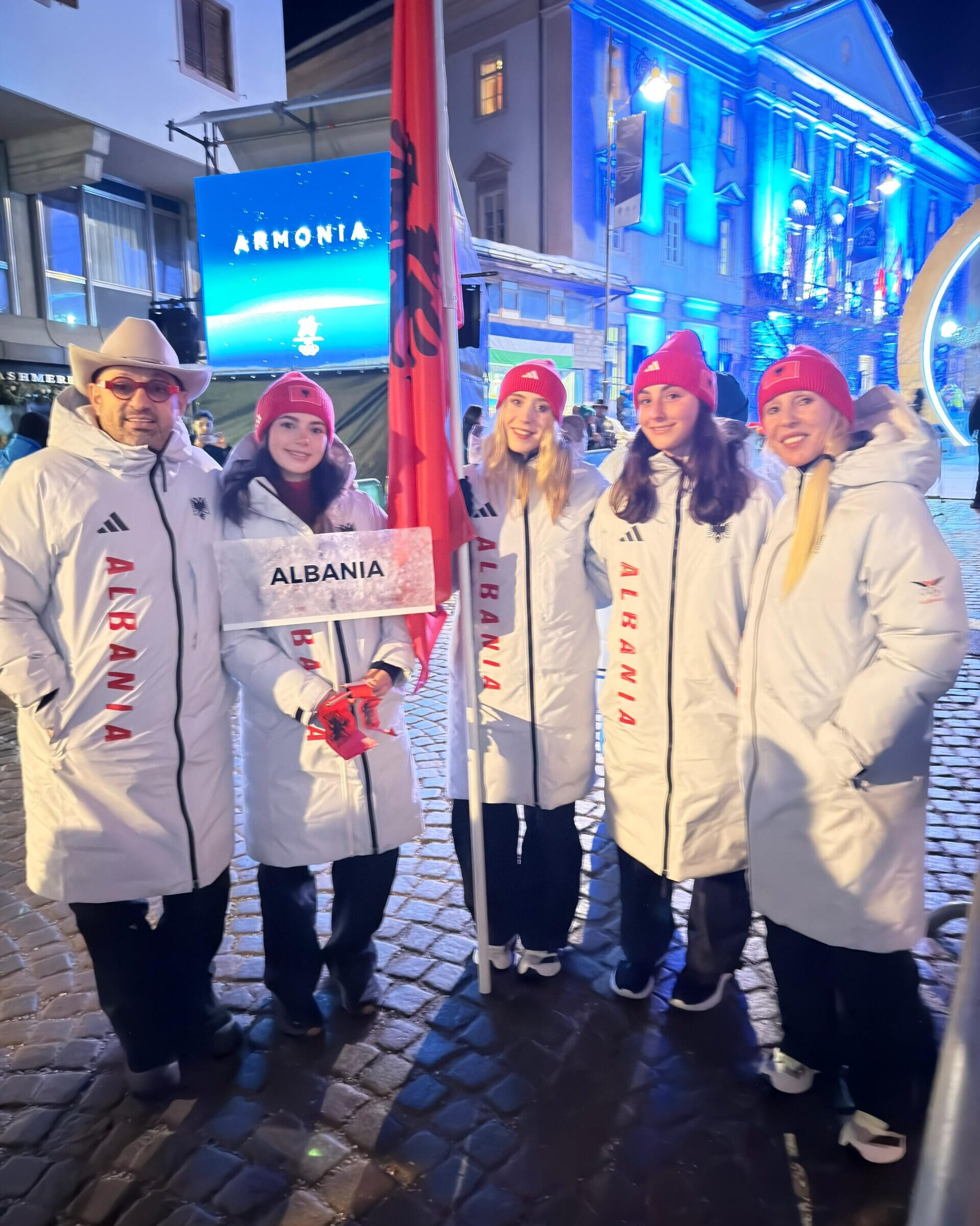 Milano – Cortina 2026, credit: Elvis Toci
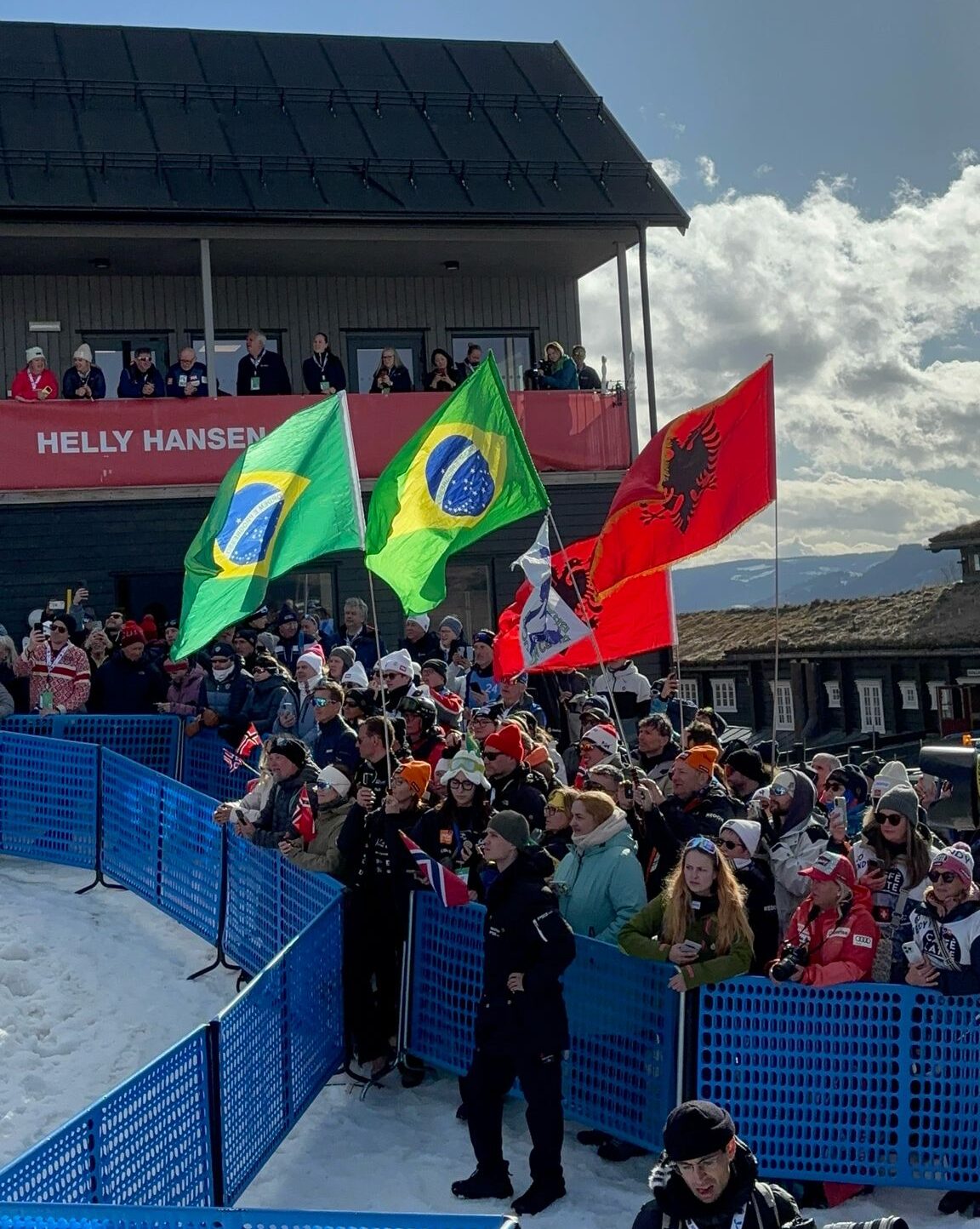 World cup finals 2026, Hafjell, credit: Darka Sefcik Starnova
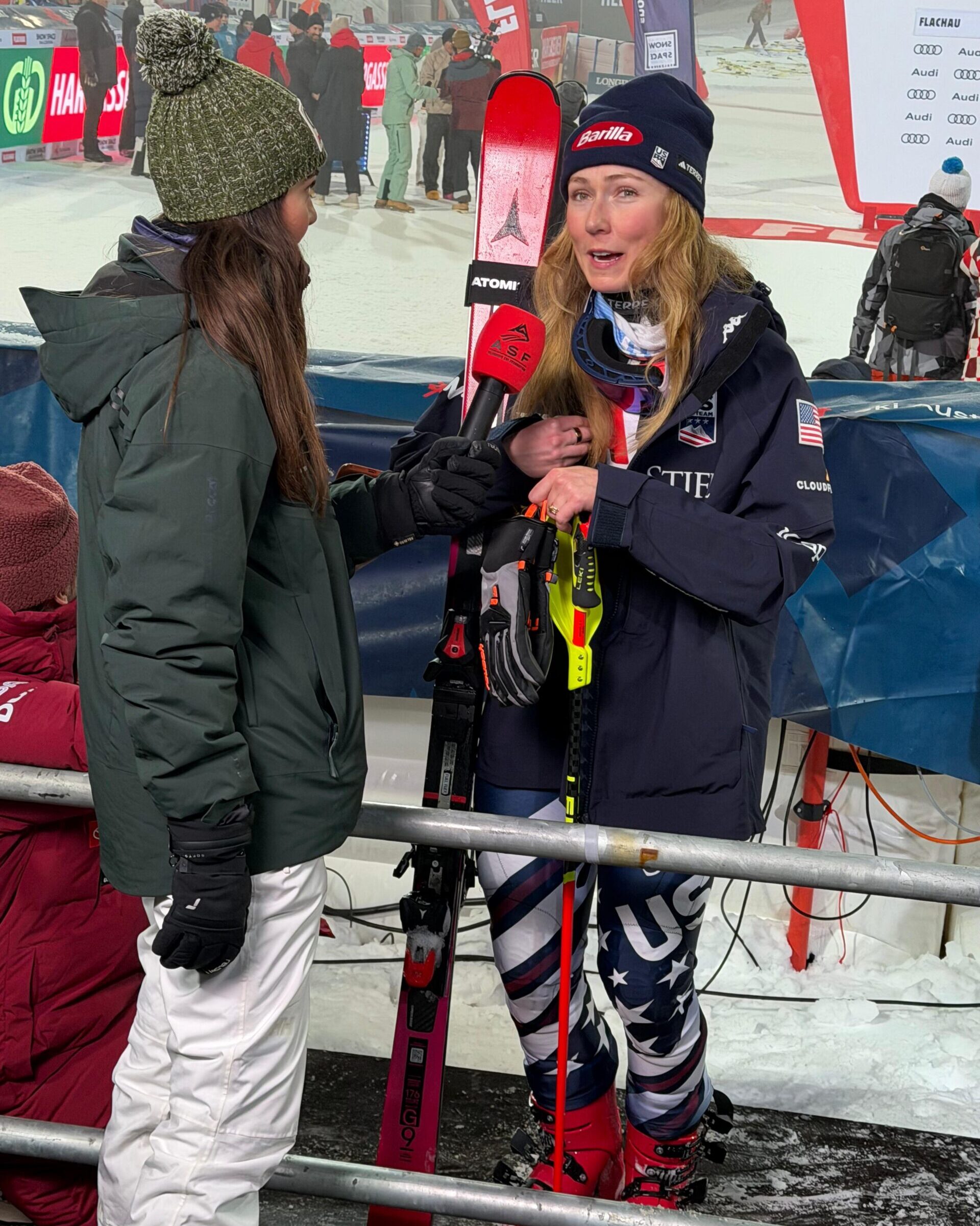 Albanian TV crew in action, credit: Elvis Toci
Still Waiting for the Anthem — But…
So far, Colturi has collected seven World Cup podium finishes over the past two seasons — four seconds and three thirds. Thanks to her results, Albania also secured additional Olympic quota spots, allowing three women (Lara Colturi, Semire Dauti and Lisa Brunga) and one man (Denni Xhepa) to represent the country in alpine skiing at the Milano Cortina 2026 Winter Olympics.
A 10th-place finish in slalom became Albania’s best-ever result at the winter Olympics and a historic milestone for the country.
Last season, Colturi was also named the Rising Ski Star, recognizing the best skier under 21. She shared the stage with Eduard Hallberg of Finland, who received the same award in the men’s category.
In recent years, the World Cup circuit has embraced a growing diversity of flags and fan banners — and athletes from previously outsider nations have brought fresh energy to the slopes and grandstands alike.
More Than Results
“Of course the fans are important. Their support is incredible, and for Albanians it is motivating to see Albanian flags on the slopes and on television. Some Albanians came to races even though they know nothing about skiing — they simply came to support their athlete,” Toci adds.
“At the federation, we currently have two full-time employees, and I myself work as a volunteer,” Toci says while describing the human resources behind the Albanian Ski Federation.
Still, the nearly three-million-strong Balkan nation certainly has plenty to look forward to in the coming seasons. Colturi — who often spends her free time at World Cup venues, figure skating, another sport she actively pursued in the past — is far from finished. And Elvis Toci also plans to continue enjoying the finish area atmosphere and creating warmth and friendliness even in freezing conditions.
When he took over the federation, Albania had no elite skiers, limited funding and no ski resort. Today, it travels the World Cup circuit with one of the sport’s brightest young talents and ambitions that continue to grow.
And who knows what else Albania may still bring to the world of alpine skiing.