
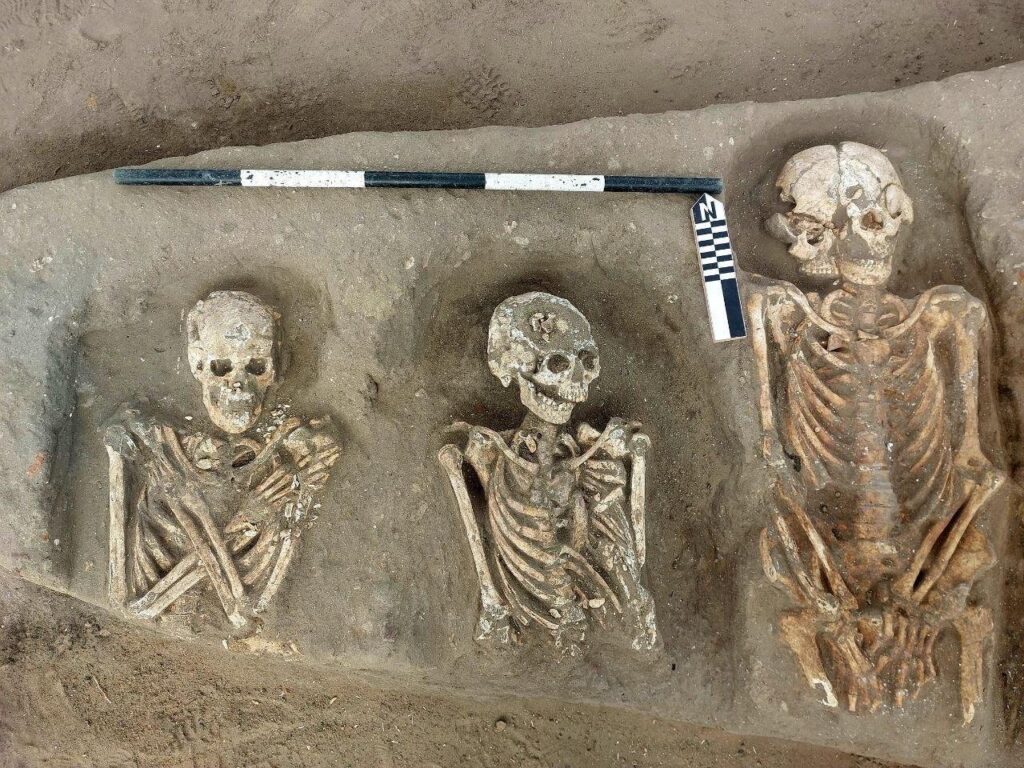
Excavations at Tell Kom Aziza in Beheira Governorate have uncovered part of a Greco-Roman cemetery along with evidence of settlement activity stretching back to the Old Kingdom, offering a long archaeological sequence that spans several major periods of Egyptian history.
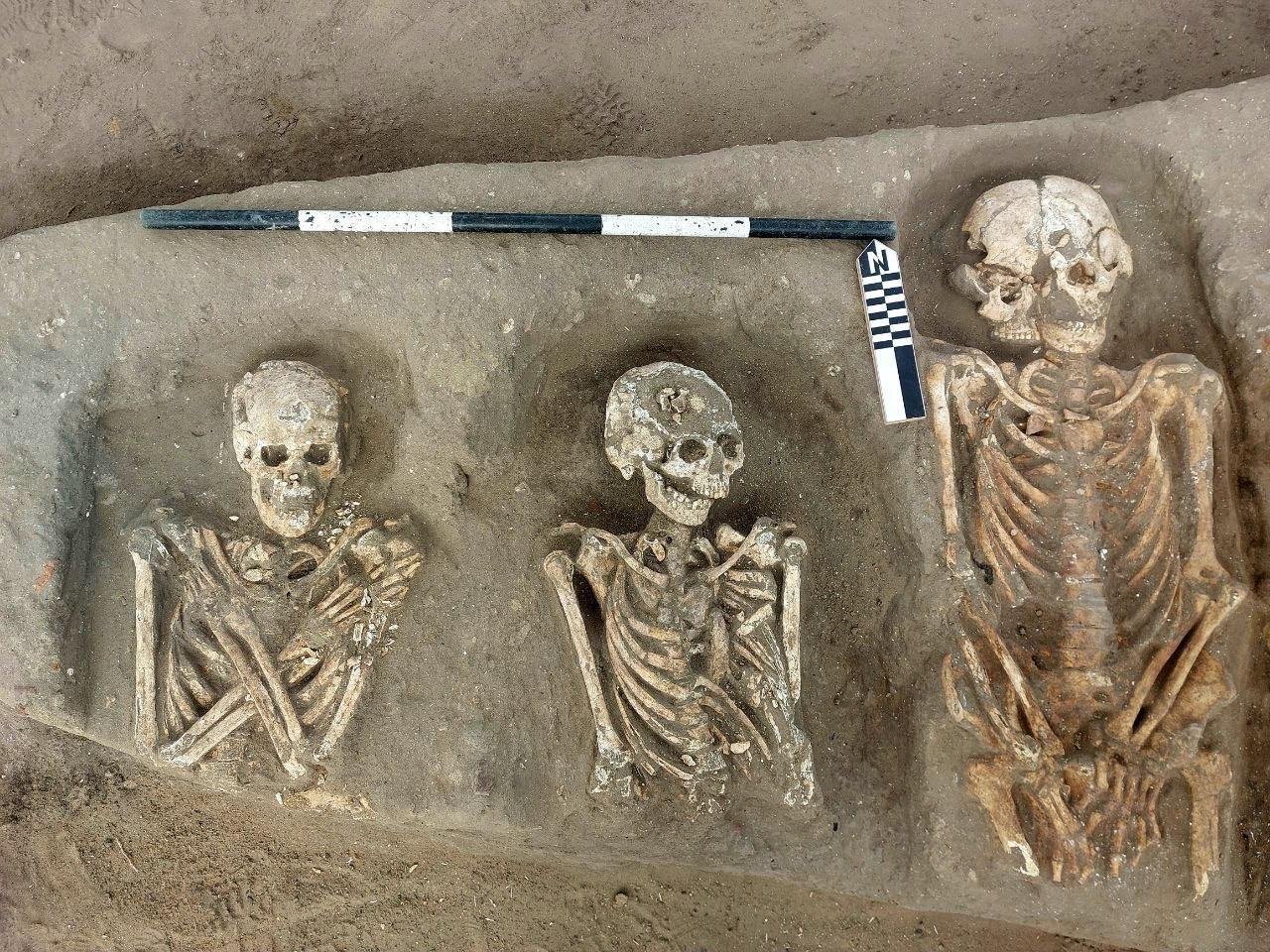 Excavations at the necropolis. Photo courtesy of the Egyptian Ministry of Tourism and Antiquities
The work was carried out by an Egyptian archaeological mission under the Supreme Council of Antiquities. According to the Ministry of Tourism and Antiquities, the cemetery was built above earlier occupation layers, and the stratigraphy indicates repeated use of the site from the Old Kingdom through the New Kingdom and Late Period into the Greco-Roman era.
The excavation revealed a wide range of burial forms. Some graves were simple pits cut into the soil, while others had mudbrick linings that created more structured burial spaces. Archaeologists also recovered burials placed in decorated plaster coffins and in barrel-shaped pottery coffins, a form commonly associated with the Ptolemaic period.
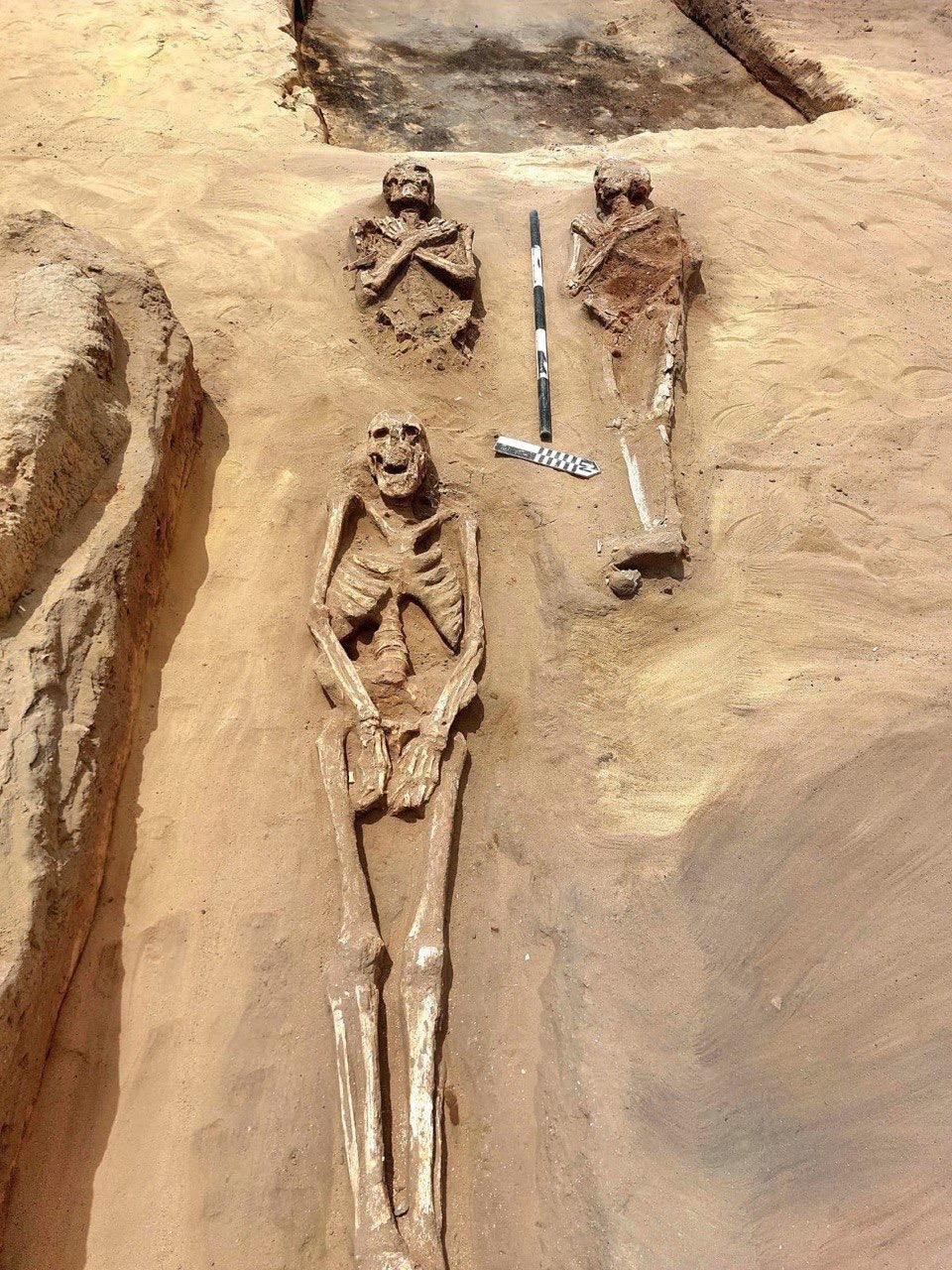 Excavations at the necropolis. Photo courtesy of the Egyptian Ministry of Tourism and Antiquities
Preliminary study of the human remains points to considerable variation in funerary practice. Researchers documented both individual and collective burials. Bodies were oriented either north-south or east-west, and arm positions differed from one burial to another. Some individuals had hands crossed over the pelvis, others had hands near the neck, some were placed in the Osirian pose with arms crossed over the chest, and others had arms extended along the thighs. The team says this pattern reflects multiple traditions of body preparation and burial treatment rather than a single uniform rite.
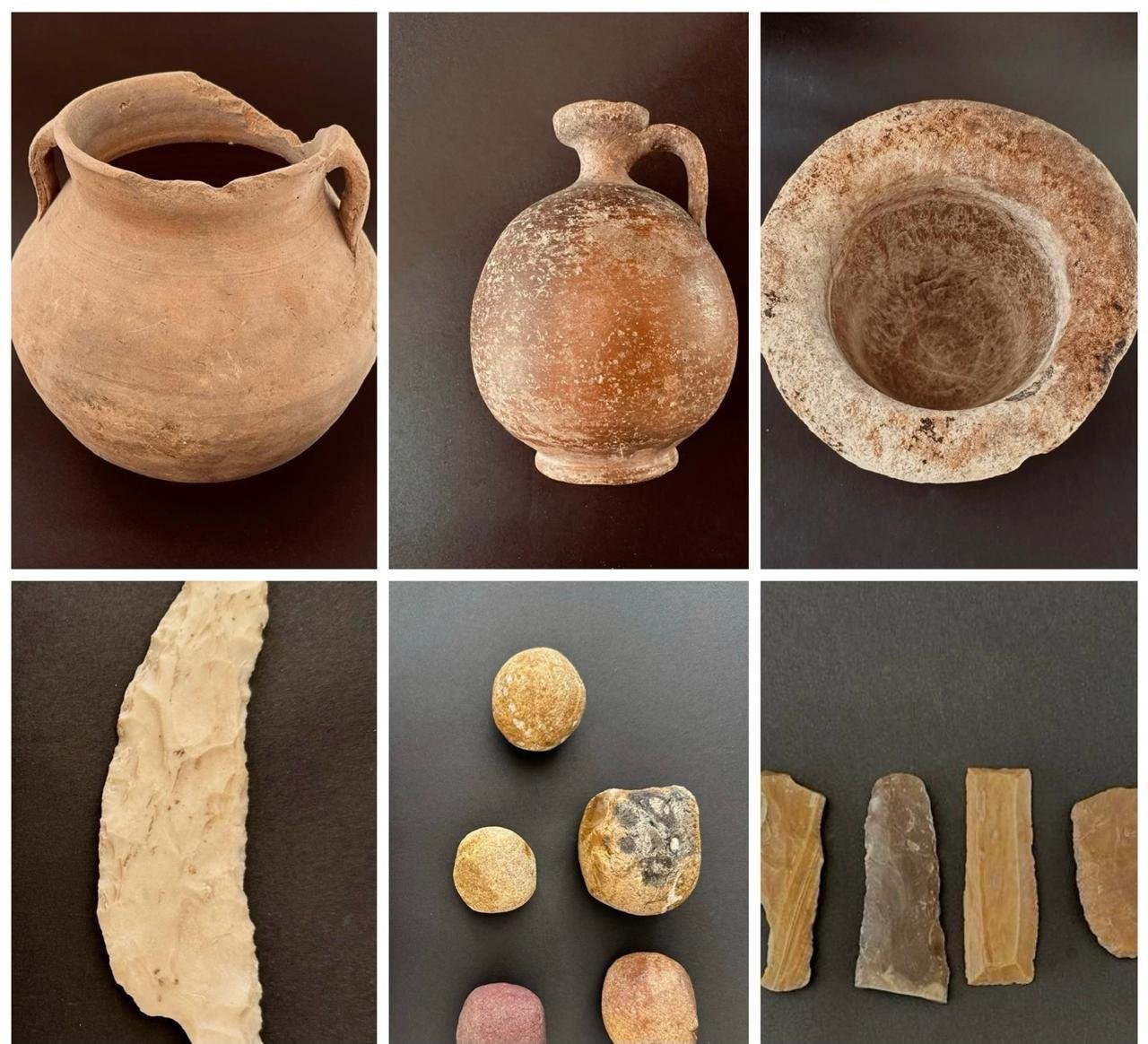 Some of the artifacts uncovered during excavations at Tell Kom Aziza. Photo courtesy of the Egyptian Ministry of Tourism and Antiquities.
A particularly unusual find was the complete burial of wild boars (Sus scrofa) within one of the archaeological layers. Boar burials are extremely rare in ancient Egyptian funerary contexts because pigs and boars carried negative associations in some Egyptian religious traditions, especially through their connection with the god Seth. Excavation leaders say the animals may relate more to economic or domestic activity at the site during a certain phase of occupation than to a formal funerary ritual, although further analysis is still needed.
Beyond the cemetery, the mission uncovered material from everyday life. Finds include ceramic and stone vessels, bread-making molds, stone tools, ovens, storage containers, and large quantities of fish, bird, and mammal remains. The faunal assemblage will help reconstruct diet, food processing, and local economic activity across different periods of occupation.
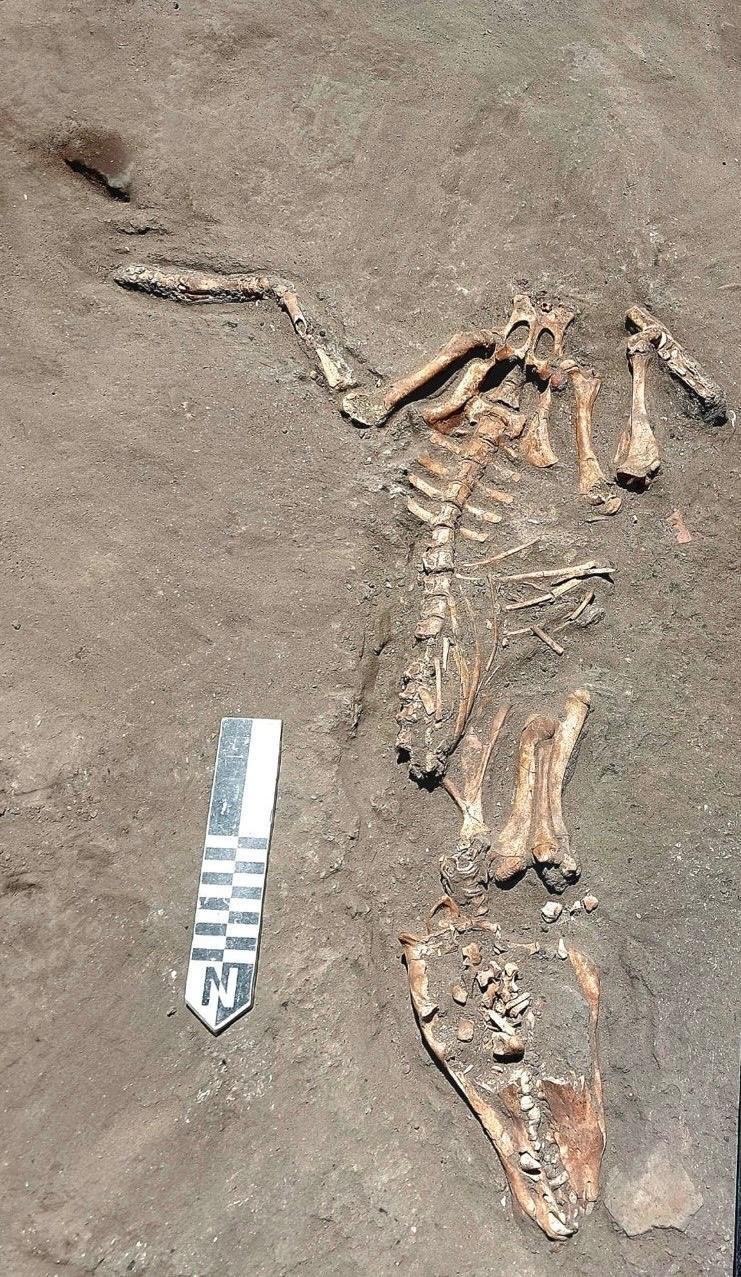 One of the wild boar burials uncovered at Tell Kom Aziza in Egypt. Photo courtesy of the Egyptian Ministry of Tourism and Antiquities
The site’s importance lies in the combination of funerary evidence and settlement evidence within a single stratified sequence. The Greco-Roman cemetery represents only the latest visible phase of a landscape that had already been occupied for centuries. Each layer preserves traces of changing patterns of habitation, production, burial, and interaction with the surrounding delta environment.
Officials from the Ministry of Tourism and Antiquities and the Supreme Council of Antiquities describe Tell Kom Aziza as one of the Nile Delta’s most promising multi-period archaeological sites. Future excavation seasons are expected to focus on clarifying the chronology of the cemetery, the relationship between different burial types, and the function of the boar burials within the broader history of the settlement.
More information: Egyptian Ministry of Tourism and Antiquities