

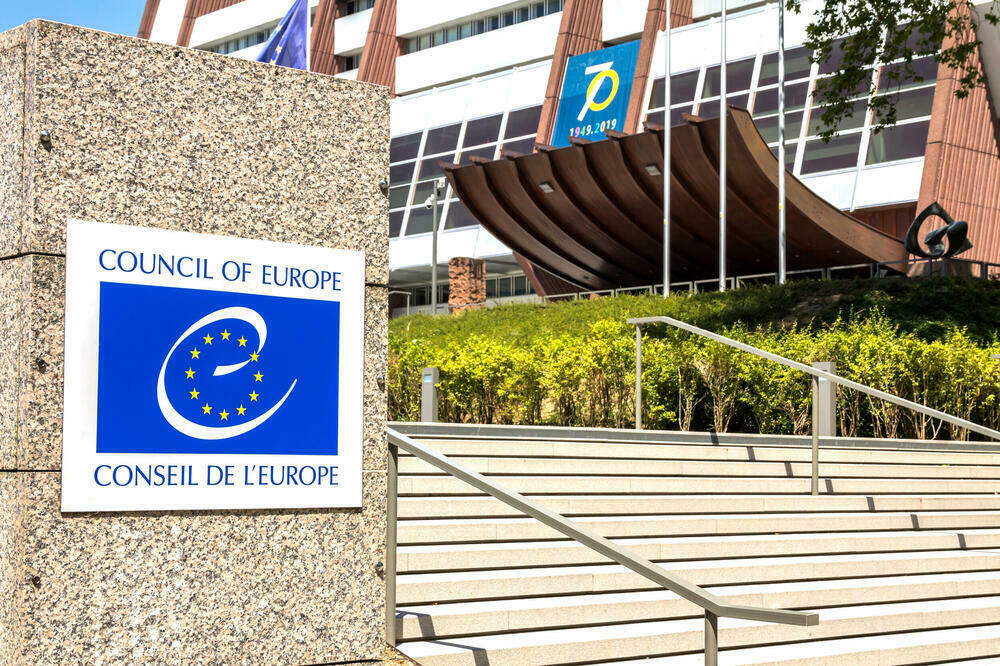
Most of the recommendations from 2022 partially implemented: Council of Europe (illustration), Photo: Shutterstock

06.06.2026. 17:17h
The Council of Europe’s Group of States Against Corruption (GRECO) could decide at its plenary session scheduled for next week in Strasbourg to give Montenegro another year to fulfill its 2022 recommendations, which relate to verifying the integrity of the highest state officials in the executive branch, “Vijesti” has learned.
According to the editorial office, GRECO proposed this in April this year, in the Draft Second Compliance Report, within the Fifth Evaluation Round, which relates to the prevention of corruption and the promotion of integrity in bodies at the highest levels of executive power and in law enforcement bodies.
Sources of “Vijesti” claim that GRECO is dissatisfied with the fact that most of the recommendations have still been partially implemented. According to the same information, this body of the Council of Europe praised progress in several areas related to the integrity of persons in the highest positions, “although in some of them the final results have not yet been achieved.”
“Montenegro has successfully implemented six out of twenty-two recommendations from the Fifth Round of Evaluation report. Of the remaining 16 recommendations, 14 have been partially implemented and two have not been implemented,” it was told to “Vijesti”.
On May 18, “Vijesti” asked the Office of the Deputy Prime Minister for the Political System, Judiciary and Anti-Corruption Moma Koprivica about GRECO’s intention to give Montenegro another year to fulfill the 2022 recommendations, but the response had not arrived by the time the text was concluded.
The editorial office was confirmed by the Council of Europe that the GRECO plenary session will be held in Strasbourg from June 8 to 12, specifying that the agenda includes, among others, the Second Compliance Report for Montenegro, as part of the Fifth Evaluation Round.
“In accordance with GRECO rules and procedures, once the reports are adopted, they will be published when national authorities approve their publication,” an official response from Strasbourg was given to “Vijesti”.
The Montenegrin delegation, according to available information, will be led by Koprivica.
On Thursday, the Government adopted the Proposal for a Platform for the Deputy Prime Minister’s working visit to Strasbourg from June 8 to 12, 2026.
Koprivica’s cabinet has been working on several acts related to GRECO recommendations in recent months, but the implementation of some of them is conditional on the adoption of the Draft Law on the Government.
This was also raised by GRECO in its Draft Report from April, according to the editorial team. They state that this body of the Council of Europe welcomed the adoption of the Draft Law on the Government and the provisions relating to the verification of the integrity of the highest officials. It was assessed that the adoption of this regulation would meet the requirements of a specific recommendation given four years ago, but that there is still no confirmation that the law has been adopted.
“Therefore, GRECO encourages the Montenegrin authorities to complete the remaining steps for its adoption,” it states, according to information from “Vijesti”, in a confidential document from April.
The draft law on the Government has been in parliamentary procedure since February 23, but it has not yet been considered by the relevant committees – the Legislative Committee and the Committee on the Political System, Judiciary and Administration.
“The Montenegrin authorities report that the implementation of some of the recommendations is still conditional on the adoption of the Law on Government, which provides for the adoption of a code of ethics for high-ranking officials in the executive branch, as well as the establishment of a mechanism for its oversight,” the GRECO document states.
In 2022, this body also recommended that the legal framework governing access to information be simplified, in order to ensure effective access to data of state authorities in practice.
According to information from “Vijesti”, GRECO noted progress in the part related to the abolition of the term “business secrets”, the introduction of stricter provisions on the types of information that can be withheld, as well as the obligation to adequately justify decisions to deny access to information.
“However, they state that they cannot ignore reports that question the independence of the Agency for Personal Data Protection and Free Access to Information, as well as its human and financial resources,” said editorial sources.
Download the app and follow the news


FOLLOW US ON

News