
 Iran has made good on its threat, but a lot now depends on Israel’s responsepublished at 21:27 BST
21:27 BST
Sebastian Usher
Global affairs correspondent, reporting from Jerusalem
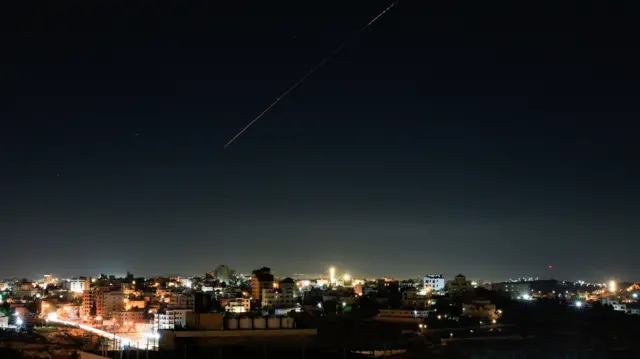 Image source, Reuters
Image caption,
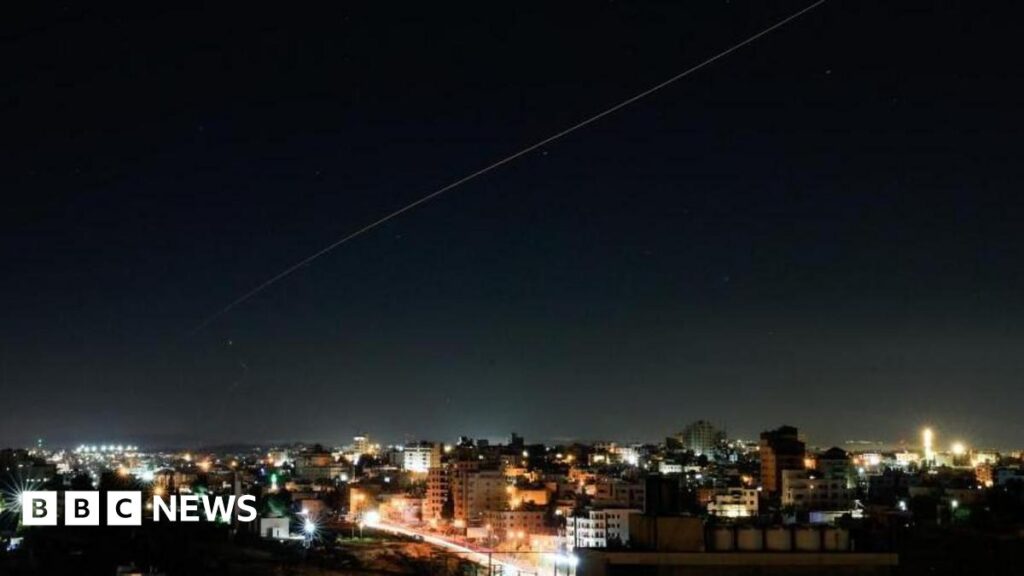
An Israeli defence missile seen in the sky
The tension between Iran, Israel and the US over Israel’s offensive against Hezbollah in Lebanon has been building in intensity in recent days.
When Israeli Prime Minister Benjamin Netanyahu gave his military the green light to strike the southern suburbs of Beirut again last week, Tehran threatened that it would carry out new strikes on northern Israel if it did so.
The possibility of a major new escalation in Lebanon prompted US President Donald Trump to tell Netanyahu in the strongest possible language to hold back, for fear that any such action would derail the already fraying ceasefire between the US and Iran.
Netanyahu agreed, but on condition that Hezbollah would fire no more rockets into northern Israel.
A sketchy new ceasefire was subsequently agreed between the Israeli and Lebanese governments at talks mediated by the US. But once again, that ceasefire didn’t seem to have much effect on the ground.
And it now appears to have collapsed, after Israel carried out strikes on the southern suburbs of the Lebanese capital Beirut in response to continued rocket fire by Hezbollah into Israel.
Just a few hours later, Iran has made good on its threat, firing a barrage of missiles and drones into Israel. Iran’s Revolutionary Guards has promised to continue for seven days, although there are other signs that this new salvo may have been intended as a warning.
Much will now depend on Israel’s response.
There could be a new round of tit for tat attacks between the two countries that could reignite the Iran war.
How President Trump reacts will also be key. For now, he still seems set on trying to defuse the situation.
One thing this latest development has made even clearer is how central a role the conflict in Lebanon now plays in determining what happens in the wider conflict.