
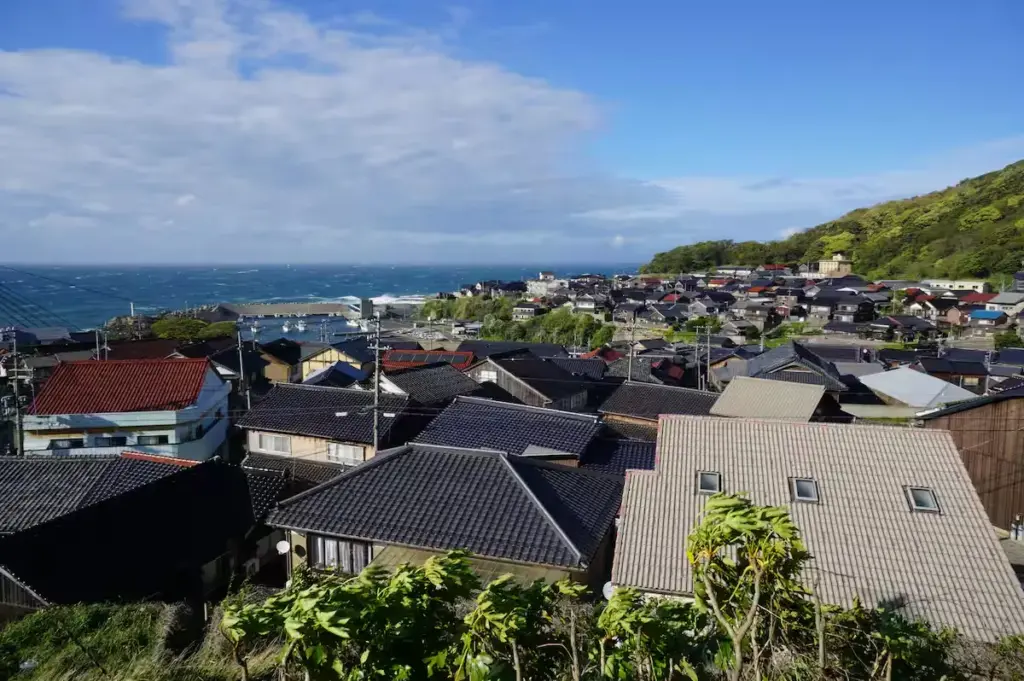
Taiza, a fishing village in Kyoto Prefecture known for landing premium snow crabs, once thrived as a center of Tango chirimen silk production. To counter growing depopulation, the “Taiza Project” launched this spring.
Backed by roughly ¥1.8 billion ($11.2 million), the initiative aims to restore a former textile factory and vacant homes while promoting Japan’s weaving culture and the region’s distinctive character.
Leading the effort are an Israeli entrepreneur and others who specialize in curating bespoke trips to Japan for wealthy international travelers—people who believe this fading fishing village possesses qualities that resonate deeply around the world.
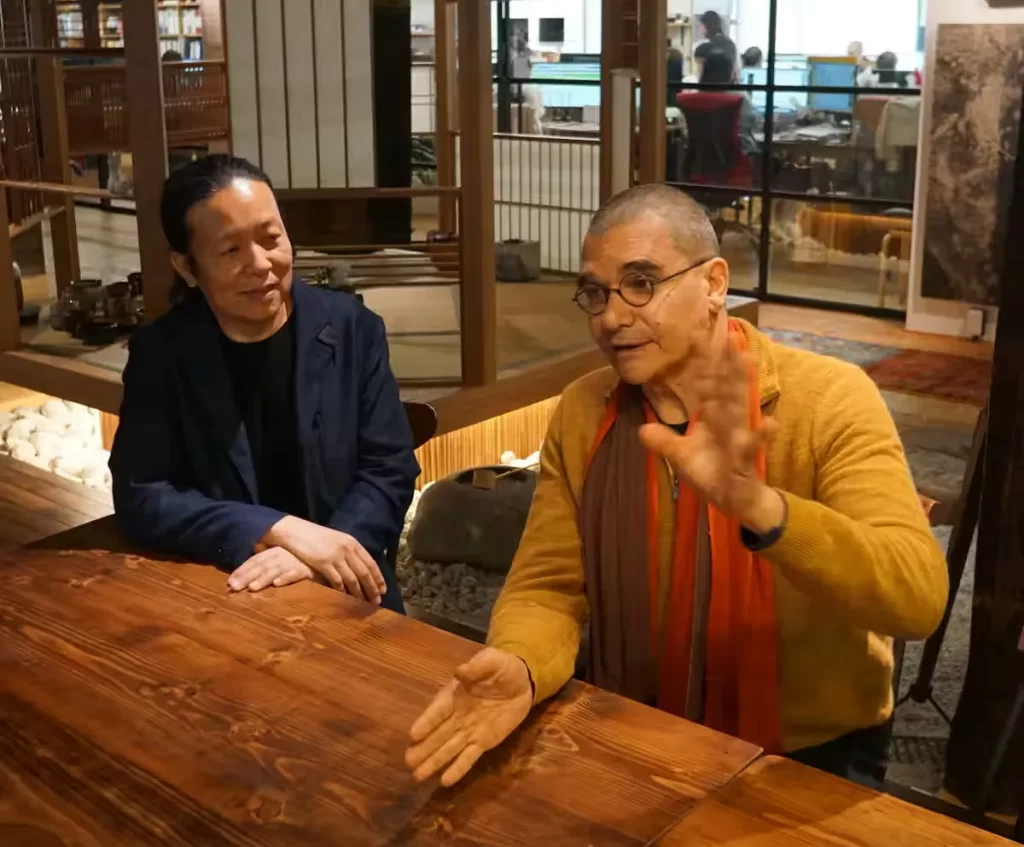 Lugasi Abraham (right) and Kotaro Nishibori discuss their vision for the Taiza project at the offices of Windows to Japan in Kyoto.
From Boom to Decline
The village is defined by tightly packed houses with blackened cedar walls and tiled roofs, built to withstand the salt-laden winds off the Sea of Japan. Until the Showa era, the sound of weaving looms echoed through its streets.
Tango chirimen has a history stretching back more than 300 years, but its golden age came after World War II as demand for formal kimono surged. In addition to established weaving factories, many farming and fishing households across the Tango region operated looms from their homes.
The industry became so lucrative that it gave rise to the term gachaman—a combination of gacha, the clattering sound of a loom, and man, meaning 10,000 yen—reflecting the notion that every clatter brought money into the household.
Today, the Tango region still produces about 70% of Japan’s white kimono fabric. But overall demand has fallen sharply, and output is now only a fraction of what it was at its peak in the 1960s and 1970s. In Taiza, depopulation and an aging population have drained the community’s vitality, and roughly 30% of homes now sit vacant.
Reviving a Fading Village
Lugasi Abraham has run the inbound travel agency Windows to Japan, based in Kyoto, since 2005, catering to affluent visitors from Europe, North America, and Australia. Before the COVID-19 pandemic, he visited Taiza and was struck by its traditional fishing village scenery, dramatic natural surroundings, and rich food culture.
Known for his eye for authentic cultural experiences, Abraham regularly brought clients to the workshop of Tamiya Raden, a company celebrated for its distinctive technique of embedding seashells into textiles. Through those visits, he learned that nearby Taiza had also been a major center of Tango chirimen production.
But with each visit, he saw more abandoned factories and vacant homes. The decline of the weaving culture—and the community it had sustained—became impossible to overlook.
Abraham brought these concerns to Kotaro Nishibori, the fifth-generation head of Kyoto umbrella maker Hiyoshiya and a longtime friend. Nishibori supports traditional artisans and has worked to open overseas markets for Tango textiles. The two began exploring ways to bring Tango weaving to a global audience and founded the company Revive in February last year.

A New Future for Abandoned Buildings
At the heart of the project is the restoration of eight buildings that once formed the factory complex of the former Nakaken Weaving Company, one of Taiza’s largest textile producers. The facilities will be converted into exhibition and event spaces, workshops, and housing for apprentice artisans. Organizers hope to attract an international craft exposition and showcase innovative textile arts. The complex is scheduled to open in spring 2028.
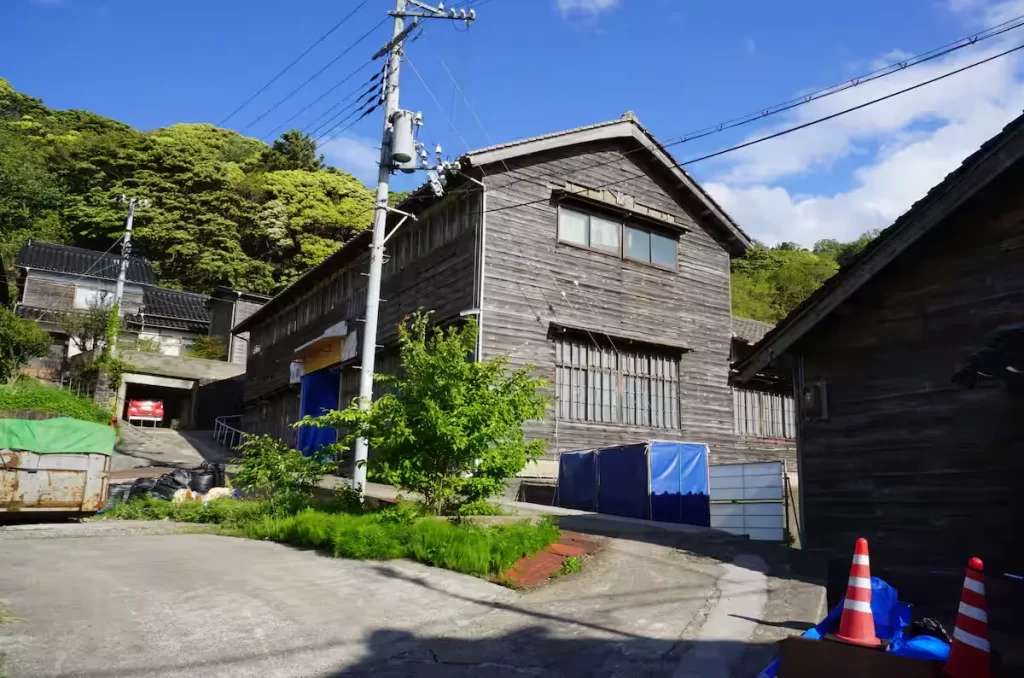 The former Nakaken Weaving factory, set to be transformed into the central facility of the Taiza Project, in Kyotango, Kyoto Prefecture.
 Rendering of a restaurant that retains the atmosphere of the former weaving factory. (Courtesy of Revive)
Eiichi Nakae, the 79-year-old former president of Nakaken, said it feels like a dream to see a factory that had been left to decay transformed into a center for Taiza’s textile revival.
The project also involves purchasing 10 vacant homes in the surrounding area and renovating them into a scattered-style hotel, while preserving as much of the original structure and materials as possible. Former owners will still be able to stay in their homes during holidays such as New Year’s and Obon, helping preserve ties between the village and families with roots in Taiza.
 A planned rooftop bar atop the former weaving factory will offer views of Taiza and the Sea of Japan. (Courtesy of Revive)
Development without Destruction
Abraham describes Tango textiles as works of art worthy of museums around the world. The project is also pursuing plans to bring a textile and craft exposition to Taiza, modeled on an annual event held on the Spanish island of Mallorca, creating a gathering place for artisans from Japan and beyond.
The Tango region is also home to many healthy centenarians and is recognized as one of the world’s “Blue Zones,” regions associated with exceptional longevity.
Total investment in the Taiza Project is expected to reach around ¥1.8 billion, including government subsidies. Nishibori says the central challenge is creating new value without erasing the villagescape and atmosphere that give the community its character. The project’s guiding principle is simple: do not destroy what already exists.
Organizers continue to seek investment from companies and individuals who share that vision, with hopes of expanding the initiative further.
RELATED:
(Read the article in Japanese.)
Author: Kenshiro Kawanishi, The Sankei Shimbun
Continue Reading