
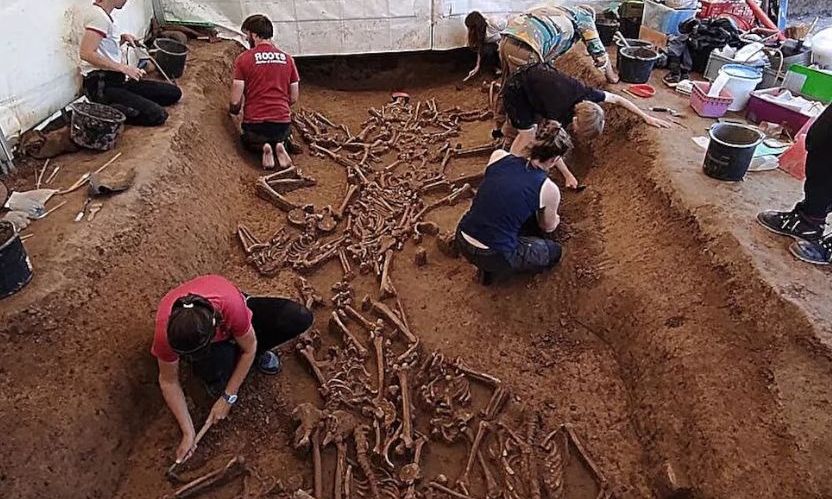
An extraordinary archaeological discovery in Slovakia is changing the way scientists understand the lives and rituals of Europe’s first farming communities. Archaeologists working at the Neolithic settlement of Vráble have unearthed 78 human skeletons, 77 of which were skullless. The unusual find has challenged previous theories that linked such cases to massacres, wars or violent conflicts.
According to researchers, the skeletons were found in a ditch near the entrance to the settlement, which dates back to between 5250 and 4950 BC. The area included more than 300 dwellings and is considered one of the largest Neolithic centers in the region. Of the 78 individuals discovered, only one child had an intact skull. Analyses show that the heads were not severed by force, but were carefully removed after death, through a controlled procedure.
According to biological anthropologist Katharina Fuchs, co-author of the study published in the Proceedings of the Prehistoric Society, the findings clearly indicate that the bodies were deliberately treated according to ritual practices of the time. Experts believe that these customs are related to the traditions of the so-called Linear Pottery Culture, which dominated Central Europe during the early agricultural period.
Although the bodies were placed haphazardly within the ditch, analyses revealed no evidence of massacre or violent conflict. Marks found on the neck vertebrae indicate that the skulls were carefully removed rather than through brutal cutting. Archaeologists believe that such rituals may have played an important role in the social and spiritual relationships of the community, strengthening the bonds between its members.
So far, researchers have not been able to find the place where the skulls were preserved or deposited. However, similar practices have been documented in other European Neolithic communities, where certain body parts were kept separately for ritual purposes. The research program continues with DNA and isotope analyses, which are expected to reveal more about the origins, diet and family connections of the individuals found. According to experts, this discovery offers a rare opportunity to understand how the first farmers of Europe perceived death, the human body and the role of the individual within the community about 7,000 years ago.
© BalkansWeb