
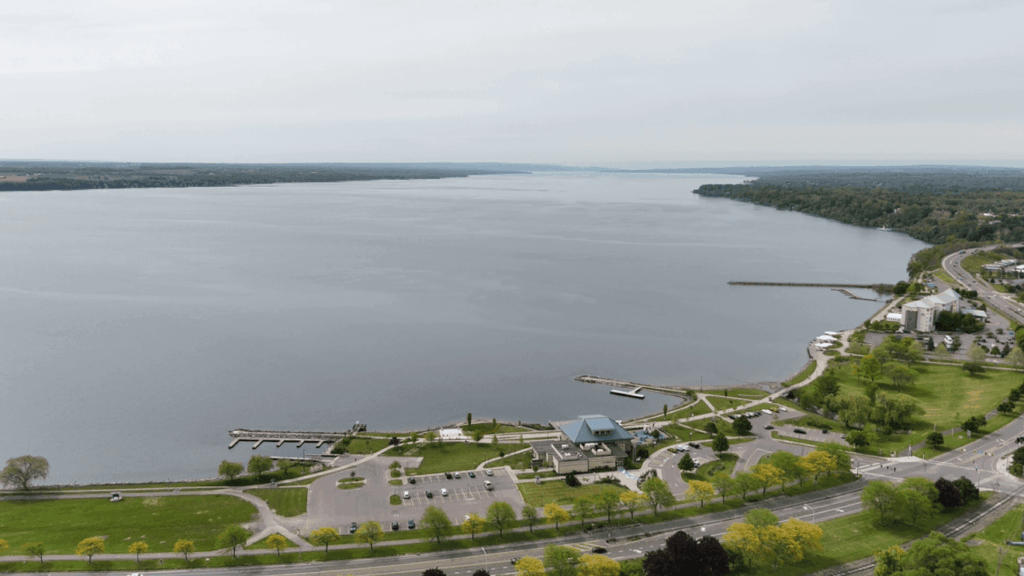
GENEVA, N.Y. — There is a mystery underneath the Finger Lakes largest and deepest lake. It’s one that has been resonating with generations as far back as the Native Americans who used to call Seneca Lake home.
“I’ve never heard them actually, but it’s sort of like a legend around here,” said Loretta Norwalk.
“My mom told me one of her colleagues thinks that there is like a gate to Hell opening and shutting underneath the lake, and that’s what causes the sound, and I think that’s a fun theory,” said Daria Blanchart.
“People would like to know what it is and get to the bottom of it, but it’s one of those mysteries to this point has never been solved,” said Lou Bruno.
All three are speaking about the mysterious sound heard along the shores of Seneca Lake, reportedly for hundreds of years. It’s called the “Seneca Drums,” “Seneca Guns,” or even “Lake Guns.” The sound has been likened to a loud, hollow boom that sounds a lot like a distant cannon or heavy artillery fire. For generations, the sound has gone on without explanation, but scientists are working to one day solve the mystery of the Seneca Drums.
One of those researchers, Dr. Tim Morin, associate professor with the Department of Environmental Resources Engineering at SUNY ESF, says he first heard about the mystery when he was reviewing a 2019 study done by Middlebury College in Vermont.
“A few years ago, a group of researchers with Middlebury College did a survey on what the bottom of Seneca Lake looked like. And while they were doing that, what they found were kind of things they expected, like shipwrecks and deep areas of the lake. But they also found something unexpected was that the bottom of the lake that kind of looks like it has craters like you might find on the surface of the moon. And that was really unexpected,” said Dr. Morin.
“When we looked into those, what we found is that no one really knows what they’re doing at Seneca Lake, but in similar systems out in the ocean where they found things like this has been caused by geologic bursts. Gases welling to the surface and popping the surface. And so we were wondering if it was doing something similar here.”
“There’s this long standing myth of the Seneca drums or Seneca guns that is really famous in upstate New York. And so some of the research team kind of put it together and said, well, wait a second, what if these things are related to what if the craters are caused by bursts of gases? And what if that is maybe also the explanation for the Seneca drums?” asked Dr. Morin.
With researchers from Cornell, SUNY ESF and the New York State Department of Environmental Conservation, Dr. Morin and a team of scientists set out to the lake to try and determine what was causing the booming-sounds. While many theories exist, the chief of which was the geological formation of gasses and fluids bursting out from the lake’s bottom. Using specialized equipment, Dr. Morin and his team sent down water gathering tools which took samples deep below the surface of Seneca Lake. That water was then tested for the presence of gasses like methane and chloride, which could be an indicator of brackish groundwater that’s welling up under the lake.

The team of researchers from Cornell, SUNY ESF and the New York State Department of Environmental Conservation used specialized equipment to gather deep water samples from Seneca Lake. (PHOTO BY ERIN HASSET)
Unfortunately, the team was unable to find conclusive evidence of what is causing the booming sounds on the lake.
“Unfortunately, what we found is that when we monitor the actual pockmarks, those craters at the bottom of the lake, we don’t consistently see elevated levels of methane or chloride. So the mystery’s kind of continuing here. But what I will say is we have several reasons to think that this could still be happening, but we just haven’t looked at it in the right way yet,” said Dr. Morin.
“Maybe it only comes out when you actually get a popping event, and so you have to be really lucky and be there watching it pop. Maybe only some of the pockmarks leak, and we had to sample only a subsection. There’s about 120 of them, and we sampled 14. So maybe we happen to miss the ones where it’s still happens to have a preferential pathway for these things to come out. Maybe they only leak sometimes. So there’s lots of reasons that the theory that we started with could still be true, but that we didn’t find evidence of it yet. So it’s one of those situations where we think there’s still more to dig into here. And we do hope to go back and study it some more in the future,” said Dr. Morin.
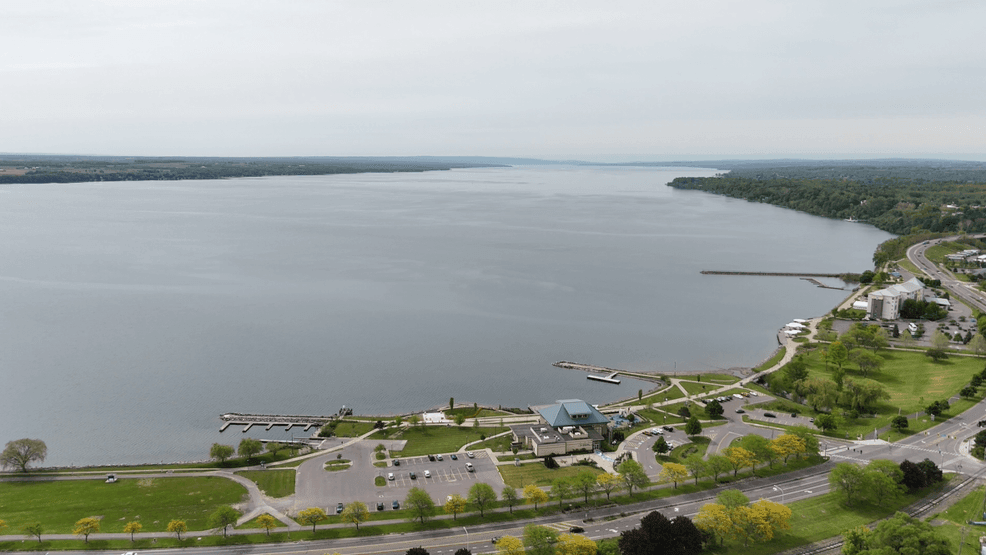
While conducting research into the Seneca Drums on Seneca Lake, none of the researchers were able to hear any of the booming sounds described as “distant artillery,” “gun shots,” or loud “drums.” (PHOTO BY CNY CENTRAL)
“We think that there is more evidence needed to say something conclusively. So we find that there’s no across the board effect. But that’s not to say we didn’t get little tantalizing bits where it’s a little bit elevated, and it just wasn’t consistent enough for us as scientists to come out and say, like, this is definitively what’s going on here,” said Dr. Morin.
Dr. Morin believes the team is on the right track when it comes to investigating the pock-marks on the lake’s bottom more closely. He says if they’re able, researchers would like to head back out to the lake and focus on using different technology.
“We think the pockmarks are 100% leading to these elevated levels. So in the future, you know, we want to test some of these alternate theories about how this could both be something that we missed here and still maybe be true. So we want to look at it from different angles, put out continuous monitoring things that watch it for a long time, put out cameras that can see methane and just point them out in the right direction and watch it. And hopefully we’ll get lucky in one of these times and catch it as one bursts. And that would be really exciting for everyone,” said Dr. Morin.
BOTTOM LINE: DO THE DRUMS EXIST?
Dr. Morin and his team did a lot of research prior to scientifically testing the waters of the lake. He says between the historical accounts and stories handed down through the ages, there is reason to believe they do in fact exist.
“There’s so much historic accounting of it from back with the Native Americans documenting it, which is that’s where the original term, the Seneca drums comes from. And then James Fenimore Cooper, author of “Last of the Mohicans,” has a short story entitled “The Lake Gun.” So, ancient peoples in America have heard the Seneca drums for a very long time. There’s a lot of historic accounting for it. So I think there’s good reason to think, yes, it’s a real thing.”
“That’s also part of why people have linked it to shale gas is maybe as we’re hydro fracking in the area, there’s less pressure under the ground from that hydro fracking. So I would say that the folklore and accounting for it in modern day does inform the scientific questions because it’s sort of an anecdotal line of evidence about what maybe is driving this,” said Dr. Morin.
“Upstate New York has a lot of interesting geology. If this were an upwelling of geologic fluid into the lake, it would be one amongst many in the area. So there’s the Tully mud boils, which are similarly caused. And that’s not very far from Seneca Lake. So, from a practical point of view, I think what it would let us understand about Seneca Lake is a little bit more about the inflows and outflows to the lake.”
“In the broader context, I think this is something that’s really captured the public imagination in upstate New York and being able to have a definitive answer about what are these Seneca drums? Do we really know what they are? I think that would just be a big cultural enrichment for the area. So, I think in both respects we’re really hoping to bring something new to that,” said Dr. Morin.
The researcher’s final paper is currently going through approval processes prior to publishing. Dr. Morin says they have identified a journal where the findings will be published as soon as the approval process has been completed.