
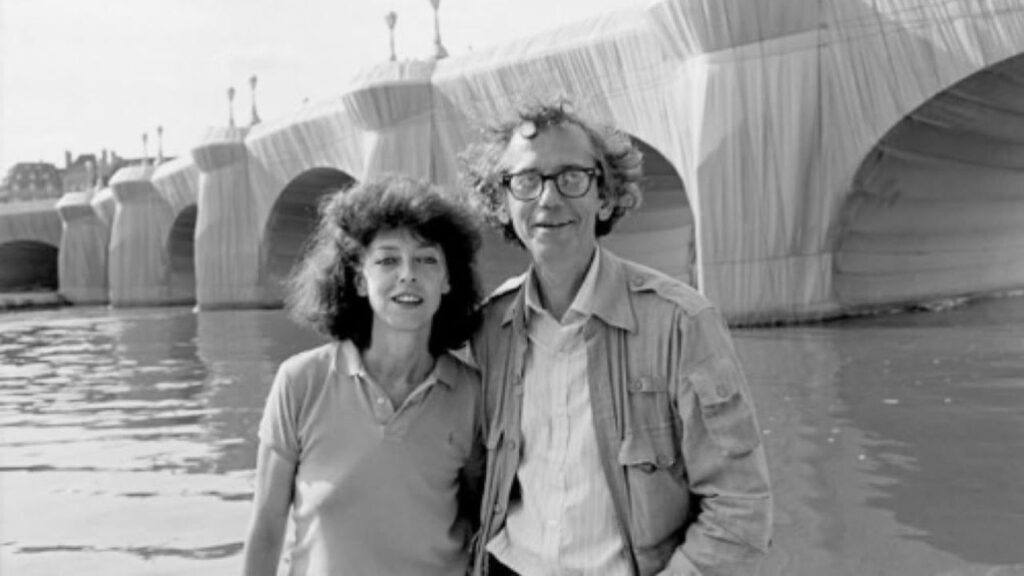
More than four decades after Christo and Jeanne-Claude turned Pont Neuf, Paris’s oldest bridge, into a monumental work of art, the French capital is once again celebrating the legacy of the creative duo that left an indelible mark on the city.
Born on the same day, 13 June 1935 – Christo Yavachev in Gabrovo, Bulgaria, and Jeanne-Claude Denat de Guillebon in Casablanca, Morocco – the two met in Paris in 1958 and forged one of the most remarkable creative partnerships in contemporary art. Over the next six decades, they challenged conventional notions of space and scale, creating some of the most memorable works of their time, from Wrapped Reichstag in Berlin to L’Arc de Triomphe, Wrapped in Paris, and transforming ephemeral installations into enduring cultural events.
Few Bulgarians remained untouched by the images of the hundreds of thousands of visitors who flocked to The Floating Piers on Italy’s Lake Iseo in 2016 – the last project Christo saw realised during his lifetime. A similar sense of pride accompanied L’Arc de Triomphe, Wrapped in the autumn of 2021, when the installation was realised by the Christo and Jeanne-Claude Foundation and Christo’s nephew, Vladimir Yavachev, a year after the artist’s death and twelve years after the passing of his creative and life partner, Jeanne-Claude.
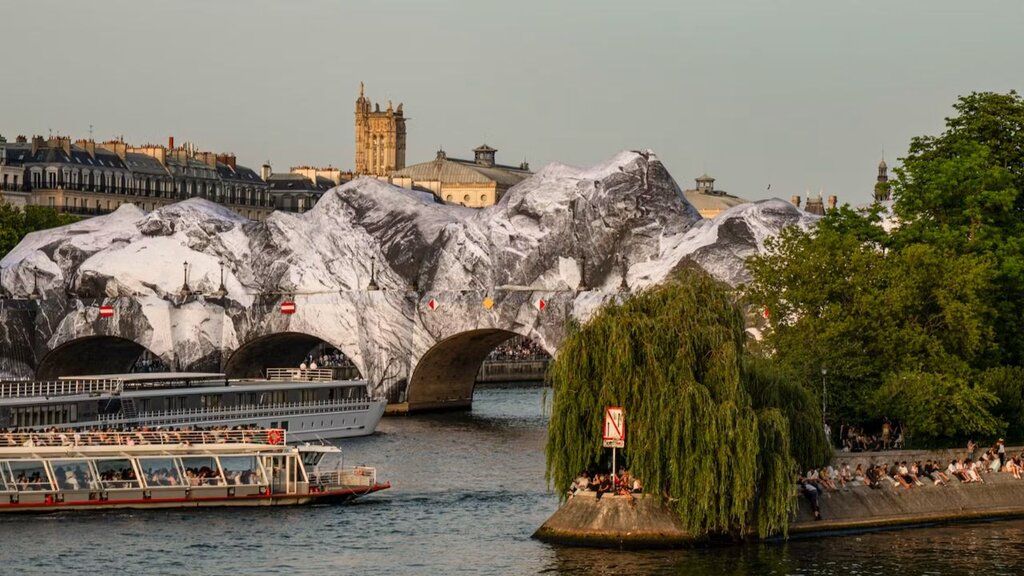
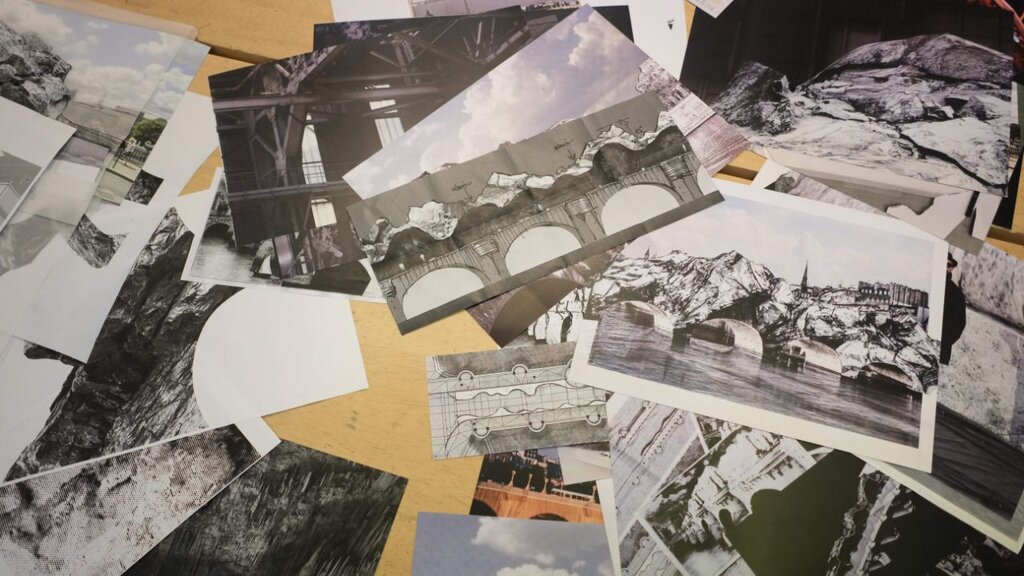
Today, Paris is revisiting one of their most ambitious undertakings – The Pont Neuf Wrapped, realised in 1985 after nearly a decade of planning and negotiations. More than 40 years later, the bridge spanning the Seine has once again become the focus of artistic attention. In June 2026, French visual artist JR transformed the site with The Pont Neuf Cave, conceived as a tribute to Christo and Jeanne-Claude.
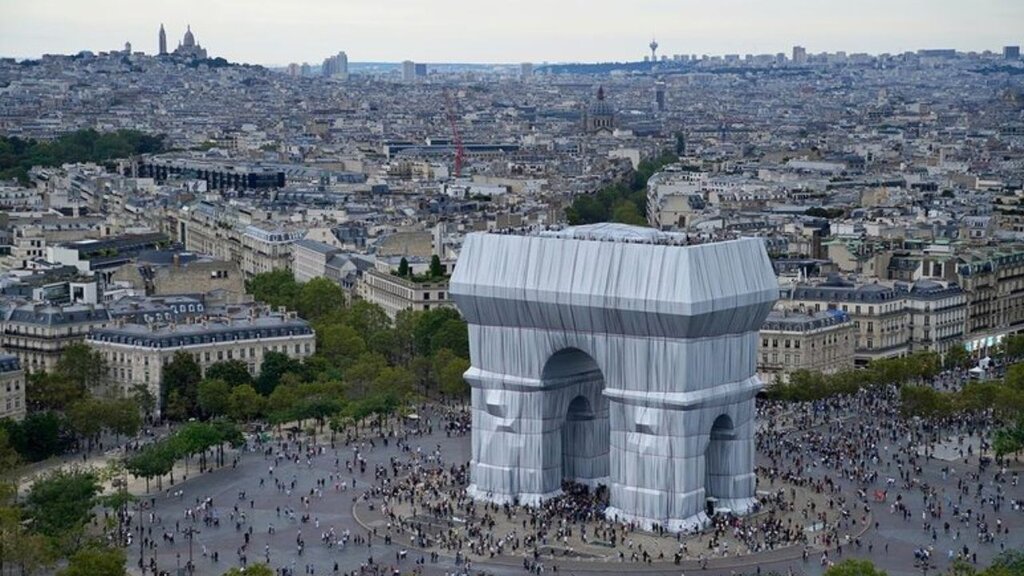
PHOTO Christo and Jeanne Claude Foundation
The idea of marking the anniversary of The Pont Neuf Wrapped came from Christo’s nephew, Vladimir Yavachev, and the Christo and Jeanne-Claude Foundation, Daniel Nenchev, head of Strategic Development at Bulgarian National Radio, told Radio Bulgaria.
The seeds of the project were sown at Art Basel in Switzerland in 2013, when Vladimir Yavachev met French photographer and street artist Jean-René, better known as JR and often referred to as “the French Banksy”.
For now, however, the project has encountered serious difficulties. Conceived as a giant cave made up of printed fabric panels stretching some 120 metres and rising to more than 17 metres at certain points, The Pont Neuf Cave relies largely on air pressure to fill the vast space above the bridge. But the installation has fallen victim to Paris’s notoriously unpredictable weather. A powerful storm tore part of the structure, forcing organisers to postpone the official opening scheduled for 6 June.
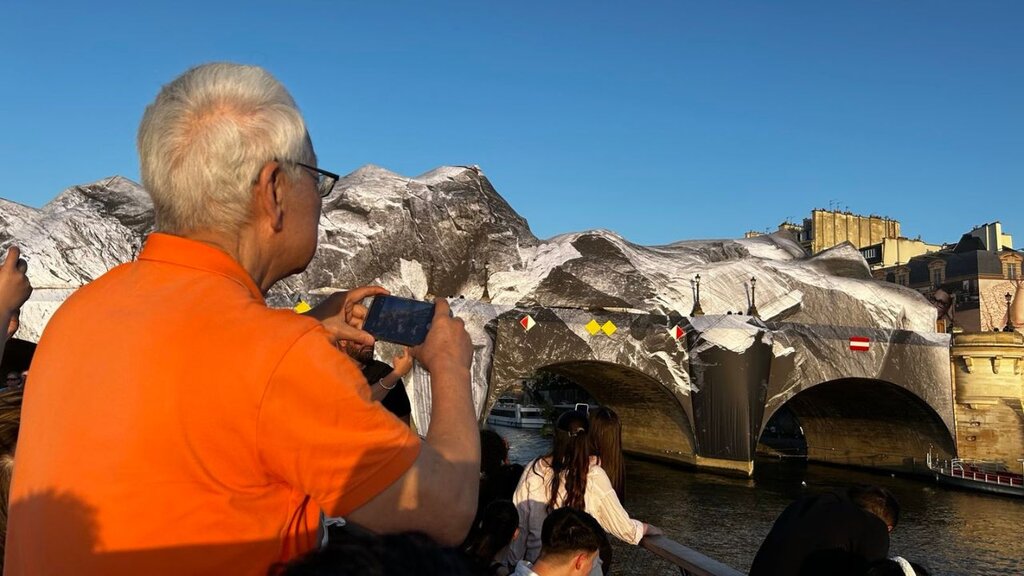
JR’s team, which includes Bulgarians who worked on L’Arc de Triomphe, Wrapped, is now trying to restore the original vision of The Pont Neuf Cave, Nenchev says. Yet with Parisian weather remaining unpredictable, the delayed opening may ultimately extend the installation’s run beyond its originally planned closing date of 28 June.
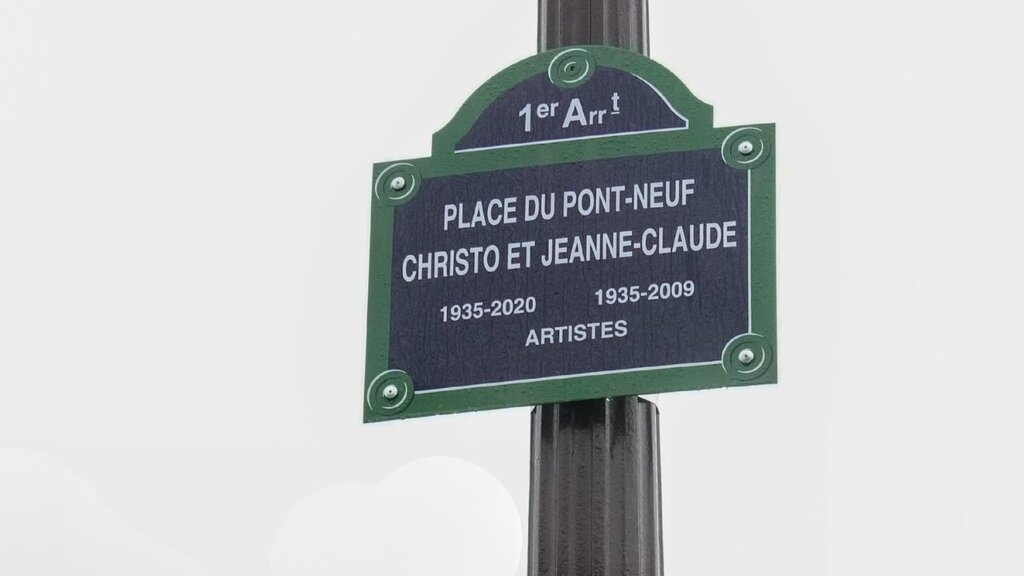
Despite the whims of the weather, Paris has embraced the transformation of its iconic bridge much as it did more than 40 years ago. The latest expression of that came with the decision by the City Council, at the initiative of Mayor Anne Hidalgo, to rename the square in the middle of Pont Neuf Place du Pont Neuf – Christo et Jeanne-Claude.
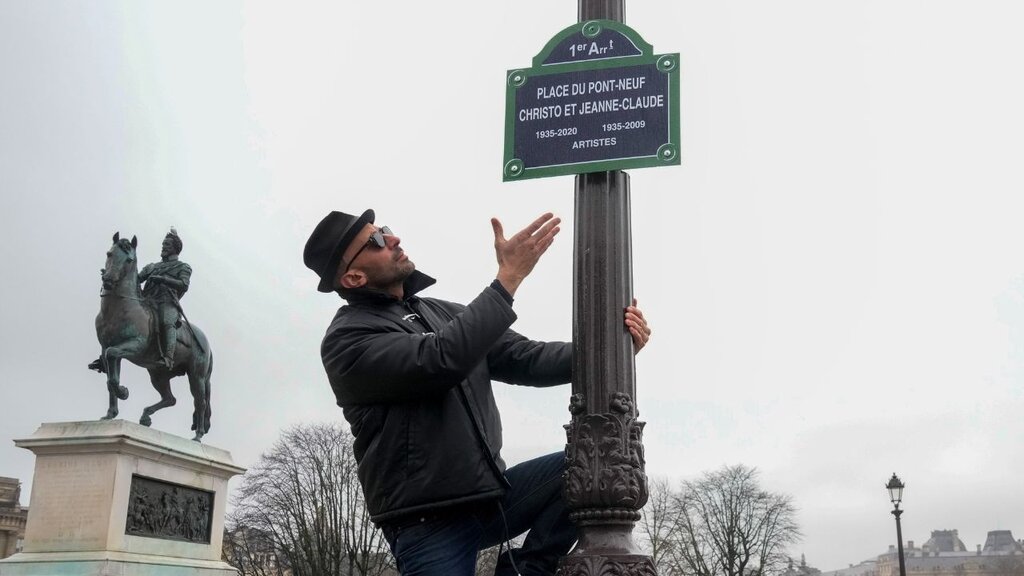
French artist JR poses beside the Place du Pont Neuf – Christo et Jeanne-Claude sign in Paris.
PHOTO BTA
“The whole city is living with this idea,” Nenchev says. “You notice it from the moment you arrive. Even at the airport, visitors are handed a free magazine devoted to the initiative, featuring interviews with JR and Vladimir Yavachev, who jokingly refers to himself as ‘the grandfather of the project’.
“To quote him: ‘I’m delighted with the project, but I take no responsibility for it,’ because much of his attention is currently focused on preparing Christo and Jeanne-Claude’s last major project, The Mastaba in Abu Dhabi. It is still under development and requires numerous permits and a huge amount of organisational work.
“But right now, Parisians and all of us who are here are waiting for the opening of The Cave, and that depends entirely on the weather.”
Exactly when that will happen remains to be seen. One thing, however, is certain: the weather will not disrupt the events marking the artistic legacy and the shared birthday of the two artists.
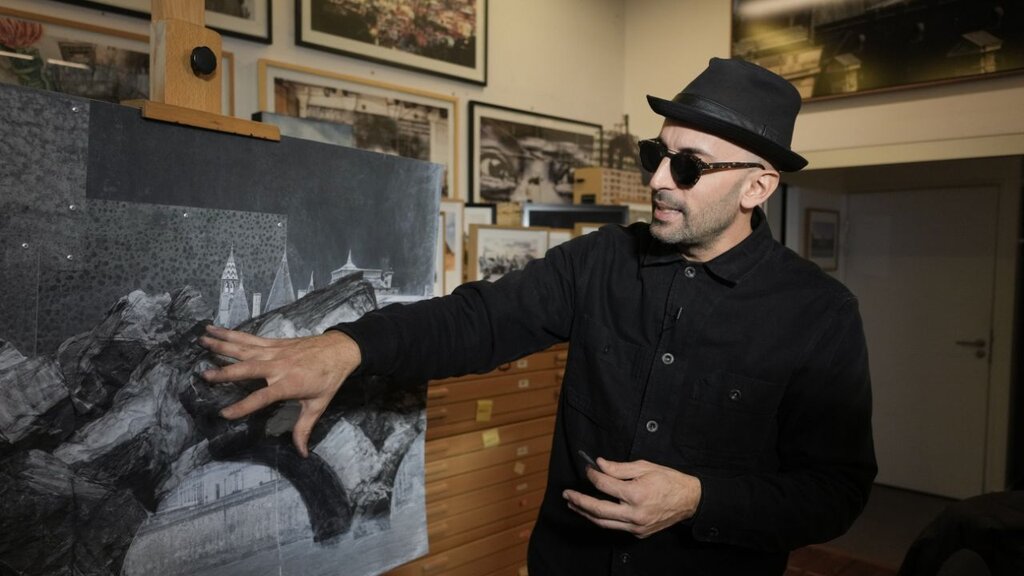
On 13 June – the birthday shared by Christo and Jeanne-Claude – JR will meet visitors at the gallery to discuss the creative process behind The Pont Neuf Cave.
On 18 June, the Bulgarian Cultural Institute in Paris will host the presentation of the French edition of Christo and Jeanne-Claude at 90 in Eternity, the collector’s issue of the Bulgarian News Agency’s LIK magazine. Originally published in 2025, the edition has now been translated into French. Contributors include journalist and producer Evgenia Atanasova, Margarita Dorovska, director of the International Centre for Christo and Jeanne-Claude in Gabrovo, and Daniel Nenchev himself, who will attend the event.
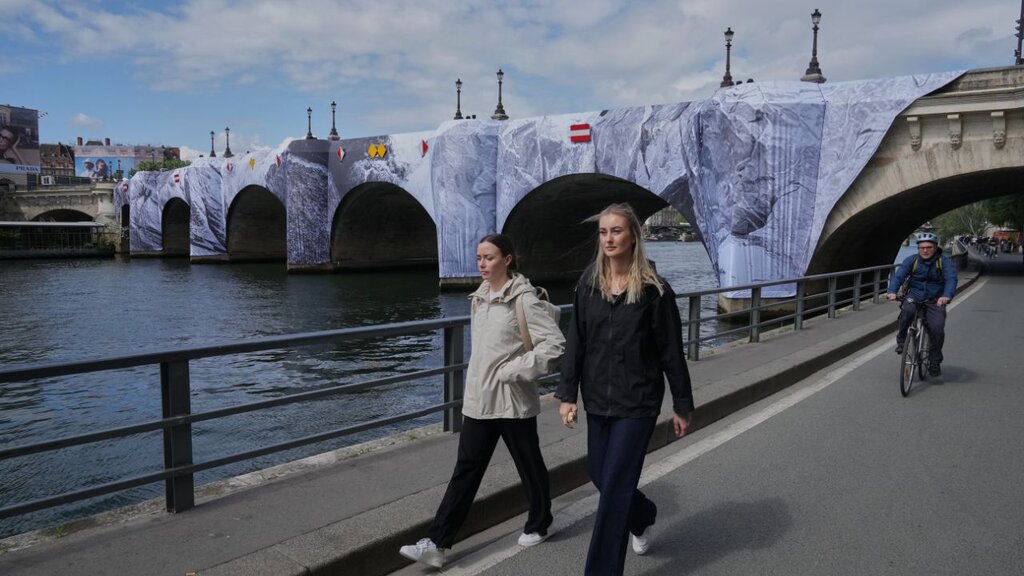
The Pont Neuf Cave holds a special appeal for Nenchev:
“It doesn’t have the lightness, elegance and refinement we associate with the works of Christo and Jeanne-Claude. At first glance, it may seem rougher, although no one has yet seen it in its finished form. Yet it contains a number of fascinating elements beyond what meets the eye. It will be much more than an installation on Paris’s oldest bridge.
“The project will feature a soundscape created by Thomas Bangalter of the legendary duo Daft Punk. There will also be augmented reality, allowing visitors to experience the space in an entirely new way. All of that is still to come.”
Many Parisians have a deep emotional attachment to the art of Christo and Jeanne-Claude, Nenchev says. He recalls Vladimir Yavachev’s observation that there are couples and even entire families whose personal histories are intertwined with The Pont Neuf Wrapped in the autumn of 1985.
“That is the power of great art – art that transcends our notions of scale, proportion and horizons, and even the boundaries of reason,” Nenchev says. “Paris and the French love Christo and Jeanne-Claude. They see them as part of the city’s history and cultural fabric, even though the two left Paris in 1964 and settled in New York, where they remained for the rest of their lives.
Paris has not only named a square after them. The French also ‘wrapped’ their national monument, realising L’Arc de Triomphe, Wrapped after the deaths of the two artists and attracting nearly six million visitors between 18 September and 3 October 2021.”
Born in Gabrovo, Christo Yavachev remains one of the few Bulgarians whose work has left a lasting imprint on world culture. Together with Jeanne-Claude, he created works that changed the way we think about space, freedom and the possibilities of art.
Today, Paris is once again paying tribute to that legacy – not only as part of its own history, but also as part of the story of an artist who began his journey in Bulgaria and became a global name.
Editor: E. Karkalanova