
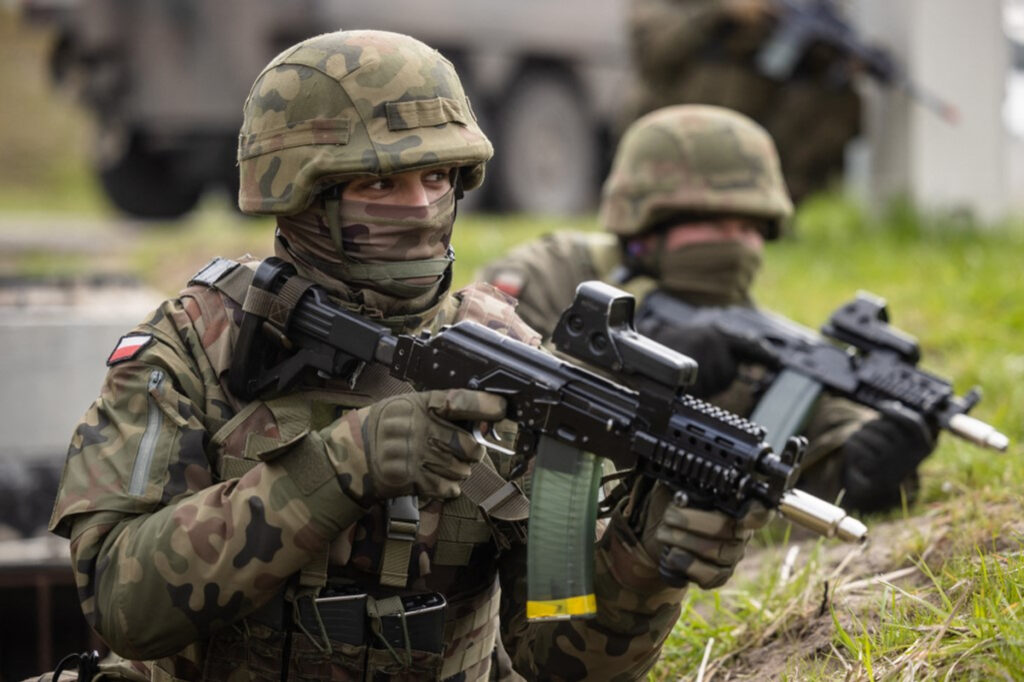
A divide within the European Union over the allocation of billions in military support funds is unfolding, with Warsaw demanding full reimbursement for its past contributions and Berlin advocating redirecting the funds entirely to Ukraine.
According to Polish media RMF24 on Wednesday, the disagreement concerns €6.6 billion ($7.6 billion) from the European Peace Facility (EPF) that was unlocked after Hungary lifted its veto on the EU support package for Ukraine, clearing the way for funding slated to strengthen Ukraine’s air defenses.
Follow our coverage of the war on the @Kyivpost_official.
Poland wants full compensation of about 2 billion zlotys (€450 million) for military aid given to Ukraine.
“This money, this is our money,” said Polish Deputy Minister Cezary Tomczyk.
Set up in 2021, the EPF is an off-budget fund for the EU to finance defense needs. Under the program, partner states receive defense-related support from the EU – for Ukraine, EU states would first send weapons and equipment to cover Kyiv’s needs, then receive reimbursements under the fund.
RMF24 said EU countries have supplied Ukraine with a total of €43 billion ($49 billion), with a significant portion – around 40%, or roughly €13.5 billion ($15.5 billion) – to be reimbursed to member states. However, only €6.6 billion ($7.6 billion) is actually available, meaning that there is not enough money to fully repay all EU members.
EU foreign policy chief Kaja Kallas proposed a proportional return of about 10% of the costs to each member state that helped fund Ukraine, with the remainder allocated to training Ukrainian troops and joint arms purchases.
Other Topics of Interest
Full Statement (Translated): UK, France and Germany After Moscow Talks
The British Embassy in Moscow published a joint statement on Thursday after a rare meeting between UK, French and German envoys at Moscow’s foreign ministry building. Amid Europe’s renewed peace push, the statement backs Zelensky’s recent call for a direct meeting with Vladimir Putin.
Poland rejected this offer, accusing Brussels of “trying to change the rules of the game.”
Countries that were the first to hand over weapons, such as Poland or Slovakia, do not agree to reduced payouts, Tomczyk said, adding that “this is what the countries that later began to provide support, like Germany, want to do.”
Germany wants to return funds to Ukraine
Germany, the largest contributor to the EPF Fund, argued that the unlocked funds should be transferred to Ukraine rather than returned to national budgets.
“The European Peace Fund has been designed as a solidarity mechanism,” said German Defense Ministry Secretary Sebastian Hartmann during the meeting of EU defense ministers in Nicosia.
“Germany will spend €11.5 billion [$13.2 billion] on Ukraine this year,” said Hartmann, explaining that Berlin is ready to give up compensation in favor of Ukraine.
While Poland is mainly supported by Slovakia, Germany, France, and Scandinavian countries support a more balanced distribution of funds. However, Paris insisted that the purchase of weapons should apply exclusively to European equipment.
Currently, the issue has been transferred to technical-level negotiations before being taken up by the EU member state ambassadors.