
In an era defined by rapid technological upheaval, can a fallen corporate giant truly recover?
Minnesota Carlson Professor Alfred Marcus, whose expertise includes strategic management and corporate strategy, explores this idea by examining leading companies, including Intel, Amazon, Dell, Best Buy, Disney, Pepsi, Bayer (Monsanto) and Tesla in his new book ‘Comeback’.
Through his analysis, he identifies common patterns and unique challenges across different industries, offering a comprehensive look at corporate renewal in today’s business landscape.
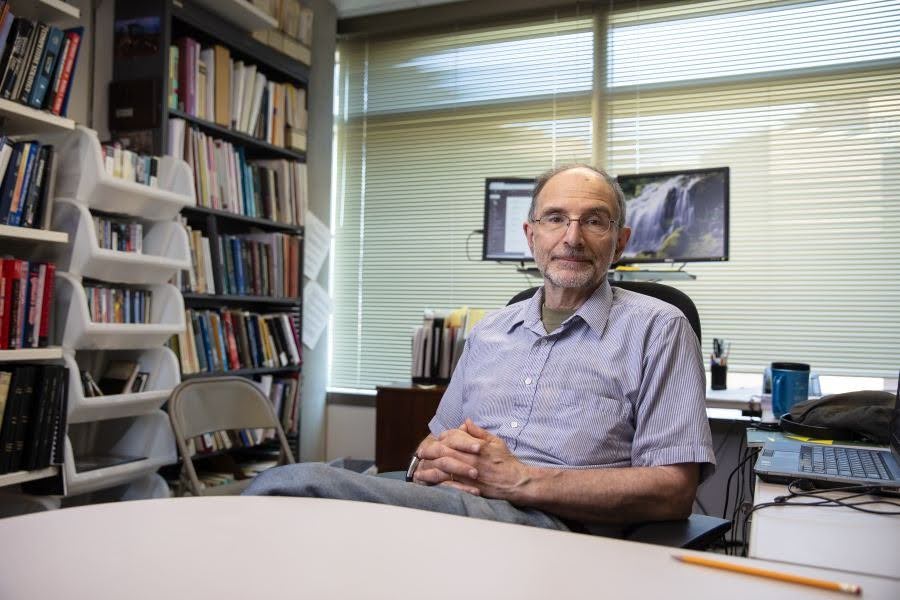
Alfred Marcus, Ph.D.
“In today’s economy, corporate comebacks are no longer side stories; they are the main story of how firms survive repeated waves of disruption. The latest and most powerful of these waves is artificial intelligence. AI is reshaping semiconductors, retail, media, autos, agriculture and finance, and many of the firms I have studied — from Intel and Amazon to Disney, Tesla and Bayer — are being forced to reinvent themselves under this pressure. My research suggests that very few companies make a clean return to their former greatness. Most, at best, claw their way back to a new, more modest equilibrium.
“That process unfolds in an environment of deep financial uncertainty. Leaders are making high‑stakes AI bets before they fully understand the payoffs, while interest rates, debt burdens and volatile capital markets constrain their room to maneuver. Under these conditions, great leadership is less about finding a single brilliant answer and more about managing paradox: exploring bold new AI‑driven opportunities while exploiting legacy businesses that still generate cash; diversifying into new lines of business while keeping a sharp focus on what the firm can still do better than anyone else; advancing into unfamiliar terrain while retreating from activities that no longer make sense.
“Across the eight comeback companies I examined, the common pattern is not a textbook ‘fix’ but a disciplined way of living with these contradictions — hedging bets, sequencing moves and constantly re‑evaluating what ‘greatness’ can realistically mean in an age of AI and instability.”
Alfred Marcus is the Edson Spencer Endowed Chair in Strategy and Technological Leadership in Minnesota Carlson’s Strategic Management & Entrepreneurship Department. He also holds a faculty position in the Technological Leadership Institute at the University’s College of Science and Engineering. His research covers a wide range of topics, including the oil and natural gas industry, sustainability, global economy, the food industry and more.