
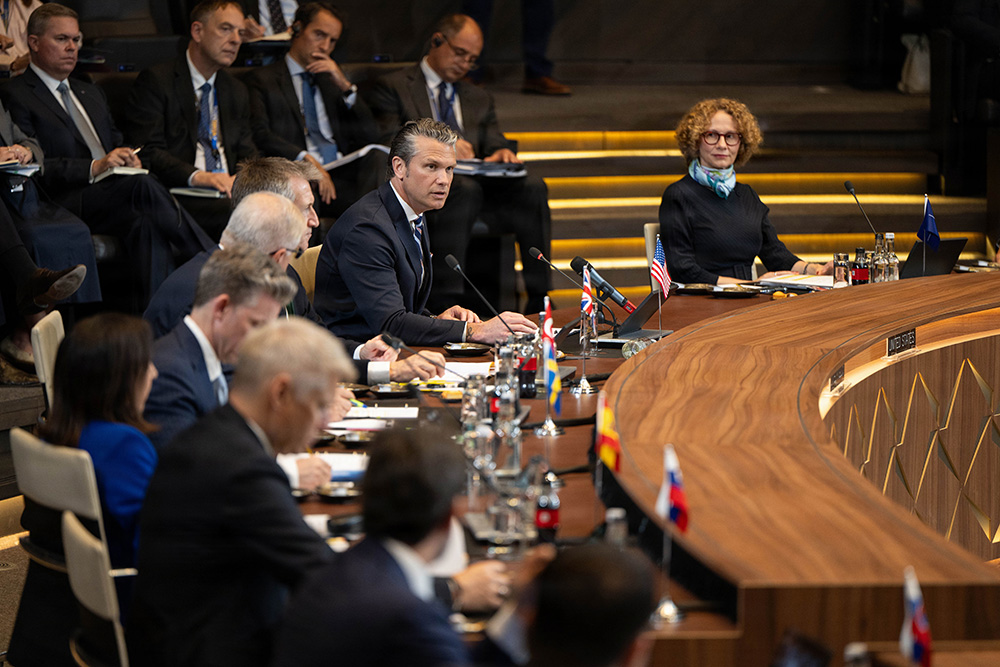
The United States is signaling a major shift in its approach to the North Atlantic Treaty Organization. Defense Secretary Pete Hegseth has launched a review of America’s military posture across Europe. The goal is clear: transform the alliance into what officials call “NATO 3.0,” with European nations taking primary responsibility for their own defense.
This announcement comes during a NATO defense ministers meeting and reflects long-standing frustrations from the Trump administration. For years, American taxpayers have shouldered a disproportionate share of the burden for Europe’s security. Now, Washington is drawing a firmer line.
“We’re doubling down on our effort to make NATO what it always was supposed to be: a balanced alliance with Europe in the lead for its own defense – NATO 3.0,” Hegseth said during his address in Brussels.
The review, which could last up to six months, will examine U.S. force posture, basing, and support for the alliance. It will also assess how European partners are contributing. Officials plan to consult with Congress and allies throughout the process. Hegseth emphasized that the effort aims to ensure NATO moves “fast and irreversibly” toward Europe leading its conventional defense.
A Two-Way Street for Alliance Contributions
Hegseth made it plain that future U.S. contributions will depend on allies meeting their commitments. “Going forward, our annual NATO dues will be contingent on other countries meeting their defense spending targets; where other allies do not spend with urgency, our dues contributions will go down,” he stated. “NATO will be a two-way street. It’s only common sense. America cannot care for or pay more for Europe’s defense than our allies do.”
The administration has pushed for NATO members to reach 5 percent of gross domestic product on defense spending. Some nations are already making progress toward this ambitious target, and Hegseth praised those efforts while noting the United States itself plans significant increases in its own defense budget.
This push is not about abandoning NATO. Far from it. The review explicitly aims to strengthen the alliance by encouraging Europeans to rebuild their defense industrial base and take ownership of continental security. As Hegseth explained, NATO 3.0 represents a post-Cold War focus on real military capabilities ready to deter threats right on the European continent, led by Europeans rather than relying primarily on American forces.
Critics may worry about potential reductions in U.S. presence, but the message from Washington is one of partnership through accountability. Allies who step up will see continued strong cooperation. Those who hesitate risk falling short in this evaluation. “It’s a review that some countries will fail, and others will pass with flying colors,” Hegseth warned.
Why This Matters Now
Europe faces real security challenges, from regional tensions to broader global threats. For too long, many NATO members have underinvested while depending on the United States as the ultimate guarantor of their safety. President Trump and Secretary Hegseth are right to demand change. A stronger, more self-reliant Europe benefits everyone in the alliance, including America, which must also focus on its own global priorities.
The review will consider access, basing, and overflight rights – issues that gained attention during recent operations. It sends a practical signal: alliances work best when responsibilities are shared fairly.
NATO allies are scheduled to meet again in July in Ankara, Turkey. That gathering will offer an early indication of how European capitals plan to respond. Will they accelerate spending and capability building? Or will old patterns of delay continue?
The coming months will test the alliance’s willingness to evolve. For those who value a robust transatlantic partnership, this review represents an opportunity rather than a threat. Europe has the economic strength and talent to lead its own defense. The United States is prepared to support a balanced alliance – but only if partners deliver on their pledges.
This is the moment for European leaders to prove they are serious about collective security. The United States has made its position clear. Now it is time for action.