
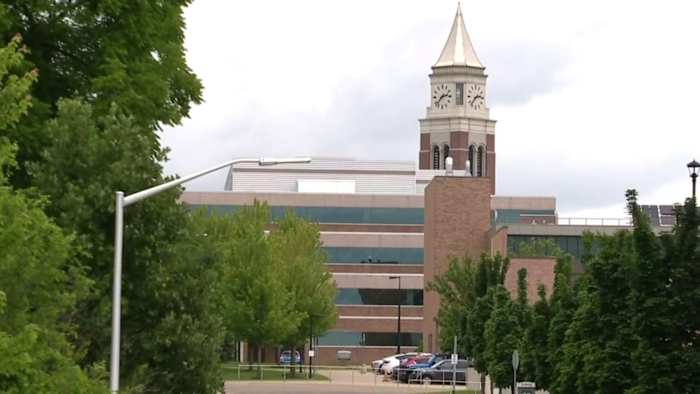
AUBURN HILLS, Mich. – Oakland University is taking a major step toward building a new data center and artificial intelligence institute on campus after its Board of Trustees voted to advance the project into the next phase.
The vote, taken at a board meeting this week, moves the proposal into a formal due diligence period that will examine issues such as finances, environmental impacts, and infrastructure needs.
Immediately after the vote, a recess was called as some in the audience who opposed the project grew loud and upset that they had not been allowed to speak before the decision.
“For the university, it’s going to take us and put us on the tip, on the modern edge of technology today,” said Stephen W. Mackey, Oakland University’s senior vice president for finance and administration.
University leaders say the data center and AI institute would help students become more competitive in research and emerging technologies.
“Every major, every subject, we need AI,” said professor Huirong Fu. “With the establishment of this data center, we’ll enable the students’ training in the classroom.”
The proposed facility would be about 15 acres in size, significantly smaller than so‑called hyperscale data centers, and would use only about 2% of the power those larger operations typically consume, according to the university.
The project is being pursued in partnership with Fairmount Properties.
Initially, the data infrastructure site was proposed for Parking Lot 35.
The latest plan shifts it across the street to Parking Lot 37, increasing the distance from nearby buildings and sensitive areas, including a campus hall, a nature preserve, and a Native American heritage site.
Despite the changes, some faculty and students remain opposed, raising concerns about environmental impacts and respect for Native communities.
“I am here to speak on behalf of myself and the Native community of Southeast Michigan, and what I have to say is shame on you for ignoring Native people’s opposition to this data center,” said professor Dr. Megan Peiser.
“Obviously, we’ve seen with data centers the electric usage,” said student Clover Devore. “They claim it’s 2% of an average mega-size data center, but 2% is still 2%. That’s still affecting our campus, that’s still taking everything.”
Development agreements are expected to be drafted this summer, with official due diligence studies set to begin in October.
The university said it will also form a new steering committee, including students and faculty, to guide the project as it moves forward.
Copyright 2026 by WDIV ClickOnDetroit – All rights reserved.