
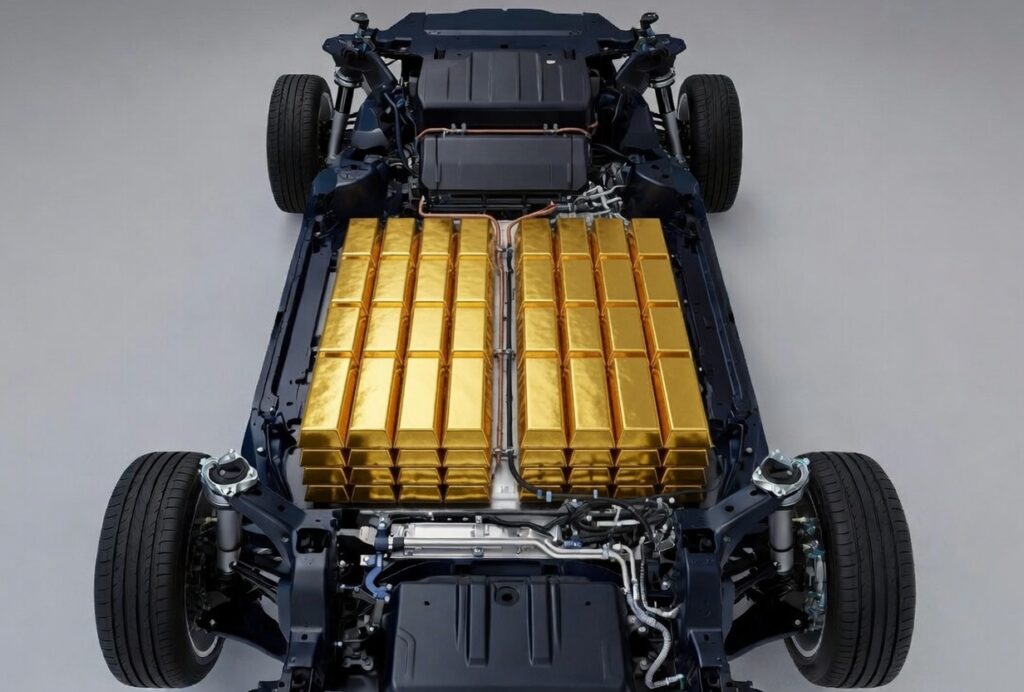
Edortech have first introduced their research during the 2026 Planet Expo February this year. It was in this context that their so calle “ONLi” technology emerged from the laboratory environment to take center stage in both domestic and international professional circles.
Behind the scenes lie more than 14 years of research and development. Along the path from laboratory experiments to pilot-scale validation, numerous redesigns, learning processes, and technical decisions shaped the technology. One of the most important characteristics of this development is that it deliberately diverges from the direction that has dominated the battery industry in recent decades. While most innovations have focused on the cathode side, ONLi, in contrast, places its emphasis on the anode. This approach not only represents a technological departure but also opens up new possibilities in terms of manufacturing processes and industrial applicability. It is a solution that enables a simpler manufacturing process, reduces energy and material requirements, and offers significant performance improvements in the long term.
“ONLi is Edortech’s flagship program because it does not simply fine-tune the existing graphite-silicon anode approach; rather, it provides a new foundation for the anode. The goal is to achieve both performance and sustainability benefits, while using industrial scalability as the starting point. We have four key claims that, together, represent a rare combination in the market”, states Dr. Ádám Vida CEO on the company’s website. He sums up the essence of their innovation in four points:
Powder- and binder-free anode design
There is no powder-based coating and no binder-based design: the process requires no adhesive and eliminates traditional solvent-based steps. This enables a simpler, cleaner manufacturing approach with lower environmental and operational impacts.
Metal Alloy-Based, Continuous Layer
ONLi is built on a metal alloy layer created by electrochemical deposition, which is bonded to the copper foil via a metallic bond. This provides a stable structure and favorable electrical and thermal conductivity properties.
Significant potential for increasing energy density
The goal of the concept is to store substantially more energy per unit volume than with graphite–silicon approaches. This directly translates to range, operating time, and applicability.
Industrial compatibility and supply flexibility
The technology operates on a coil-to-coil basis and is designed to be integrated into existing cell production lines. Furthermore, by relying on locally available metals, it reduces regional exposure to raw material supply risks.
If we were to replace the conventional 21700 cells with the Onli 21700 cells, our technology, you would get up about 60 to 80% capacity increase,”
the inventor claimed. That matters because improvements in a single battery cell can translate into significant gains across the entire vehicle.
For consumers, the key questions remain driving range and cost. While electric vehicles continue to improve, industry analysts say prices remain higher on average than comparable gasoline-powered cars. The biggest problem with electric cars is not the range, nor the charging speed. It is the price, says Dr. Laki.