
This article was originally written for Türkiye Today’s weekly newsletter, Saturday’s Wrap-up, in its June 27, 2026, issue. Please make sure you subscribe to the newsletter by clicking here.
Some reports look incredibly fake the moment they surface. Or, at the very least, you suspect a mouthpiece from a developing country is simply spinning a story exactly how his contact wanted it. When early reports hinted that Donald Trump would travel to Türkiye for the upcoming NATO summit out of respect for President Erdogan, many dismissed it as sheer fiction. Yet there was Trump, confirming in the Oval Office, right in front of NATO Secretary-General Mark Rutte, that he is going there out of respect for Erdogan. Granted, several other things Trump said during that meeting were obvious lies, but the Ankara trip is definitely happening.
The domestic political implications of the NATO summit in Ankara are already fascinating to witness. Opposition journalists recently went nuts after their NATO accreditation applications were refused. To complicate the narrative, a popular pro-government journalist subsequently revealed his application was also denied, leading to widespread confusion. However, the overwhelming majority of those rejected were opposition media members, including a few fiercely pro-Russian journalists who probably shouldn’t have been expecting approval in the first place. Maybe, they were just trolling the system. The security backdrop has only added another layer to the story, with dozens of terror-related arrests reported in both Ankara and Istanbul and security forces placed on high alert over even the slightest potential threat ahead of the summit.
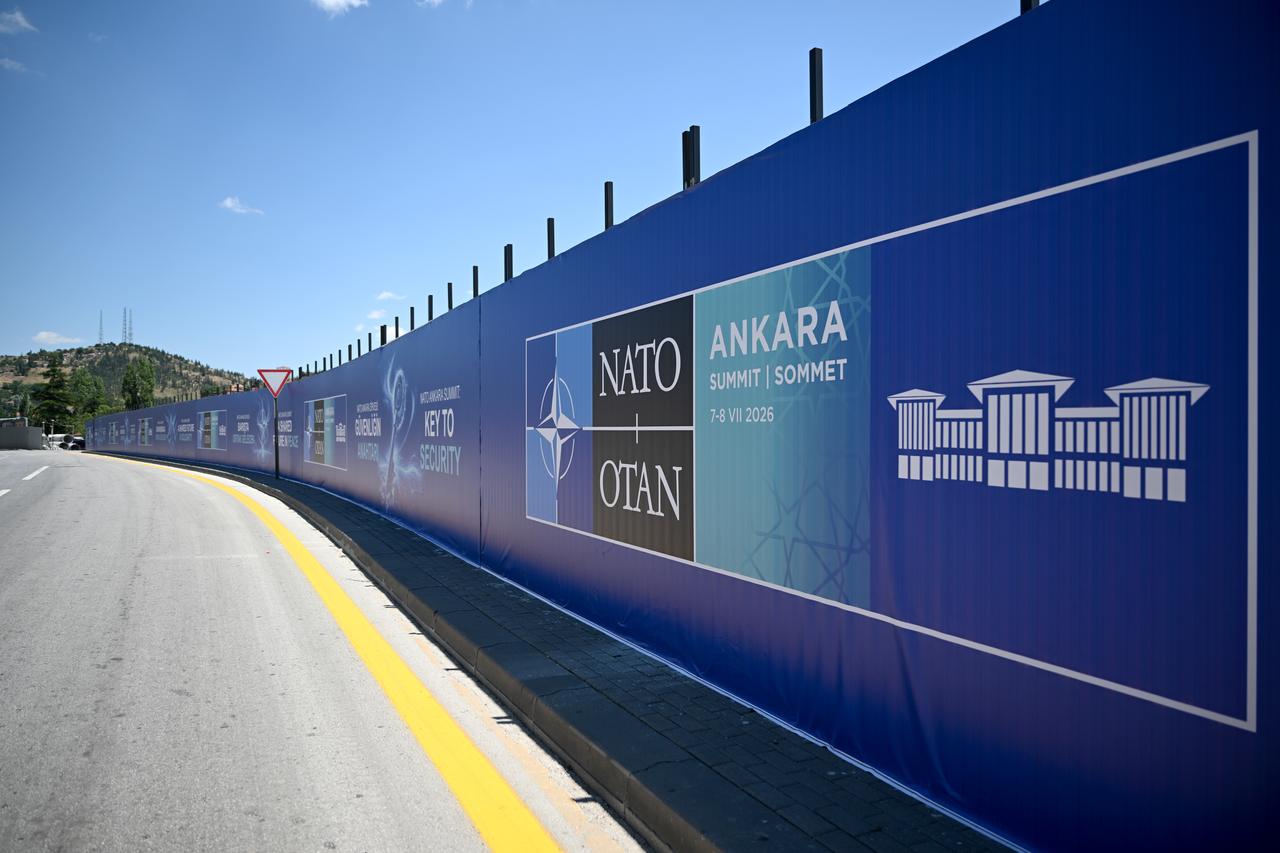

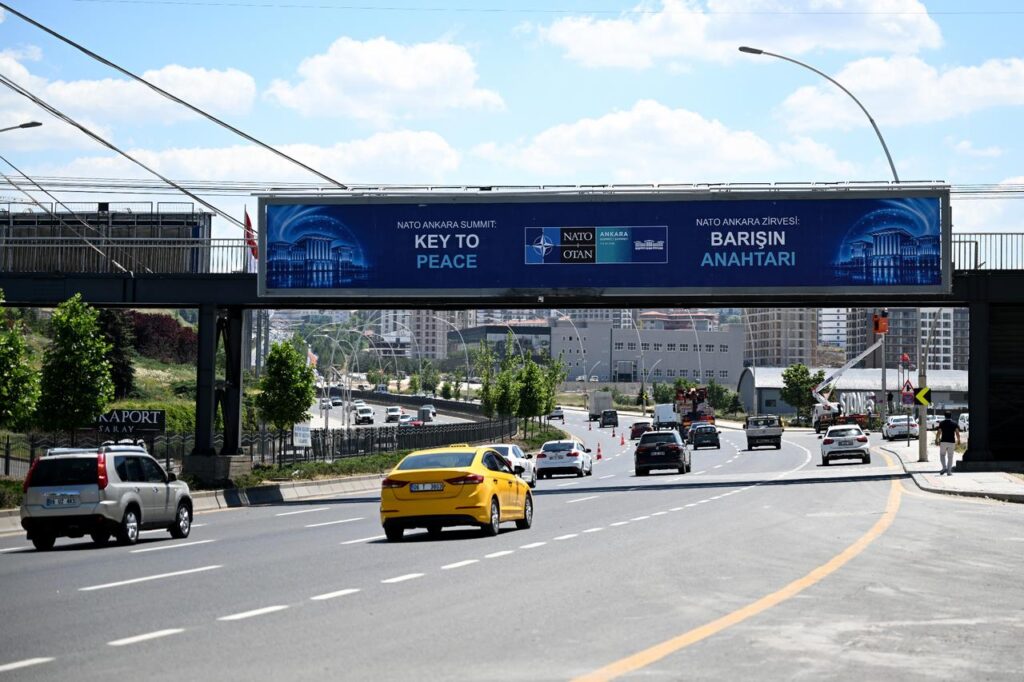
Billboards bearing the slogans “Key to Peace,” “Key to Security,” and “Shared Future in Peace” are seen at various points along the boulevard on the protocol route ahead of the NATO Summit as preparations continue in Ankara, Türkiye, on June 25, 2026. (AA Photo)
Ironically, you don’t actually see any meaningful political opposition in Türkiye actively protesting the NATO summit itself. For a long time, the Turkish opposition has stopped discussing principles and ideologies; instead, their sole focus is to unify against one man in any political way possible. This was the case before the imprisonment of major political figures, and it remains the case now.
For decades, a familiar blend of grievances has fueled anti-NATO hysteria in Türkiye. Leftists and various political figures have long argued that the inevitable rise of Eurasia would render NATO obsolete, that the alliance’s very existence acts as a leash on Turkish sovereignty, and that a clandestine “NATO war room” has been orchestrating the chaos of domestic politics.
However, for the average Turkish citizen, recent geopolitical realities may have shattered that narrative. Between the attack on Iran, China’s rigid non-interference policy, and Russia’s inability to focus its resources on Ukraine, it has become clear that the “rising Eurasian bloc” is far from being a unified power. It is, by all accounts, still a distant dream.
Türkiye has long harbored anti-NATO movements, a sentiment that usually swells during times of relative peace. In such quiet periods, Türkiye’s visible role in the alliance shrinks, and the country tends to view NATO as an institution largely irrelevant to its immediate national security interests. However, times have abruptly changed. The growing friction between Europe and the U.S. regarding the alliance’s future, coupled with a burning region with Israel’s genocide in Gaza and its rogue actions across the region, has pushed Ankara toward advocating for a stronger, more meaningful NATO. And Ankara wants to be at the center of it.
President Erdogan is currently navigating a highly favorable geopolitical landscape. History repeatedly proves a certain rule of alliance dynamics. When threat perceptions rise, allies suddenly rediscover Türkiye’s strategic value; when those threats decline, the familiar hand-wringing over Türkiye’s identity, reliability, and political direction magically regains force.
This rediscovery of Ankara comes at a time of severe Western political disarray. In Germany, politicians are seriously debating banning the far-right Alternative for Germany (AfD) on the grounds of channeling a ghost with a Hitler mustache, despite the party polling at 29%—the highest level of public support among all political factions. Meanwhile, the U.S. under Trump remains a wildly unpredictable spectacle, and Britain, which seems to change prime ministers every few months, is now genuinely preparing for a potential Russian attack by 2030.
Against this chaotic backdrop, Ankara is quietly planning a constructive summit. As Türkiye Today’s Deniz Karakullukcu argues, the alliance needs “more Türkiye in NATO and less Cold War thinking” to navigate these modern crises. Furthermore, as Türkiye Today’s Pinar Dost argues, confronting the reality of “NATO 3.0” requires building a stronger European pillar, rather than wasting political capital on a parallel defense union.
Türkiye intends to carefully set the diplomatic conditions in Ankara so that Trump’s usual shooting gallery—where he relentlessly complains about European allies—does not completely dominate the agenda. Ultimately, while Ankara is mature enough to avoid blind optimism, watching the shifting balance of transatlantic power is offering Turkish policymakers a profound opportunity to solidify their indispensable status.

June 27, 2026 01:32 PM GMT+03:00