

Welcome to the 219th edition of The Week in Polls (TWIP), a polling newsletter that always welcomes new readers. So please don’t keep TWIP a secret; share it with your friends and colleagues:
This time, as it is a decade since the Brexit referendum, I’ve returned to the topic of Europe, the subject of one of my most popular posts back in 2024. That post has aged well enough for me to include some of it below.
This is followed by a summary of the latest national voting intention polls, seat projections from MRPs and the most recent party leader ratings.
Subscribers who pay for the full edition can also read ten insights from the latest polls and analyses, including:
-
How Andy Burnham won his by-election;
-
What people say Keir Starmer’s greatest achievement was; and
-
Why tactical voting is likely to benefit some parties more than others.
If you are not yet a paid subscriber, you can read all ten by starting a free trial now:
First, though, an update on an earlier story. I had reported Jenevieve Treadwell’s calculations:
There were at least three MRPs just for London’s local elections this cycle — from YouGov, More in Common, and JL Partners … Vote share projections were broadly accurate … Each pollster’s “MAE” (mean absolute error), the average size of the error, is around 4pp. An MAE of 4pp means that, in a given borough, the pollster was off by about 4 percentage points on average.
One of the polling firms has been in touch to provide separate figures for each firm (with lower being better):
-
YouGov 3.2
-
More in Common 3.5
-
JL Partners 4.3
I think you can guess who was in touch…
For more polling news as it comes in ahead of next week’s edition, you can also follow The Week in Polls on Bluesky.
And with that, on with the show.
The public’s clear and repeated verdict is ‘no’, as the YouGov tracker illustrates:
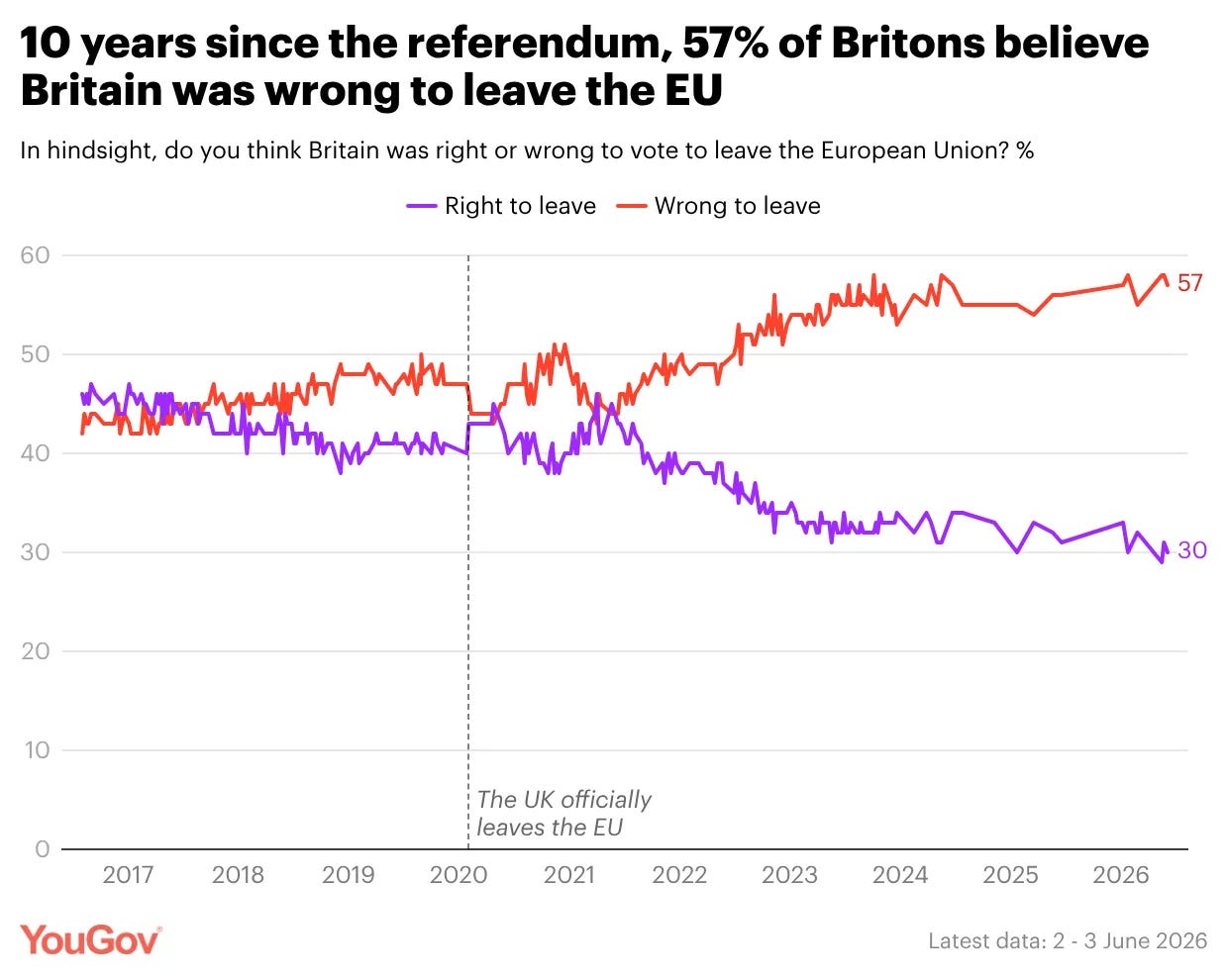
Polling consistently shows a large lead for those who think the Brexit vote was in some ways wrong or mistaken. Note, however, that most of that lead came in the early years of this decade. In more recent years the trend has been flat. Even so, a 57%-30% verdict is clear.
The emotions behind those figures are pretty clear too as this data from Survation shows:
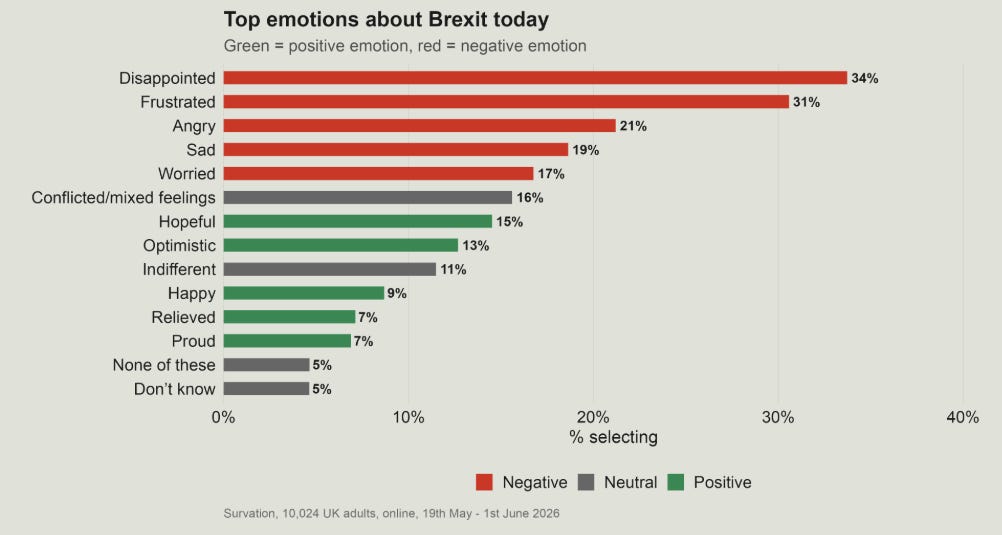
Again, the headline picture here is fairly clear and consistent. Here, for example, is the picture from Ipsos:
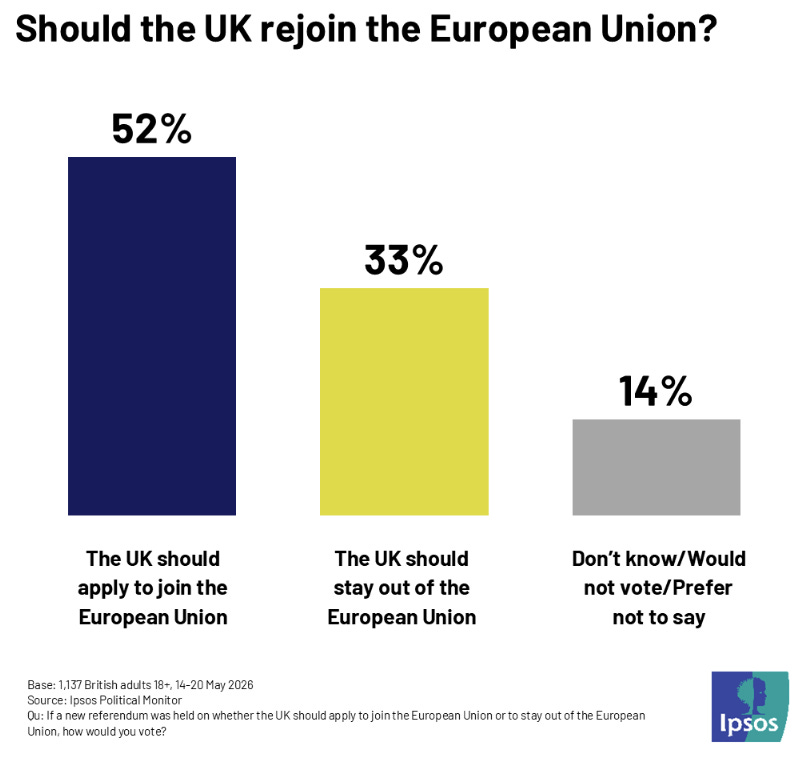
It is worth noting that geographic breakdowns of such figures show that supposed Leave heartlands now frequently have more people wanting Britain to rejoin rather than to stay out.
Take, for example, the constituency most in the news recently, Makerfield:
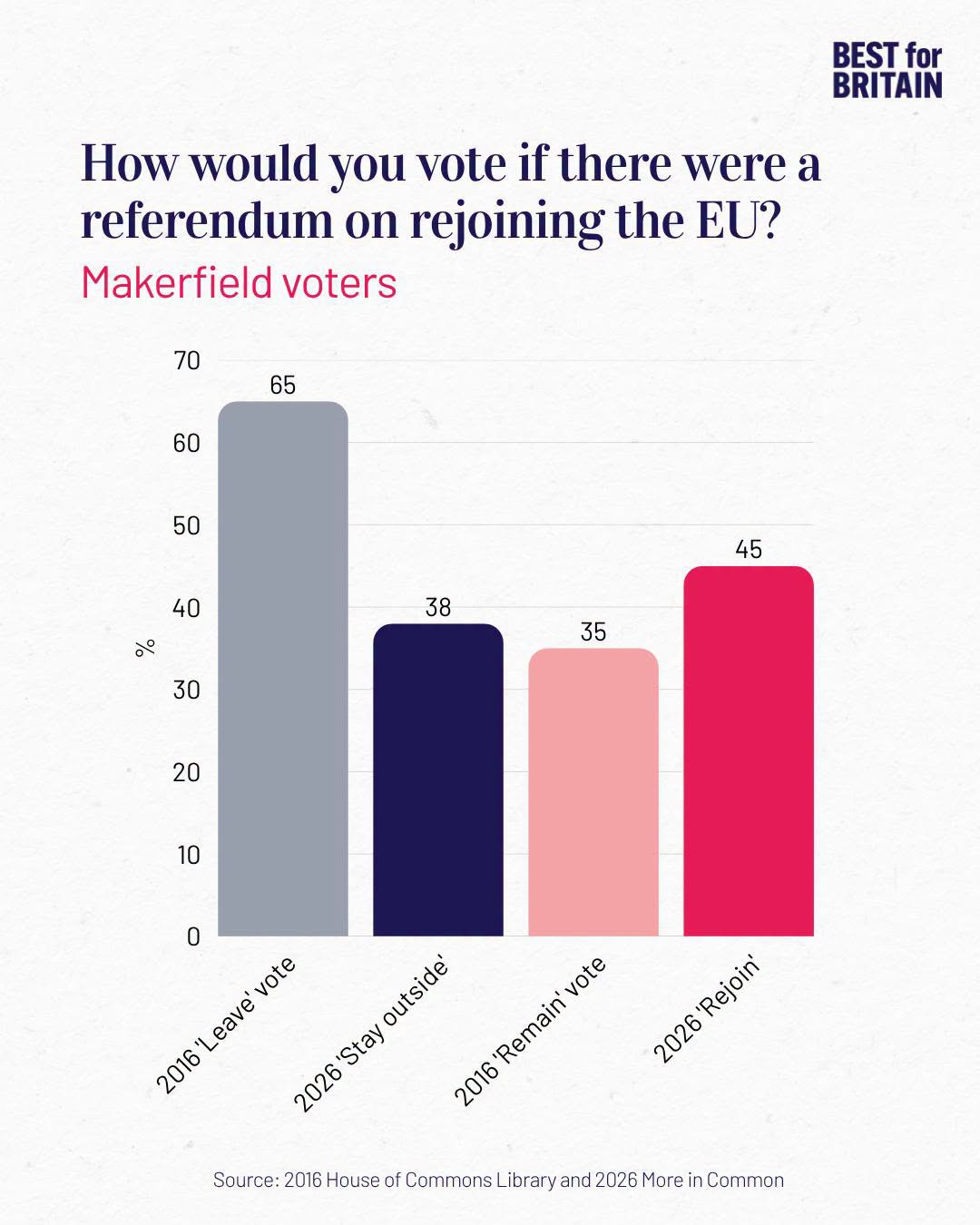
Note: Britain Unbound made a bit of a splash claiming on social media that a poll by Opinium showed more people want to remain outside the EU than to rejoin. Steve Akehurst did a succinct post which points out the misleading calculation involved, presenting the question as if it was an in/out one when in fact it wasn’t.
Where people are given a range of options, that support for rejoining drops, as in this data from Survation:
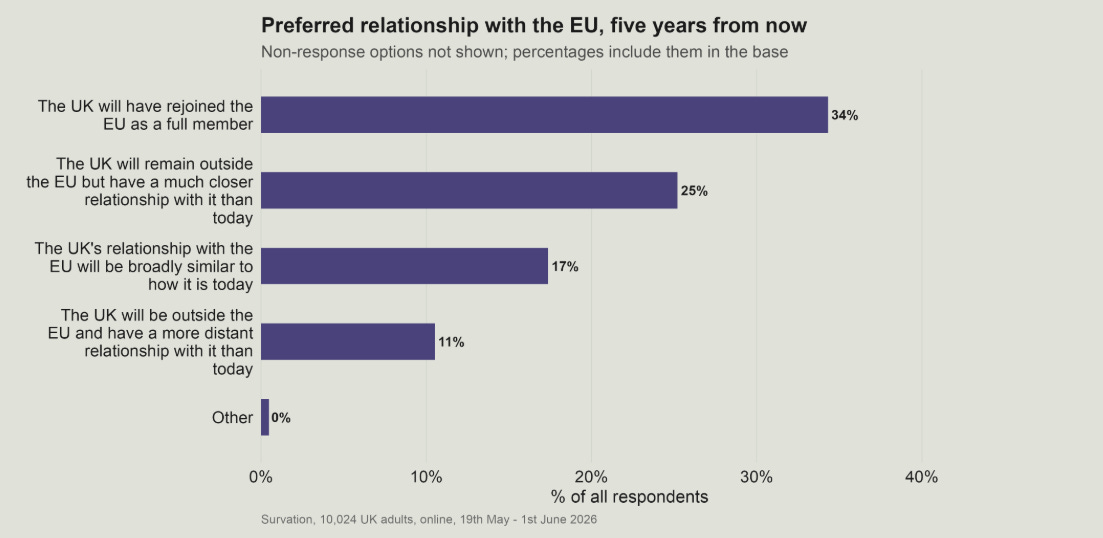
In other words, a significant chunk of that lead for rejoin in simple in/out questions comes from people whose preferred option is warmer relations in some form short of rejoining. These are not hardcore rejoiners.
So the headline support for rejoin is not as solid as you may think, especially as there is another form of softness at play too. While plenty of polling shows a clear lead for rejoin on a simple question, plenty of polling also shows that shrinking, even disappearing, if you add in possible conditions.
The New Statesman’s Ben Walker (Britain Elects) for example has produced this graph:
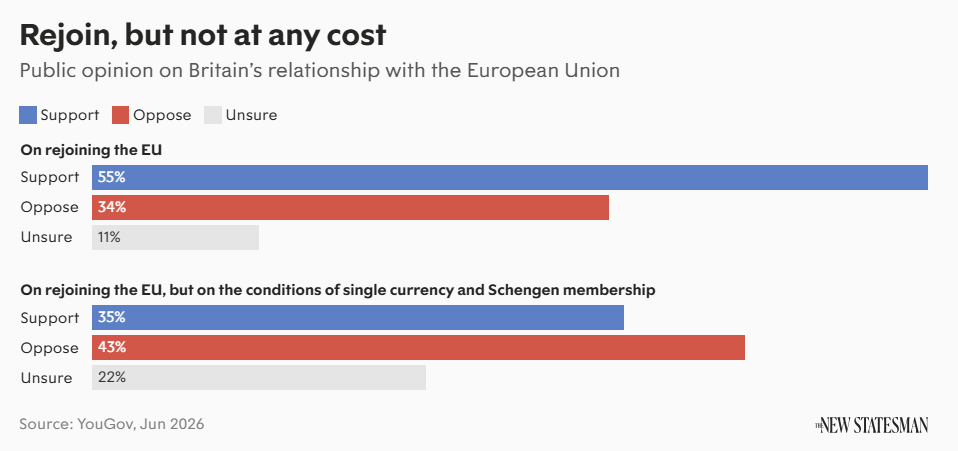
Whether rejoining would necessarily involve one or both of these conditions is a matter of some debate. So it is worth emphasising that this sort of switch around happens when a variety of different possible conditions or consequences are added in.
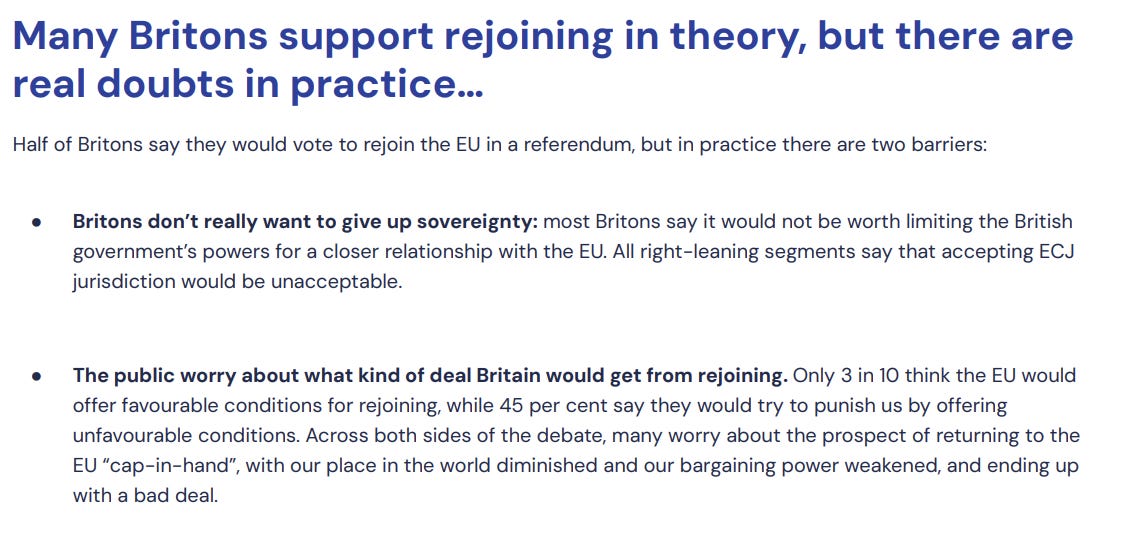
Support to rejoin is soft, as also shown by other data such as More in Common’s:
Moreover, those who are against rejoining hold their views more strongly than those who support it, as James Breckwoldt has found:
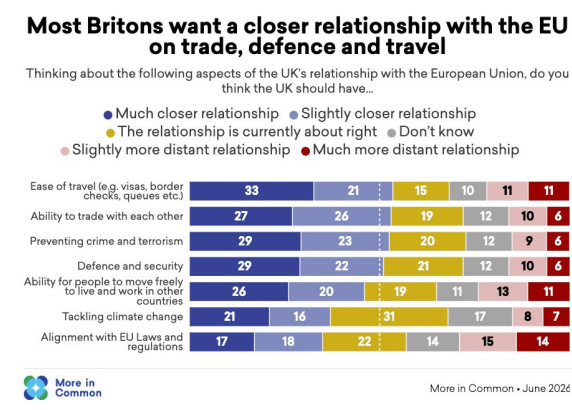
That said, there is also support, even among Leave voters, for measures short of a full rejoin as the above graphic also shows.
Likewise this data from More in Common showing support for a variety of closer relations with the EU:
Given what a dominant issue Brexit has been and how many people are unhappy about it, you might think that doing something about it would be a priority for voters.
The data, however, says otherwise.
First, we have data on the idea of holding another referendum, which often shows some support for this, but not a clear majority for one soon. An example is this from More in Common:
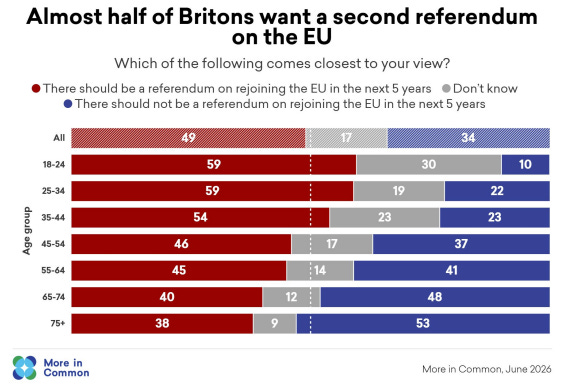
There is also the data on which issues people say are the most important either for the country or for themselves and their families.
I always like using the Ipsos data for this as Ipsos asks an open-ended question to which people can answer anything. So answers are not shaped by which options a pollster chooses to offer.
The latest Ipsos data has 1% (yes, one percent) picking some version of Brexit/EU/Europe etc. as being the most important issue facing Britain. That rises to 4% when people are allowed to pick more than one issue as being the most important facing Britain.
You can see why the recent speech on Europe from Ed Davey looked to link the topic to higher profile issues such as the cost of living and defence.
There is also some voting data too, as there are not infrequently fringe ‘Rejoin the EU’ candidates standing in elections. Of course, we should judge their performance in the context of how fringe candidates do, but even so the 0.1% (35 votes) secured by one in the Makerfield by-election, for example, illustrates how there isn’t a bubbling up of electoral support in the way that we have seen for other political positions in the past with fringe candidate votes picking up before the issues became mainstream.
As I wrote back in 2024:
In the run-up to the 2016 referendum, Remain was for a long period consistently ahead in the polls … We know how that story turned out.

Or there are lessons from the Alternative Vote referendum – many years of public support for electoral reform followed by a huge vote in favour of first past the post when put to the test.
Or the 2019 Parliamentary Petition to revoke Brexit. Over six million signatures and then support for revoke not followed through on ballot papers.
As I’ve written about this, there’s the risk of ‘expressive polling’, where people give answers that best express their general outlook, rather than their actual view on the specific wording in front of them. If you’re very strongly pro-European and asked by a pollster if there should be another referendum, the best way of expressing your pro-Europeanism may be to say ‘yes’ even if, actually given the choice to make, you’d be not quite so keen on having one, at least right away. (It’s why when a politician is in a scandal, we sometimes get polling results claiming some people are as a result more likely to support them. They’re just picking the strongest way of expressing their support, rather than actually having become even more keen on them.)
It’s also a regular mistake of predictive punditry to take current trends and just extrapolate them into the future. Reality often changes course. Booms follow busts. Falls follow rises. Swings one way then swing the other way. In particular, there are many other issues, such as attitudes towards increasing public spending, where support rises and falls in waves in response to external events, the government’s record and the state of the economy.
I went on to warn that some of what was being seen may be a reflection of the circumstances: “So far, all we’ve seen is what happens during economic tough times under a Conservative government closely associated with Brexit.”
But that risk has not come to fruition. A change of government has not seen a switch around in views. What we have seen are more durable views, although, as I’ve shown above, they are also often soft.
People are unhappy about how Brexit has panned out.
They do want warmer relations with the EU in some form, but the apparent lead in support for rejoining is soft in a variety of ways – and people still don’t want the issue to dominate politics. Only 1 in 100 people pick this as the top issue facing Britain.
So supporters of Brexit are certainly on the back foot in that it is not seen as a success and the idea of more distant relations with Europe is very unpopular.
But opponents of Brexit need to avoid shooting themselves in their own feet by ignoring the caveats and cautions that make support for rejoining soft. In particular note those for whom, when given a range of options, rejoining is not their preferred pick and who also say this is not a priority that politicians should be tackling; they are a key swing group behind the headline support for rejoining the EU.
The view so popular on social media of ‘I was right, you were an idiot’ is very unlikely to be the approach which would make the most of the opportunities there are to make something of the unhappiness with Brexit.

No surprise that this week’s pick for the Political Fictions podcast was a drama based on Brexit, the TV movie from James Graham:
To mark ten years since the Brexit Referendum, Cory and Mark talk about James Graham’s TV movie starring Benedict Cumberbatch, Brexit: The Uncivil War. They talk about the ability of Mark Gatiss to chew scenery without actually being on screen, how the story the film tells of how Leave won has aged rather badly, and Cory has a rant about the most shambolic doorknocking encounter he’s ever seen.
You can view Brexit: The Uncivil War on IMDb here.
As well as listening here, you can also listen on Apple Podcasts, Spotify, YouTube or in your favourite podcast app.
Or if you aren’t sure, check out the film’s trailer first:
Borrowing an idea from Stuart Ritchie and others, if you spot a factual error in an edition of this newsletter, I will give you a free 12-month subscription to the paid-for version (or an extra 12 months on your existing one). Factual errors qualify; grammatical errors or disagreements over interpretation do not and my decision is final. Messages about both of those are always welcome, though.
Here are the latest voting intention polls from different pollsters. Is there a hint of a pre-ascension surge for Burnham with that Find Out Now poll? That 6% rise looks chunky, but it has not been matched in other recent polls. However, BMG for The i compares a voting intention question with all the party leaders named including Starmer with a hypothetical one swapping Starmer’s name for Burnham. That switch of name gives Labour a 5% rise.
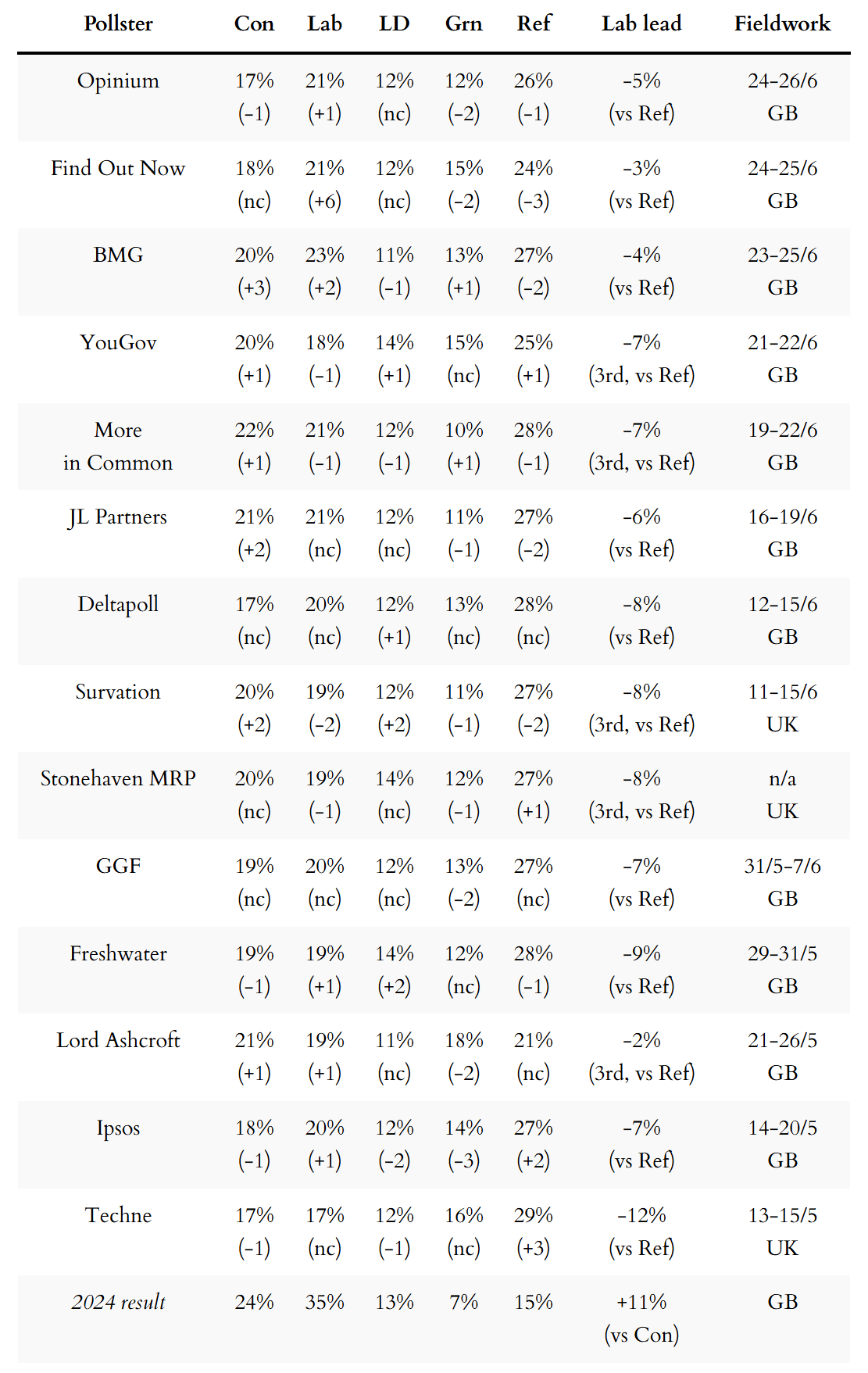
The table is also online here, along with explanations about what is included. It is updated regularly throughout the week with new polls.
Next are the seat projections from MRPs, also sorted by fieldwork dates. Because they are published infrequently, most of these are somewhat dated but there is some new Stonehaven data this time.
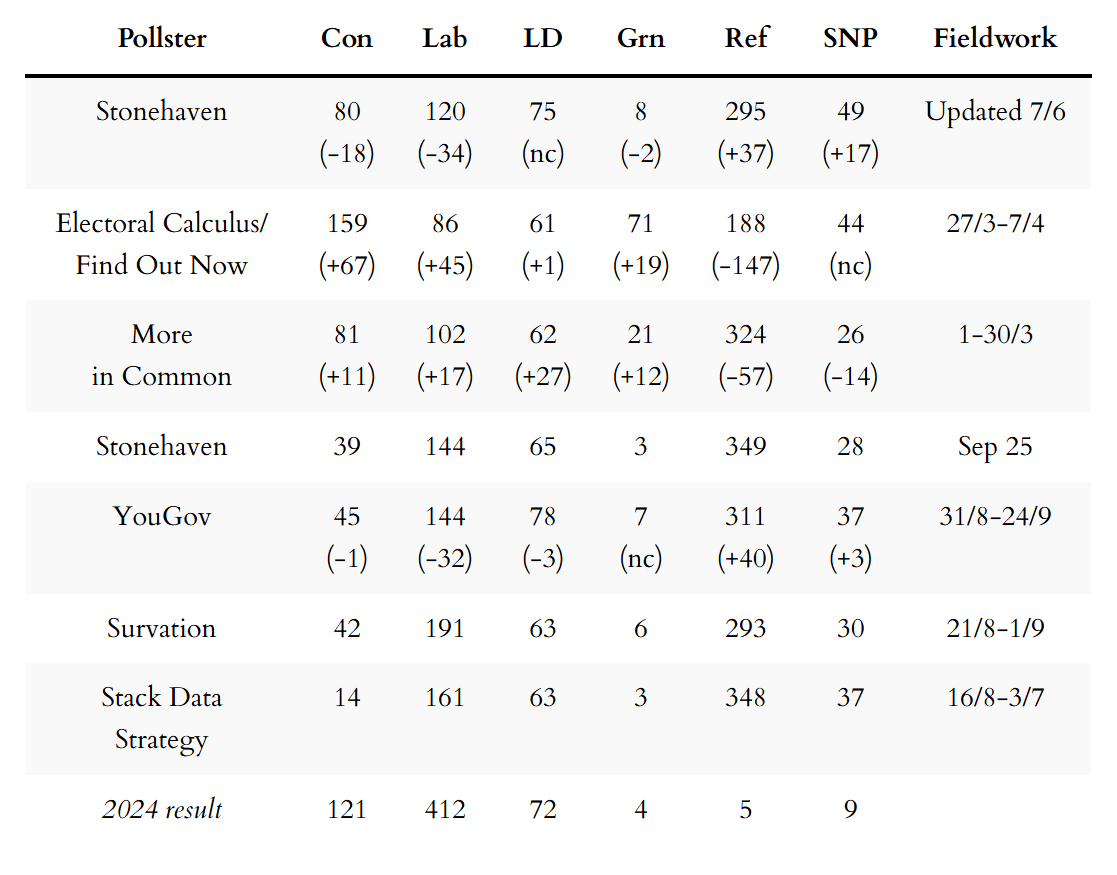
Finally, here is a summary of the latest leadership ratings, sorted by pollster name. Once there has been a formal change of Labour leader, I will swap in the new person for Starmer.
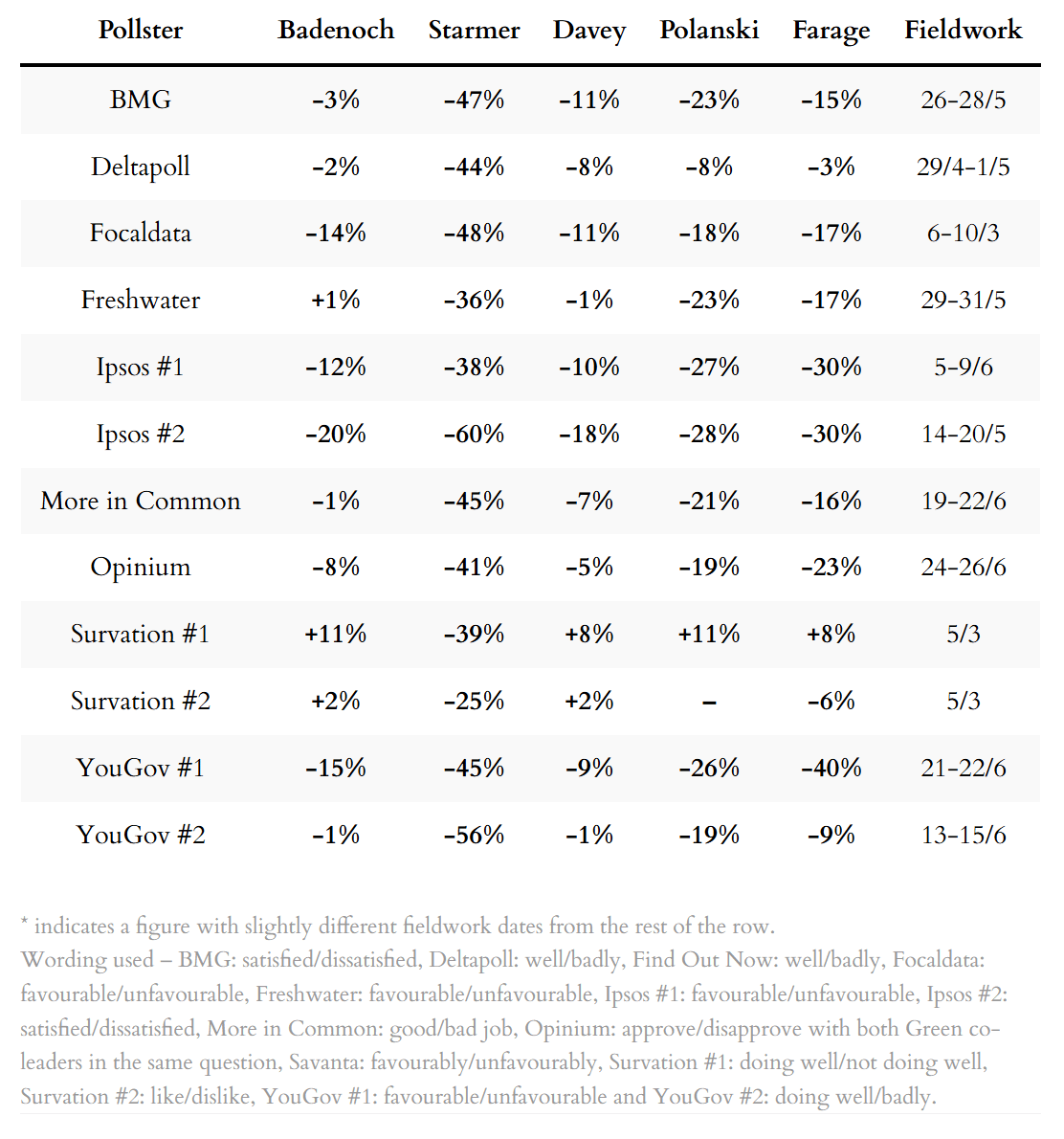
The table is also online here with additional details and is updated regularly through the week as new data comes out.
For historical figures on both voting intention and leader approval stretching back to the 1930s, including Parliamentary by-election polls, see PollBase.


My privacy policy and other legal information are available here. Links to purchase books or other items are usually affiliate links which pay a commission for each sale.
Quotes from social media messages are occasionally lightly edited for punctuation and clarity.
If you are subscribed to other email lists of mine, please note that unsubscribing from this one will not automatically remove you from the others. If you wish to be removed from all my lists, simply reply to this email to let me know.
The following 10 findings from the most recent polls and analyses are only for subscribers who pay for the full edition, but you can sign up for a free trial to read them straight away.
-
Data from BMG shows a distinct variation in willingness to vote tactically among supporters of different parties: