
The explosive growth of artificial intelligence is driving a nationwide surge in massive data centers—power-hungry facilities that consume vast amounts of electricity and water.
Communities across the United States are increasingly rising up in bipartisan resistance. The grassroots backlash has turned once-quiet server farms into a flashpoint for “not in my backyard” activism across the U.S.
From Texas:
“I don’t even know if I have the accurate words to convey how mad I am, how upset I am for the future of this town if this goes through. I can’t, I’m done.”
To Arizona:
“These AI data centers are stealing resources. We live in the desert, we can’t waste water. They will waste water.”
“Data centers are needed, I won’t deny that. Again, I use them every day, as do you. I also use the bathroom every day, but I don’t want a waste treatment plant in my backyard.”
RELATED | Virginia budget heads to Gov. Spanberger as data center tax debate shapes final deal
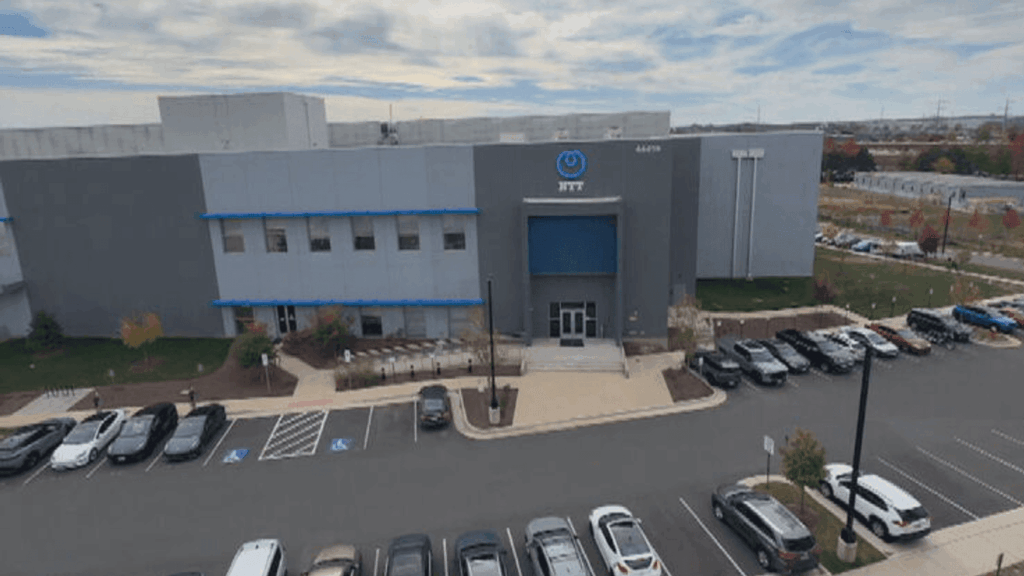
7News anchor Scott Thuman got a look inside a 112,000-square-foot facility, owned and operated by NTT Data, a Japanese company that’s one of the global leaders in data center development. This place, one of seven the company has built in Northern Virginia.
Behind locked doors, inside secure cages, we find the vaults, where the company houses data servers from both private companies and government entities, helping store and process everything from your smartphone videos to medical records, and the vast language models used by generative AI.
Bruno Bertí is head of product management and strategic alliances for NTT Global Data Centers.
“So inside of here, we’ve got multiple clients that share the space, and you can see the physical security. We separate them all by these physical cages, and we give them access to be inside that space where they can install whatever they need. And like I said, we provide them that power, security, cooling, and connectivity that they need in order to operate their data center,” Berti said.
It’s how data centers do their vital work that’s the cause for so much concern. The two big things they need are cooling, often with water, and vast amounts of power. A single data center can use enough electricity each year to power 15,000 homes.
That’s causing worries, especially here in Northern Virginia, with the greatest concentration of data centers in the world. The local power company, Dominion, expects peak demand on its system to double by 2039.
Homeowner Vicky Hu knows firsthand what greater power needs can mean for suburban communities.
“And this will be the center of a power line. They’re going to install the stick,” Hu said.
Dominion plans to build a 185-foot-tall electrical tower in her backyard to run a 500,000-volt transmission line.
RELATED | Data center boom shows no signs of slowing as vacancy hits record lows
She and many of her neighbors are fighting the plan, taking their complaints directly to the planning commission in Richmond, Virginia.
“We live here before the data center happen. So now they build the data center, they want a power line. That’s fine. But keep the power line in the data center because this industrial power line doesn’t belong to the existing neighborhood,” Hu said.
NTT Data isn’t a customer for the new transmission line, but vice president of marketing Steven Lim understands his industry has a PR problem.
“I think we have invested more over the last couple of years in community outreach and community education than we ever have. I’ve been in this space for 15 years and I will say even six years ago, seven years ago, we never thought about it. I think now we are going into the communities much sooner, and there’s an education process,” Lim said.
“In Georgia, we saw some residents who reported problems. They were talking about issues getting clean drinking water from their wells after a data center was built there, not by NTT. But what do you do to address pollution concerns?” Thuman asked.
“Water utilization is one that gets talked about a lot, and I understand that there are some components of it,” Lim said. “What I can speak to is the way that we run and design our buildings now. We use a closed-loop water system. You prime the system once, and it runs.”
Perhaps the biggest concern for local residents: the impact of increasing electrical demand. That’s already the case for Americans in 13 states from New Jersey to Kentucky. As more data centers plug in, there are worries that the system just won’t be able to meet demand, and potentially raise prices for millions of customers.
RELATED | Spotsylvania residents push back on data centers and the county’s low data center tax
“Taxpayers have sometimes said, ‘Well, the infrastructure just to get to a data center, we feel like the data center should be paying more. It shouldn’t all come out of our taxes to get this place in a place where you can do business,'” Thuman said.
“It’s a fair question,” Lim said. “When we build campuses, we’ll often put substations on. We’re bearing the cost of that. Again, that concept of us showing up and plugging in. And so we are making significant investments in that. It does get challenging because there are certain parts of the infrastructure that we don’t control, particularly transmission lines themselves, where we try to partner with the power companies in every region we’re in.”
What the data center industry has on its side is an enormous amount of money as companies rush to invest in AI, where the U.S. currently leads, but China is racing to overtake.
“Research is exponentially growing the amount of information that’s out there, which is creating a healthy level of demand. But I think what we’ve seen in the last few years is AI. And a few years ago, this thing called ChatGPT came out, which opened everyone’s eyes to what was really happening for many years before that,” Bertí said.
In addition to insatiable demand, the data center industry also has political support in Washington, where President Donald Trump has signed an order to streamline and speed up permitting for large-scale data centers. The administration argues the U.S. needs to stay ahead of China for economic and national security reasons.
All of which is unlikely to stop public concern and demand for more studies into the health effects of data centers.
The project in Chandler, Arizona, that these residents came to oppose was ultimately rejected by the council last December.
The data center plans in College Station, Texas, led some residents to consider leaving.
“I’ll be honest, if you guys push this through, we’re moving,” one resident said.
That project was also rejected by the city council.
But elsewhere, dozens of others have been approved, as this digital divide continues to grow.