
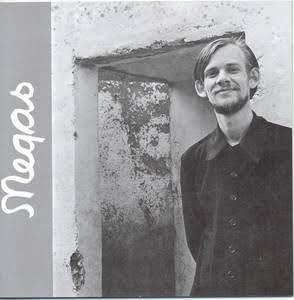
Megas, the singer-songwriter widely regarded as the father of Icelandic rock and roll, has died at the age of 81. Born Magnús Þór Jónsson in Reykjavík on April 7, 1945, he passed away in July 2026 after a career spanning more than five decades that reshaped Icelandic music and literature.
An early admirer of Elvis Presley, Megas developed a love of rock and roll as a boy before immersing himself in painting, piano, and writing. By 1968 he had already published the sheet music and lyrics to 14 songs, drawing on influences like Bob Dylan and Ray Davies as he moved into songwriting as a young bohemian writer.
His debut album was released in 1972 with the help of Icelandic students in Oslo, pairing satirical lyrics with mild acoustic backing from Norwegian folk musicians. The record proved controversial enough to get him banned from Icelandic national radio, but it also built him a devoted cult following in the country’s emerging alternative scene. He reached a wider audience in 1975 when his lyrics were performed with the electric rock band Judas, followed by the albums ‘Millilending’ and ‘Fram og aftur blindgötuna,’ both of which took aim at taboos across Icelandic society while drawing on classical literature and a sharply revisionist take on history.
In 1977 he released ‘Á bleikum náttkjólum’ with the folk-rock band Spilverk Þjóðanna, an album some critics have since called the greatest in Icelandic history and credited with featuring the country’s first punk song. By decade’s end, Megas had become both a provocateur and a foundational reference point for the generations of Icelandic artists who followed. He later stepped away from music entirely, working as a dock worker and completing an arts degree before returning to the scene in 1983.
His comeback included a mid-1980s collaboration with members of the band Kukl under the name MegaKukl, and in 1990 he released ‘Hættuleg hljómsveit & glæpakvendið Stella,’ a project that featured a young Björk on backing vocals. He remained active into the 2000s, reissuing his catalogue with bonus material and launching new collaborative projects including Megasukk, whose debut album ‘Hús Datt’ arrived in 2005.
Megas’s influence reached beyond Iceland’s borders. English band The Fall referenced his story in their 1982 song “Iceland,” with frontman Mark E. Smith reportedly meeting Megas after a concert in Reykjavík during the band’s visit to the country.
He is survived by a body of work spanning dozens of albums and several published books of lyrics and prose, cementing his place as one of the most significant and singular voices in Icelandic music history.