
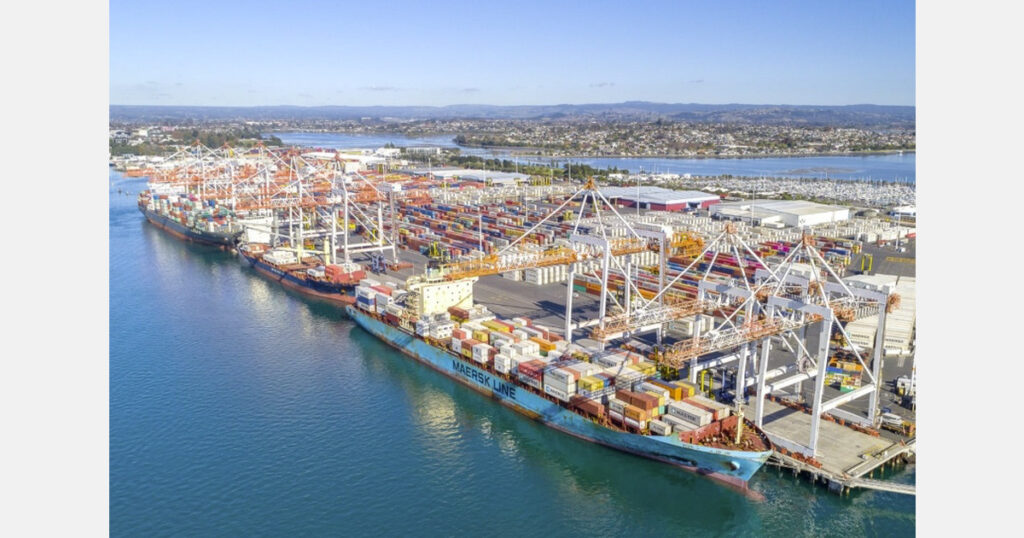
The Bay of Plenty is strengthening its role in New Zealand’s export economy, according to a new report from ANZ NZ. Regional exports reached US$4.49 billion in 2025, up 16.9 per cent year on year, while the Port of Tauranga now handles 48 per cent of the country’s containerised exports. The report also projects kiwifruit exports to reach US$3.68 billion by 2030. The number of registered businesses has increased by 62.5 per cent since 2000 to 43,146, and the region’s population is forecast to reach 541,200 by 2053.
ANZ Managing Director of Business and Agri Lorraine Mapu said: “The Bay of Plenty is one of New Zealand’s great economic success stories. Its export industries, population growth and investment in infrastructure are creating opportunities not just for the region, but for the entire country.”
 © ANZ
© ANZ
The report identifies freight and logistics as supporting the region’s export growth. Since 2000, warehousing and storage capacity has expanded across South Auckland, Waikato, and the Bay of Plenty. Over the past six years, more than one-third of all new warehouse consents issued nationally have been within this “golden triangle”, compared with 16 per cent during the 2000s.
“As an export nation, we need to be earning as much as we can for each log and each kiwifruit when we send them offshore. A critical part of that is having efficient export and logistics facilities, like those we see developing in the Bay of Plenty.
“That investment in connected freight, logistics and export infrastructure sets the scene for future growth across a range of sectors, from dairy manufacturing to horticulture. As New Zealand’s primary trade gateway, the Bay of Plenty underpins both the regional economy and national supply chains.”
The report also points to continued investment at the Port of Tauranga, including preparations for larger cargo vessels and the use of AI to improve operational efficiency and health and safety. The port is expected to benefit from increasing volumes of temperature-controlled exports, including kiwifruit, dairy, and meat.
According to the report, around 80 per cent of New Zealand’s kiwifruit is grown in the Bay of Plenty. Mapu said innovation remains a feature of the sector, citing developments including Zespri’s RubyRed cultivar and the use of AI and smartphone imagery to measure fruit size in orchards.
The report also notes that Tauranga’s population has grown from 80,100 in 1996 to 161,000 in 2025 and is projected to increase by another 90,000 people over the next three decades. ANZ said continued investment in transport, freight connections, industrial land, utilities, and other infrastructure will be needed to support that growth.
For more information:
Tarek Bazley
ANZ
Tel: +64 27 428 0434
www.anz.com.au