
Story audio is generated using AI
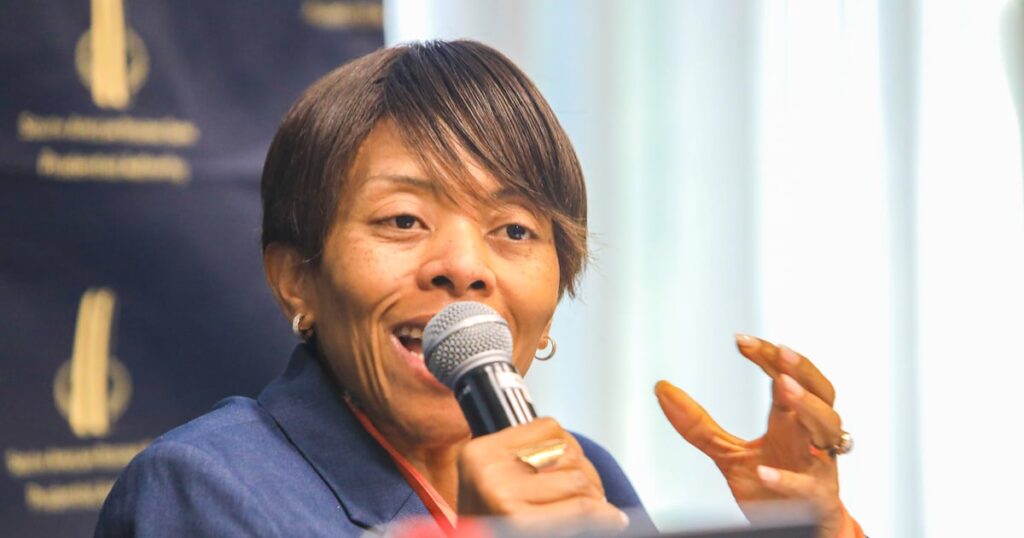
The South African Reserve Bank and its Prudential Authority are working on frameworks to regulate the use of crypto assets and minimise the risks they pose to the financial system, deputy governor Fundi Tshazibana says.
The Bank does not recognise cryptocurrency as legal tender and last year flagged “crypto assets and stablecoins” as a new risk to South Africa’s financial stability, saying their rapid growth and limited regulation could allow risks to build up undetected.
The Bank said it had undertaken an inventory of the crypto landscape at the time, which showed that the number of South Africans with crypto-trading accounts had nearly doubled to 8-million since early 2022. Almost R63bn had been externalised through local crypto platforms since 2019 — flows that fell outside exchange-control reporting.
“If you have crypto assets that are outside a regulatory perimeter … if suddenly payments are being made utilising crypto assets, there might be a concentration of risks because we don’t see how financial transactions are happening,” Tshazibana, who is also the CEO of the Prudential Authority, told a media briefing on Friday.
“There is no regulatory oversight by any financial sector supervisor with sufficient granularity to see what that ecosystem looks like, and so that’s where the risk is coming in. And we’ll see in the coming months a lot of work being done to create these frameworks to say what does the ecosystem look like, and under whose parameter should crypto assets fall in?”
“On the side of cross-border payments, there’s a framework that’s being created, and within the domestic payment space, there’s also a framework being created. But it’s a very complex layering, fundamentally because crypto is not money.”
Read: US-Iran war has added strain to financial system, Prudential Authority says
In its global economic outlook last month the Bank for International Settlements, which serves as a bank for central banks, warned that while digital innovation is transforming finance, potentially enabling greater competition and efficiency in payment systems and financial intermediation, it also brings challenges, including how to preserve trust in money.
It said stablecoins — cryptocurrencies that are pegged to the value of a currency, commodity or a basket of assets to provide greater stability — can support faster and programmable payments, but current designs fall short of the foundational properties of money and threaten financial integrity.
“Stablecoin, one might argue, is fairly different because it’s backed up by a reserve (but) you have to define these things very carefully, because you can have rand-denominated crypto assets or stablecoin, or you can have them backed by a foreign currency. They have different implications depending on what it is that we do,” Tshazibana said on Friday.
The challenges around cryptocurrency are to do with store value because their value changes rapidly, the deputy governor said.
“The debate has been about: how does crypto meet this measure of store value, which then makes it money or currency in a form, so it will meet the broad definitions? Even with stablecoin, where there might be an argument that says the store value definition is met, that also comes with some other challenges,” Tshazibana said.
“The monetary policy component comes in because at the moment the monetary policy decisions are transmitted through the banking system primarily because the shift of funds is largely happening in that space. So if we move into a crypto world, which exists as a parallel system, that transmission, as we have known it, suddenly looks very different. So we have to study it, we have to understand it and we have to know what’s happening.
“It’s all of the little things in between that when one then has a conversation with the crypto asset service providers, they will simplify it for you, and then they will say, ‘but these guys are being difficult because we’ve already met all of the definition issues. Why are they taking so long?’
“But in our spaces, there are other things that we need to look at … that, to the eye, look very simple, but we’ve got to think about the other layered elements as well.”