
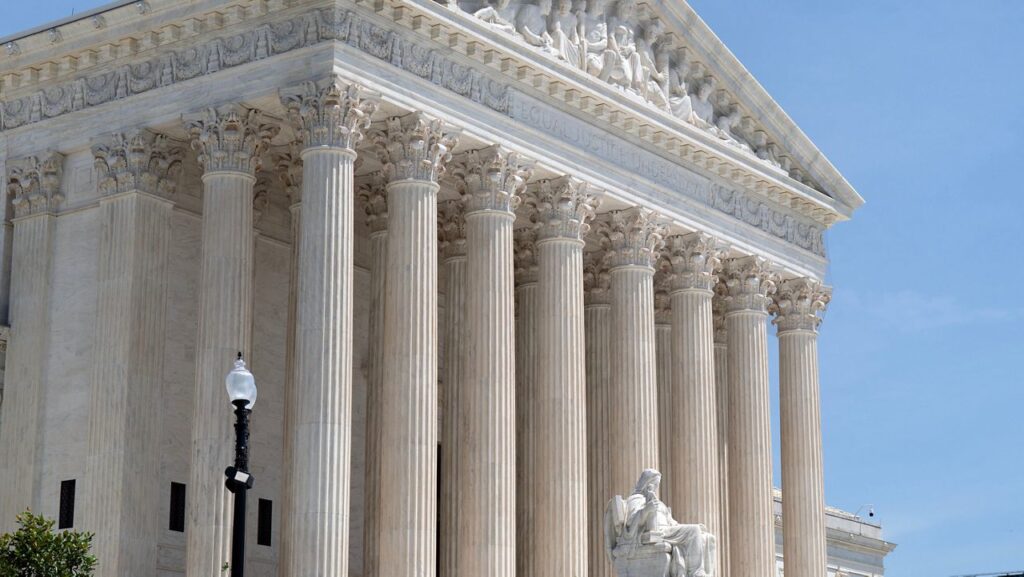
A 20-year-old college junior, shot dead by a gunman who wanted to kill his mother – a New Jersey federal judge. A failed assassination attempt outside the home of Supreme Court Justice Brett Kavanaugh. And on Monday, an arrest was made on Capitol Hill grounds after a man with a gun in his lap pulled over to ask Capitol Police for directions to the high court.
These are just a few examples of the surge in violence and threats against federal judges in recent years.
“The rhetoric has changed. We much more frequently and openly criticize federal judges, and unfortunately, sometimes that criticism bleeds over into specific threats and even acts of violence,” explained Jesssica Levinson, a professor at Loyola Law School.
The U.S. Marshals Service has documented nearly 3,200 threats against judges since 2019, according to figures USMS shared with Spectrum News. There were 564 reported in Fiscal Year 2025, up from 509 the year before.
As of July 1, there were 370 threats made against federal judges in Fiscal Year 2026, which ends on September 30.
Speaking at Rice University this spring, Supreme Court Chief Justice John Roberts said that criticism of the judiciary is fair and sometimes even healthy. But the personal attacks, he said, are not.
“Judges around the country work very hard to get it right – and if they don’t, their opinions are subject to criticism. But personally directed hostilities is dangerous and it’s got to stop,” he said.
His colleagues, Justices Elena Kagan and Amy Coney Barrett, will head to Capitol Hill Tuesday to testify before separate House and Senate subcommittees charged with overseeing the judicial budget process. The judiciary is requesting nearly $921 million to bolster security at federal court houses.
Nearly $15 million of that request would be for security at the Supreme Court.
“This is a new era. We did not used to have this number of threats against federal judges, both verbal and physical, and what we’re looking at here, I think, is number one, how seriously members of Congress take these threats, and we’re also looking for the level of detail that judges share in terms of the threats that they have been subject to, and why they need additional protection,” explained Levinson.
The last time justices appeared before Congress to testify on budget and appropriations matters was in 2019, when Kagan was joined by Justice Samuel Alito.
While the questioning is supposed to focus on security issues, it is also expected that lawmakers will press the justices on some of the high court’s more controversial decisions from this past term.