
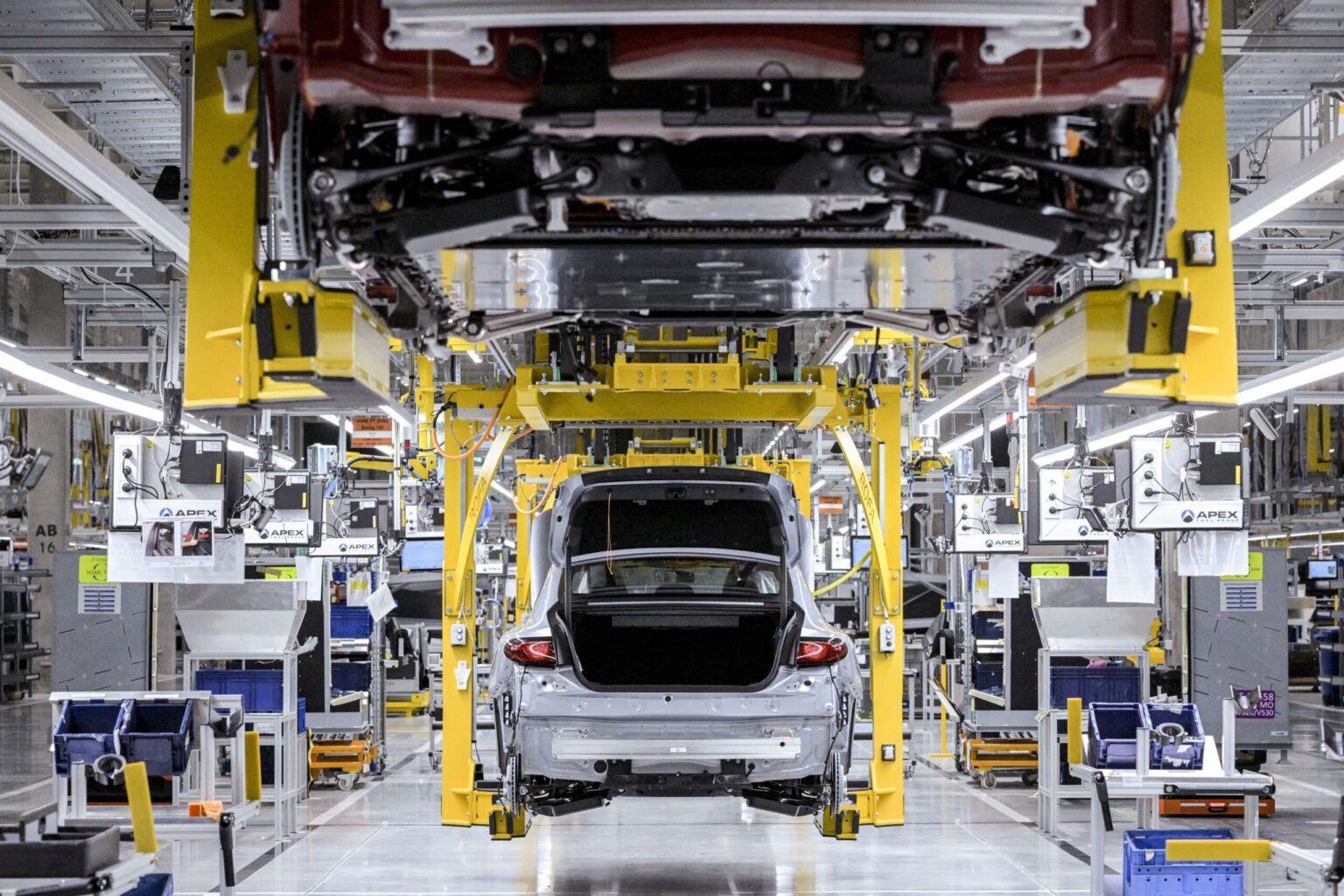

The German automotive industry is facing significant cost pressures. To remain competitive internationally, manufacturers are increasingly shifting their production to low-wage countries in Europe. One example of this trend is the recent expansion of Mercedes-Benz’s plant in the central Hungarian city of Kecskemét.
With an investment of over one billion euros, the facility was officially opened on Monday, making it the Stuttgart-based group’s most important European production center. Mercedes-Benz aims to double the share of production in European low-wage countries from the current 15 percent to 30 percent. In turn, capacity at the German sites is shrinking, as production and labor costs there are simply no longer competitive on a global scale, as reported by stern.de.
Production costs in Germany are the highest in the world in the automotive industry,”
emphasized Helena Wisbert, professor of automotive economics at Ostfalia University of Applied Sciences in Wolfsburg, in an interview. Figures from Mercedes CFO Harald Wilhelm illustrate just how significant this difference is. Production costs in Hungary are about 70 percent lower than in Germany—an estimate that industry experts also consider to be entirely realistic.

Photo: MTI/Szigetváry Zsolt
However, anyone who reduces Hungary’s success solely to cheap labor is missing the bigger picture.
In recent years, our country has worked hard to improve its attractiveness.
It attracts manufacturers with a comprehensive package that goes far beyond wage advantages:
- Attractive subsidies: Tailored government investment aid and financial incentives.
- Reduced bureaucracy: Fast, streamlined support during approval processes.
- Modern infrastructure: Targeted expansion of industrial and logistical infrastructure.
- Central location: Its geographic location in the heart of Europe offers fast access to European markets.
These advantages have long since ceased to attract only traditional automakers.
At the same time, Hungary has evolved into a global magnet for the leading players in electric mobility and battery production.
Where major manufacturers invest, suppliers follow closely behind. A specialized industrial ecosystem has formed around the automotive plants in our country:
- Bosch manufactures components for electric vehicles in Hungary and operates its largest European development center in Budapest.
- ZF Friedrichshafen produces transmissions and electric axles here.
- Aumovio (a spin-off from Continental) is also securing valuable expertise with an AI development center in the Hungarian capital.
Figures from the German Association of the Automotive Industry (VDA) demonstrate just how strong the German presence already is.
Last year, more than 300,000 passenger cars rolled off the assembly lines at German manufacturers’ plants in Hungary.
In Europe, only the Czech Republic, Spain, and Slovakia surpass this volume.

Audi Hungaria. Photo: Audi Hungaria
Thanks to Mercedes-Benz’s expansion in Kecskemét, the ramp-up of the new BMW plant in Debrecen, and Audi’s traditionally strong production in Győr, Hungary will further solidify its dominant position as a European automotive hub in the coming years.
Despite the current boom, economic experts warn against expecting this euphoria to last forever. Hungary’s economic rise and the associated shortage of skilled workers will inevitably lead to rising wages. In the long term, this dynamic could erode the country’s decisive cost advantage. While analysts agree that there is still a long way to go before Hungarian wage levels catch up with those in Germany, Hungary will find it increasingly difficult to play the “low-wage card” in the future. The focus of Hungary as a business location must therefore shift even more strongly from pure assembly toward research, development, and high technology.

Via stern.de; Featured photo: MTI/Szigetváry Zsolt