
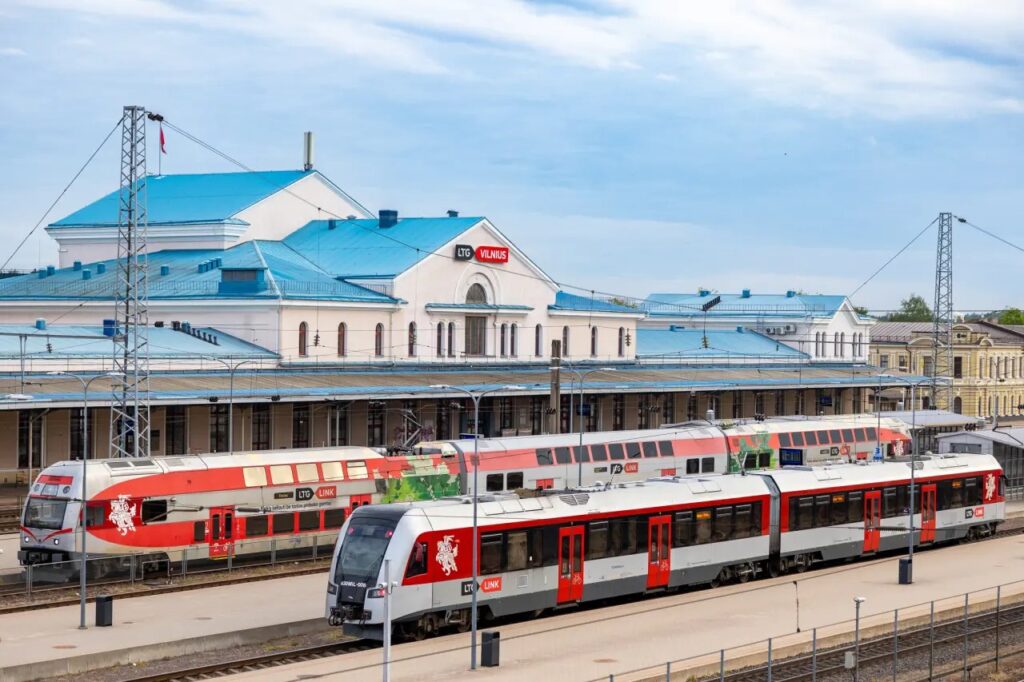
 The Lithuanian railway group LTG is testing technologies that could eventually pave the way for autonomous trains. The first projects include 3D scanning of the infrastructure, creating a digital twin of the network, and artificial intelligence systems capable of detecting trees, vehicles, or other obstacles on the tracks in real time.
Lithuania is taking its first steps toward a rail network in which more and more operations will be handled by sensors, cameras, algorithms, and automated systems.
LTG Group, the Lithuanian state-owned railway group, is testing technologies that could eventually be integrated into an ecosystem designed for autonomous trains. For now, however, driverless trains remain a distant prospect.
The strategy does not involve a direct transition to fully autonomous trains, but rather the gradual introduction of separate functions: door monitoring, obstacle detection, control of certain traffic parameters, remote monitoring, and automation of infrastructure inspections.
“A single project is not enough to introduce autonomous technologies on the railroad,” says Vytautas Bitinas, LTG’s chief technology officer.
According to him, each component must be tested separately and proven to be safe and efficient before it can be integrated with the others into a system capable of taking over a larger share of the staff’s tasks.
Sensors that verify whether boarding is complete
One of the functions being analyzed by LTG is the automatic monitoring of the area around the train doors.
Sensors, cameras, and analysis algorithms could determine whether the boarding process has ended and whether there are still people or objects in the danger zone. This information could be automatically transmitted to the train’s systems or to the staff responsible for departure.
Other steps would include continuous monitoring of the route, obstacle detection, control of speed and other parameters, as well as the implementation of remote monitoring solutions.
“The direction is clear. In the future, these technologies could reduce the need for human intervention while maintaining a high level of safety,” says the LTG director.
The Lithuanian group cautions, however, that solutions must be not only reliable but also cost-effective. Installation and maintenance costs must be justified by increased safety, reduced response times, or improved operational efficiency.
The Entire Network, Scanned in 3D
One of the most advanced projects already underway is the 3D scanning system for railway infrastructure.
The technology will record the network’s geometry and enable the creation of a highly accurate digital twin of the network. The virtual model can be used to analyze the condition of tracks, equipment, and railway structures.
The system is expected to identify even minor changes, allowing LTG teams to detect deterioration early on and better plan maintenance or repair work.
The railway network spanning Lithuania is over 3,500 km long, which makes manual inspection extremely time-consuming and labor-intensive.
“Even the partial automation of maintenance processes represents a significant technological leap and opens up entirely new possibilities for the efficient management of one of the country’s largest infrastructure systems,” said Vytautas Bitinas.
Measurements will be taken more quickly and accurately, and decisions regarding interventions will be based on continuously collected data, not just on inspections conducted at predetermined intervals.
AI detects trees and vehicles on the tracks
LTG is also testing autonomous continuous monitoring tools based on artificial intelligence.
These can analyze specific sections of track in real time and flag the appearance of unexpected obstacles.
If a fallen tree, a vehicle, or another hazardous object ends up on the tracks, the system could automatically identify the situation, send an alert, and initiate initial response measures.
The technology could reduce the time between the emergence of a hazard and the notification of dispatchers or field personnel. For trains in operation, every minute saved can be critical in preventing an accident.
However, automated systems will not immediately eliminate the need for human intervention. At this stage, their role is primarily to observe, classify, and transmit information to the responsible personnel.
Vilnius–Klaipėda Electrification, Monitored Digitally
Automatic scanning and monitoring will also be important for Lithuania’s main railway route, between Vilnius and Klaipėda, which is currently being electrified.
As power supply equipment is installed, LTG will need to monitor both the condition of the track and the operation of the electrical network.
The group believes that digital systems will enable faster identification of faults and restoration of power in a shorter time, reducing the risk of prolonged disruptions.
Data collected through 3D scanning could also be used for planning future work, verifying clearance limits, or analyzing how new installations integrate into the existing infrastructure.
The road to autonomous trains, however, will be a long one
The rail sector is subject to strict safety regulations, and LTG acknowledges that every new technology will have to undergo a lengthy testing and approval process.
Solutions will first be tested in controlled environments, then under real-world operating conditions. Their implementation can only be expanded after their reliability has been demonstrated in various situations and weather conditions.
For this reason, fully autonomous trains will not appear on the Lithuanian network in the immediate future.
The first changes will be less spectacular but noticeable in day-to-day operations: automated measurements, sensor-based inspections, AI-generated alerts, and an increasing number of operations monitored remotely.
Share on: 


