


German Wine 101: Viticulture’s history in Germany, a map of wine regions and the top 10 German wines. (Stripes Staff)
When I joined my neighbor at the Weinfest in his childhood village on the Mosel River, we spent the sunny day on a tractor in the steep vineyards and partied at a riverfront park late into the evening.
Everyone was there: kids on the carousel, a teenage wine queen, two family restaurants selling food and old folks in the oompah band. Local wines were sold by the bottle and the town youths arrived on Bacchus’ barges, in a shirtless and very merry nod to the origin of wine in Germany.

In Germany, wine has a deep and storied history connecting people to the land – a tradition that continues today. (RossHelen | stock.adobe.com)
The first viticulture came to the area with the Romans. They likely cultivated wild grapes along the Mosel River as part of establishing the garrison town of Trier on its banks. Roman culture heavily influenced areas west of the Rhein, which is where most Germanic wine production stayed until the reign of Charlemagne in the 800s. His efforts to spread Christianity eastward brought monastic wine.
Viticulture grew into a massive industry through the 1400s, when tried and true grape varieties like Rieslings developed and vineyards were much larger than today. Wars, climate and a cultural shift toward beer saw a decline in the early modern period. Post-World War II, however, viticulture was revitalized as part of reconstructing West Germany.

Roman villas like this one near Bad Duerkheim, Germany, still have surrounding vineyards in a nod to the connection between German wine and Roman culture. (Conny Pokorny – stock.adobe.com)
The mighty Rhein River is the lifeblood of German wine. The German Wine Act of 1971 defined 11 major growing regions called Anbaugebiete. They are all along the Rhein or its tributaries like the Mosel, Main and Neckar. After reunification in 1990, two more small regions were added along the Elbe River and its tributaries.
Almost all German wine is classified as top-tier Qualitätswein (quality wine). This requires the grapes to be grown a specific Anbaugebiet, which is on the label. This means that German wines remain highly local. They may also have a Prädikat designation for special attributes related to harvest times.
High quality, family-made local wine, like the kind in my glass at the village Bacchanalia, is a 2,000-year-old tradition worth celebrating. It’s easy to support local vintners by simply buying and imbibing the reasonability-priced Qualitätswein that lines German grocery shelves.
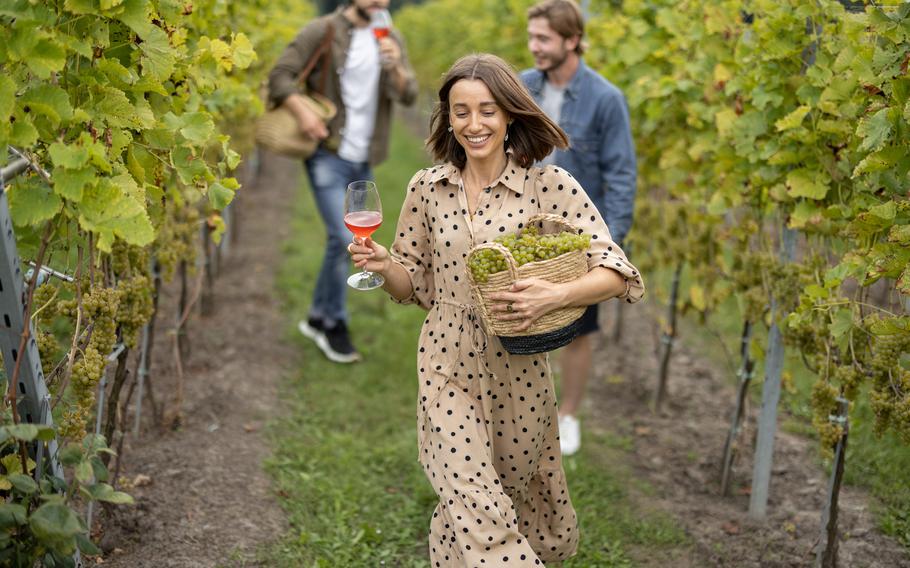
Small village wine festivals and family celebrations are one way Germany still touches their 2,000 year old connection with wine. (RossHelen | stocke.adobe.com)
Top 10 German Wines
In Germany, most wines are sortenrein (single varietal) meaning they are made with 100% of a certain type of grape. Labels on a bottle will list the wine type as synonymous with the variety of grape used. Blended wines will use a brand or invented name instead.
-
Riesling. Germany’s most popular wine is this delicately citrusy, acidic white that rules the vineyards along the Rhein and Mosel rivers. It can taste Trocken (dry), Halbtrocken (half-dry), Feinherb (off-dry and fruity), Liebliche (delicately sweet) or even süß like a dessert wine, making it very versatile for pairing.
-
Müller-Thurgau. This was the most produced wine until the 1990’s when Rieslings became popular for export. It is still mass-produced with high yields, making a light, slightly fruity, mildly dry white wine that can be served with any course.
-
Spätburgunder. The first red grape on this list, the Spätburgunder (Pinot Noir) has risen in popularity and grows on more acres than the Müller-Thurgau with slightly lower yields, making it almost tie for second place. It has an elegant medium-bodied and dry berry flavor, perfect for accompanying roast meats and cheeses.
-
Dornfelder. Another red wine, this grape grows well in the warm, wide valleys west of the Rhein River. It is deeply red and dry, but with dark fruit flavors and low tannins that make it smooth in the mouth and great with a hearty meal.
-
Graubugunder. This white wine, called the Pinot Gris outside of Germany, is actually descended from the red Pinot Noir, making a golden, mostly dry wine. It’s medium-bodied flavor reminiscent of tree fruits is great with creamy dishes and pasta.
-
Silvaner. Planted primarily in Franken along the Main River, this dry white is clean, simple and refreshing. It pairs well with unpretentious chicken or fish dishes.
-
Weißburgunder. Another white wine, this variety is delicate with a fresh acidity that makes it a light, typically dry, summer wine that lighter fare and creamy dishes. It can also be made into a sekt or sweet dessert wine.
-
Portugieser. This wine is often crafted as a Weissherbst (rosé) or a pale red. It has a very fresh, medium-bodied taste with little tannin that is perfect for everyday drinking and summer grill outs.
-
Bacchus. Named for the wine god himself, this is a popular variety in the Franken region. It is an easy-drinking white that can be dry to medium-sweet and is fruity, crisp and very aromatic. Bacchus goes well with spicy, fresh and zesty dishes.
-
Trollinger. A light, fresh and fruity red wine with low tannins, this refreshing wine is a great picnic wine. It is almost solely produced in the Württemberg area around Stuttgart.

Varieties like Bacchus are growing in popularity at vineyards in Germany. (imageBROKER – stock.adobe.com)
Anbaugebiete: German High-Quality Wine Regions
The 13 official Anbaugebiete are designated areas for vinifying Qualitätswein, and account for most the Germany’s wine production.