
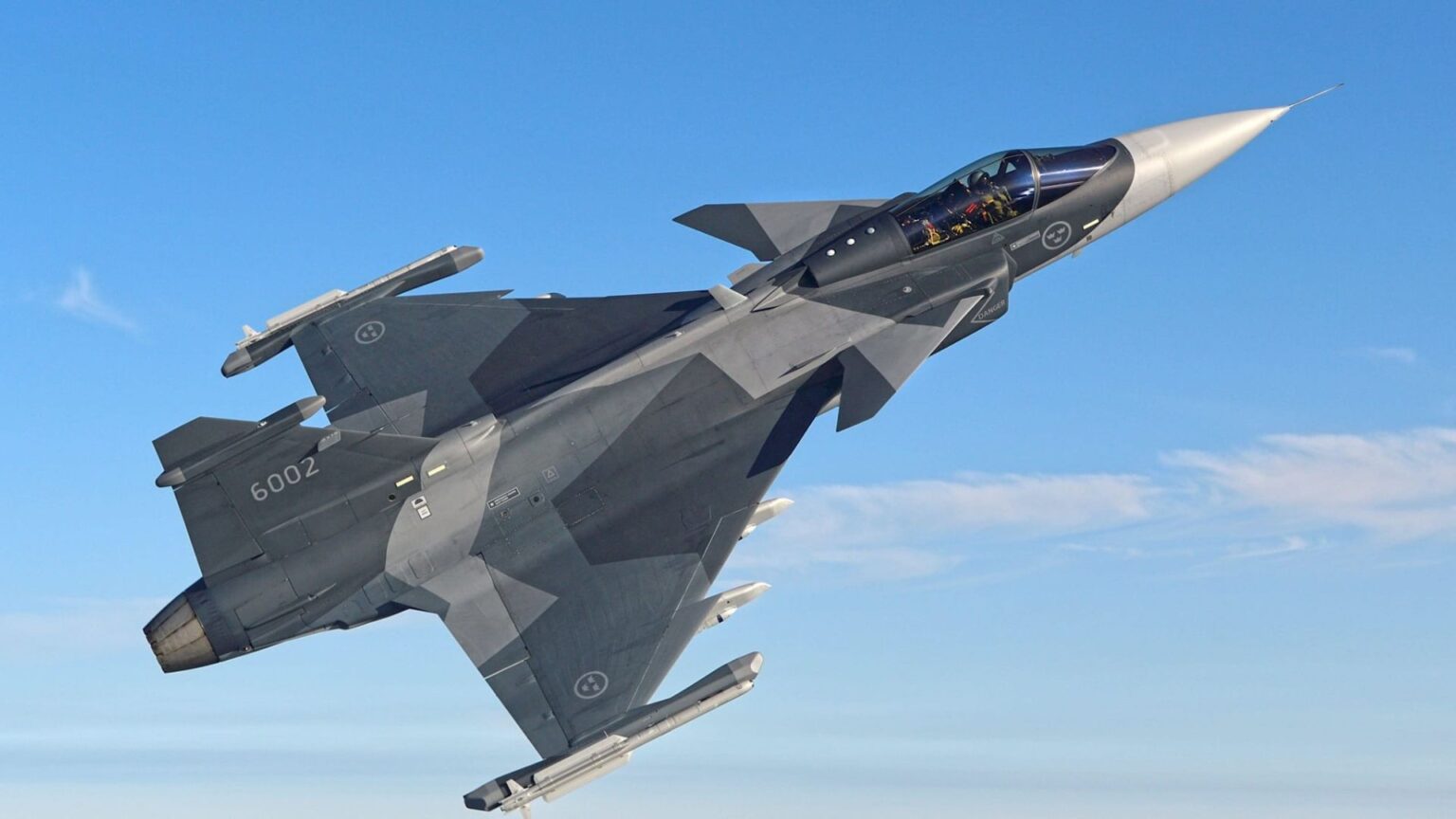
Canada’s discussion over its future fighter fleet has taken another step after aerospace firms outlined plans for an advanced training and mission support network centered on the Saab Gripen. The proposal would move ahead only if Ottawa ultimately selects the Swedish fighter as part of its long-term air combat strategy.
The plan focuses on creating a domestic training and sustainment capability instead of relying heavily on overseas support. It also comes as reports suggest Canada could rethink its current fighter procurement plan by combining Gripen aircraft with a smaller fleet of Lockheed Martin F-35As.
Training ecosystem planned
The memorandum outlines a framework for creating a Canadian-based training system for Gripen pilots and maintenance personnel. The proposed setup would include full-mission simulators alongside pilot and technician instruction. It would also provide long-term sustainment support.
The partners also intend to study mission systems development inside Canada. The effort would combine Gripen platform expertise with simulation technology to improve operational readiness throughout the aircraft’s service life.
Matthew Bromberg, president and chief executive officer of CAE, said the partnership reflects a long-term commitment to Canadian defense readiness. He said the collaboration could strengthen Canada’s future fighter capability while creating opportunities across Canada’s aerospace workforce.
Saab CEO Micael Johansson said the company wants to develop capability wherever it operates. He added that the partnership could establish advanced training and mission support in Canada while keeping critical expertise and operational knowledge within the country.
Fleet plans under review
The proposal arrives as Canada reportedly weighs significant changes to its fighter modernization program. Ottawa could reportedly replace much of its planned purchase of 88 F-35 fighters with roughly 60 Saab Gripens while retaining about 30 F-35As.
Such a mixed fleet would reduce dependence on U.S. defense supply chains while preserving fifth-generation capabilities needed for NORAD and NATO missions. No final decision has been announced, and the Canadian government has not confirmed any change to its acquisition strategy.
If Gripen becomes part of Canada’s future force, the proposed training network would give pilots and ground crews access to domestic instruction, simulator operations, and long-term maintenance support instead of depending primarily on foreign facilities.
Gripen’s operational focus
The Saab Gripen is a lightweight multirole fighter built for combat operations across several mission sets. Sweden designed the aircraft to operate from dispersed locations, including short stretches of roadway, allowing sorties even when traditional air bases are unavailable.
Modern Gripen variants feature an active electronically scanned array radar. They also carry advanced electronic warfare equipment and secure data links that improve battlefield awareness. Pilots can exchange targeting information with other aircraft and command centers in real time.
One of Gripen’s defining strengths is its relatively low operating cost compared with many larger fighters. Small ground crews can refuel and rearm the aircraft quickly, helping return it to service in a short time.
Beyond training, the agreement also covers research into next-generation technologies. The partners will also explore future mission support opportunities for Gripen operators in Canada and overseas if the aircraft becomes part of the Royal Canadian Air Force’s future inventory.