
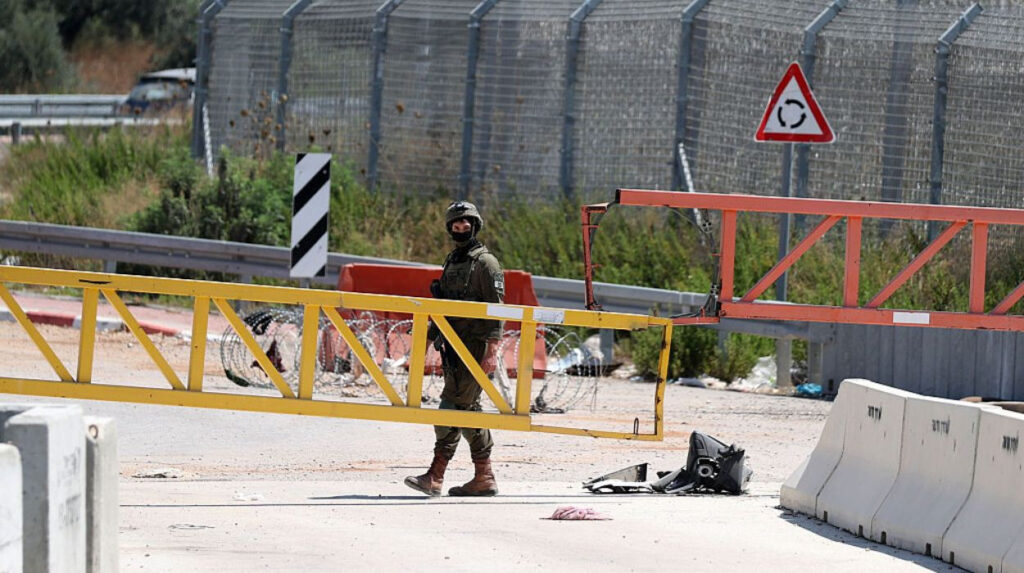

Credit: Issam Rimawi/Anadolu via Getty Images
Belgium’s decision to enforce a ban on imports from Israeli settlements marks a notable shift in European State Policy, reflecting growing impatience with prolonged inaction at the EU level. The move demonstrates how national governments are beginning to align trade decisions with Human Rights considerations, particularly in response to the legal and humanitarian implications of settlement expansion. While the European Union continues to debate collective measures, Belgium has stepped ahead, signaling that policy alignment with international law can no longer remain theoretical.
This development comes amid mounting pressure on European institutions to transition from diplomatic statements to enforceable action. The Belgian government’s position highlights a widening gap between EU rhetoric on international law and the absence of binding mechanisms to uphold it.
EU Struggles to Translate Consensus into Action
The European Commission has outlined three potential approaches to regulate trade linked to Israeli settlements: stricter export licensing, the imposition of higher tariffs, and a full or partial import ban. However, these remain policy options rather than formal legislative proposals, leaving EU member states unable to take decisive votes.
The internal debate has been complicated by disagreements over legal classification. Some countries advocate treating the issue as trade policy, which would allow decisions through qualified majority voting, while others insist it falls under sanctions, requiring unanimity. Reflecting this institutional deadlock, Kaja Kallas acknowledged that
“the option that got the most support was banning the trade with the illegal settlements,”
while also emphasizing that
“we need to have a unified position, and so far we have not been able to have that unified position.”
This tension underscores how procedural divisions continue to delay what many consider an urgent policy response.
Human Rights Framework Driving Policy Pressure
The increasing emphasis on Human Rights has reshaped the debate over settlement trade within Europe. A growing number of EU member states argue that continuing economic relations with settlements contradicts international legal obligations. This perspective has been reinforced by the 2024 International Court of Justice advisory opinion, which called on states to avoid economic activities that sustain unlawful territorial situations.
As a result, settlement imports are no longer viewed purely through a commercial lens. Instead, they are increasingly treated as part of a broader legal and ethical framework that demands policy consistency. The Belgian decision reflects this shift, suggesting that economic measures are becoming a necessary extension of Europe’s human rights commitments.
Belgium Pushes for Concrete EU Measures
Belgium’s stance has been particularly vocal in criticizing the pace and substance of EU-level responses. Foreign Minister Maxime Prévot captured this frustration by stating that
“the options that the European Commission is putting on the table… seem more like a token gesture.”
His remarks highlight dissatisfaction with what is seen as symbolic policymaking rather than actionable proposals.
At the same time, Belgium has made clear that its national action is not intended to replace EU coordination but to accelerate it. Prévot emphasized that Belgium was “on the verge” of implementing its own ban while maintaining that broader European measures would carry greater geopolitical weight. He also pointed to internal resistance within the EU, noting that some member states are constrained by
“ideological, historical or economic”
considerations when dealing with Israel.
Deepening Divisions Within the European Union
The Belgian import ban has brought into sharper focus the divisions within the EU. A coalition of member states—including Belgium, Spain, Ireland, and others—supports stronger trade restrictions and favors treating the issue as a matter of trade law. This approach would allow faster implementation and reflect a more assertive State Policy stance.
However, resistance remains from countries concerned about diplomatic fallout and economic consequences. These divisions are not new but have become more pronounced as the political and humanitarian context has worsened. Kallas also acknowledged the severity of the situation, describing conditions in the West Bank as “truly intolerable,” reinforcing the urgency behind calls for action while still navigating political constraints.
Europe’s Credibility and the Future of Settlement Trade Policy
Belgium’s move ultimately raises a broader question about Europe’s global credibility. If the EU consistently labels Israeli settlements as illegal under international law, then failure to act on trade risks undermining its own legal and diplomatic positions. The debate is no longer about whether differentiation exists—settlement goods are already excluded from preferential tariffs—but whether additional restrictions are necessary to ensure policy coherence.
Belgium’s approach suggests that some EU states now view inaction as more damaging than the risks associated with decisive measures. By linking trade policy directly to Human Rights obligations, the country is challenging the EU to adopt a more consistent and enforceable framework. Whether this leads to bloc-wide action or further fragmentation remains uncertain, but the direction of the debate is clearly shifting toward stronger accountability mechanisms.