
Photo: Ministry of Energy and Mining
Through even stronger cooperation between Montenegro and Albania, the stability of the region can be further strengthened and its energy and economic future can be built together, said the Minister of Energy and Mining, Admir Šahmanović.
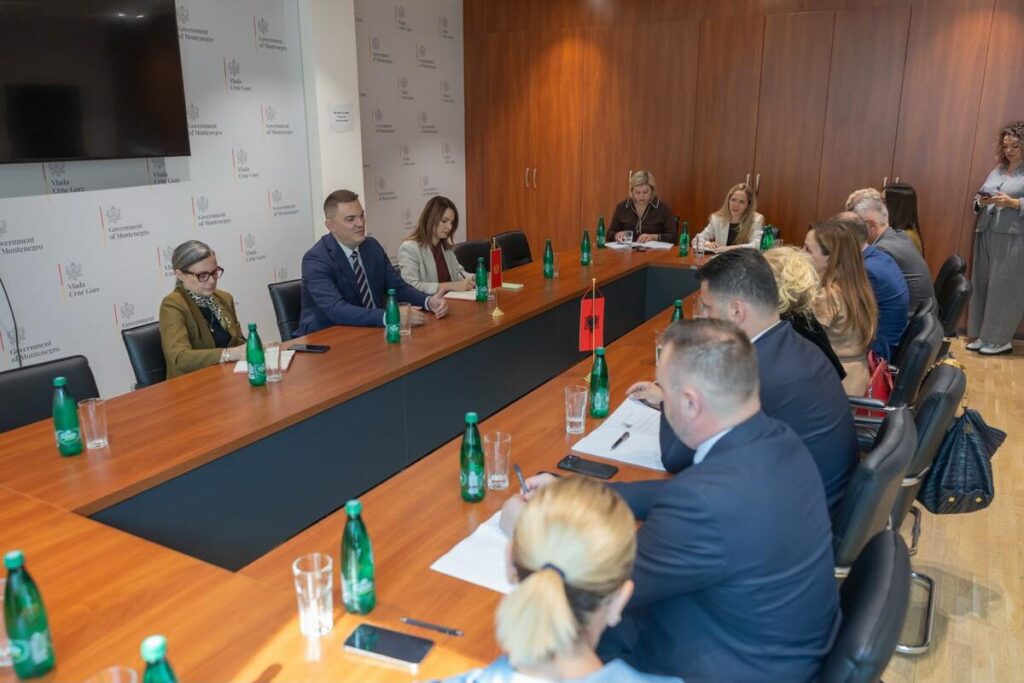
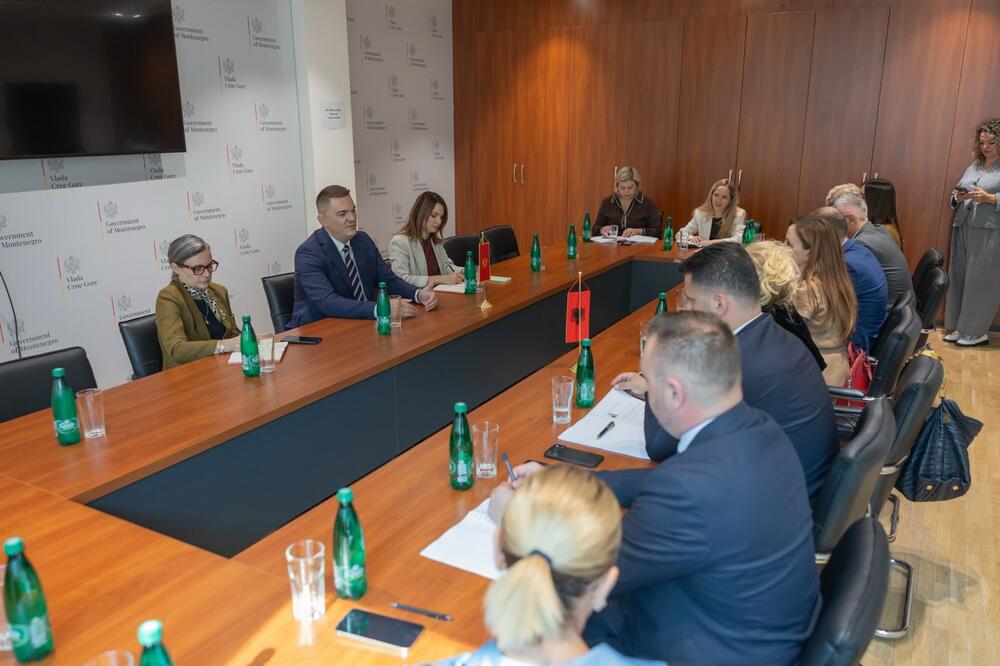
During a meeting with a delegation from the Committee on Human Rights and Public Information of the Albanian Parliament, led by the Chair of the Committee, Jorida Tabaku, he said that Montenegro and Albania are not just good neighbors, we are connected by history, culture and common European ambitions.
Welcoming the members of the delegation, Šahmanović emphasized that Montenegro and Albania have traditionally fostered good and friendly relations, based on mutual trust, closeness between the two peoples, and numerous cultural and customary similarities.
He assessed that there is significant room for further improvement of cooperation, especially in areas of common strategic interest.
Tabaku emphasized that there is very good communication between the representatives of the authorities of the two countries, assessing that today’s visit represents a new step forward in further strengthening interstate relations. She particularly pointed out the progress that Montenegro has made in the process of accession to the European Union, emphasizing that the experiences of the Montenegrin administration can be valuable to Albania in the continuation of its European path.
Speaking about European integration, Šahmanović informed his interlocutors about the results that Montenegro has achieved in the field of energy, emphasizing that Chapter 15 is one of the most technically demanding in the negotiation process, but also one of those in which significant progress has been made through the harmonization of legislation with the acquis communautaire and the implementation of reforms.
Members of the Albanian delegation expressed particular interest in the way Montenegro is implementing the energy transition and its impact on citizens, especially on socially vulnerable categories of the population.
Šahmanović emphasized that the energy transition is not solely a matter of developing new energy capacities, but a process that must be fair, inclusive and focused on improving the quality of life of citizens.
He recalled that the new legal solutions systematically recognized the concept of energy poverty for the first time, thus creating a framework for resolving this issue institutionally and in accordance with European standards.
Speaking about concrete results, Šahmanović stated that through energy efficiency improvement programs, which the Ministry of Energy and Mining is implementing together with international partners, significant funds have been invested in the reconstruction of public facilities, primarily schools, health institutions and social welfare institutions. At the same time, through support programs for households and residential buildings, citizens have been enabled to improve housing conditions, reduce electricity consumption and energy costs, while simultaneously improving the quality of life.
“We are implementing the energy transition process carefully, taking into account its social dimension. Our goal is not only to produce clean energy, but to ensure that all citizens feel the benefits of the green transition. That is precisely why we are implementing this process in close cooperation with the European Union and international partners, to ensure that the transition is fair and leaves no one behind,” said Šahmanović.
A special part of the conversation was dedicated to regional cooperation in the energy sector. Šahmanović highlighted the very good cooperation with the relevant institutions of Albania, assessing that joint infrastructure projects represent an opportunity for the two countries to further strengthen their geopolitical and energy positions.
In this context, the importance of the Adriatic-Ionian gas pipeline project was particularly emphasized, as it represents one of the most important regional energy projects and can contribute to greater energy security, diversification of supply sources and stronger connections of the Western Balkan countries with the European energy market.
The interlocutors concluded that Montenegro and Albania share a common vision of a stable, connected and European region, and expressed their readiness to continue developing their partnership in areas of common interest through more intensive institutional cooperation.
Download the app and follow the news


FOLLOW US ON
News