
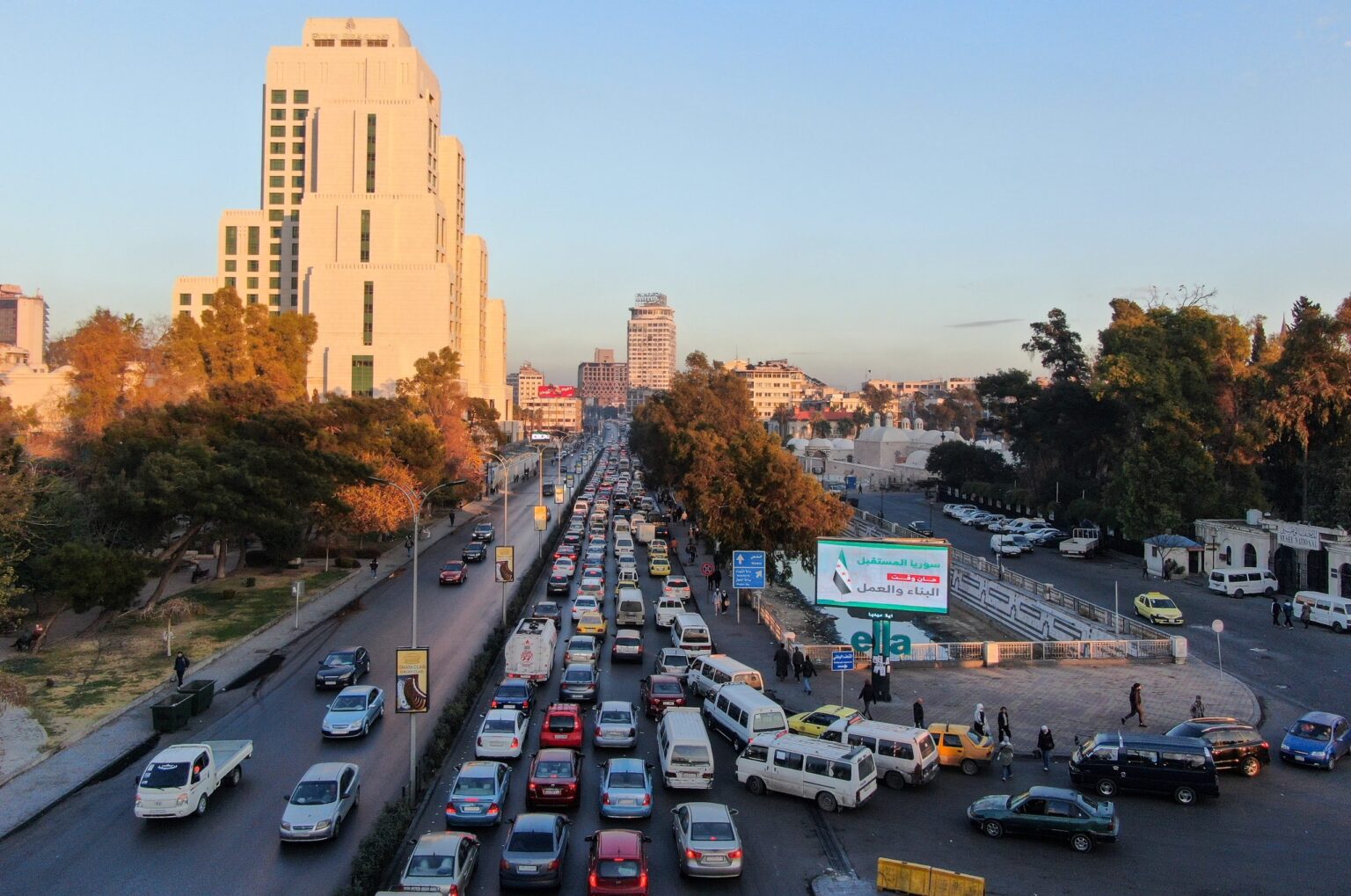
A passing mention of Syria caught my attention at a BMW press conference earlier this year, when the auto giant reported 10 percent regional growth in 2024. I stopped doodling when the Bavarian marque pledged, in all earnestness, to return to the war-ravaged country, of all places.
Even before the 2011 uprising and the 14-year civil war that followed, BMW publicly acknowledged that it sold barely 200 cars a year in Syria. Hard data is scarce, and I’m not even sure BMW’s claims can be trusted. So why return to such an opaque market?
Most analysts I contacted declined to comment, but one anonymous source said that before the war, BMW sold more cars in Syria than in Qatar and Bahrain, moving well over 1,000 units a year. Many of those gleaming German sedans were purportedly handed to retired army officers.
Eventually I managed to get some answers from my old friend Saud Abbasi, CEO of emerging markets at Ghassan Aboud Group, which has invested heavily in the beleaguered nation and represents King Long, GWM, Peugeot, Jeep, RAM and construction giant JCB.
He said that before the war, Syria’s market for new cars, trucks and SUVs stood at around 60,000 to 70,000 units annually, dominated by B- and C-segment sedans – small and medium-sized cars.
“We expect the market to return to those levels, but it is hard to say when,” Abbasi said, adding that some segments, especially commercial vehicles, will recover faster than others.
“All showrooms have been destroyed and supply chains wiped out. We are starting from zero. It is a typical post-conflict situation, though far better than Iraq, which took 12 years to stabilise.”
Without easy access to capital, the average Syrian cannot afford all this shiny new metal
Hazem Assalieh, managing director at strategic advisory FGS Global, provides some historical context for a market where time effectively stood still.
“In the 1980s and 1990s, the government periodically imported batches of cars, mostly Japanese brands,” he said. “By the early 2000s, the market had shifted towards Chinese and Iranian manufacturers.”
Syria became the first country to import Chery vehicles from China, beginning with a shipment of Fengyun sedans. Iranian manufacturer Saipa also established local assembly through Siveco, a joint venture 80 percent owned by Saipa and 20 percent by the Syrian government.
But years of sanctions eventually brought the sector to a halt. “Prices became exorbitant, and choice virtually disappeared,” Assalieh said. “By 2010, even a 25-year-old Mazda 929 from 1985 was selling for $30,000.”
The Siveco partnership formally ended in November 2024 following the fall of the Assad regime. Faced with severe vehicle shortages, the new authorities temporarily scrapped import duties, taxes and most regulations.
Inevitably, Assalieh said, a flood of imports followed. More than 100,000 cars were imported in just four months, most originating from Sharjah’s Souq Al Haraj. From Korean cars to cybertrucks, every possible kind of used automobile made a beeline for Damascus.
This laissez-faire approach did not last long. By June 2025 imports of most used cars were banned entirely, only new cars were allowed, and heavy duties of 25 percent were imposed.
Given this thirst for new cars and accompanying jobs and infrastructure, it’s easy to understand why manufacturers want to enter Syria officially. But without easy access to capital, the average Syrian cannot afford all this shiny new metal.
“The rich can afford Land Cruisers, but by and large, financing is not available,” said Abbasi.
“Currency and the flow of money are key issues, as banking systems are still under development and undergoing reactivation. The government will be the primary source of sales in the short term.”
Further reading:
That leaves Syria grappling with a contradiction. Carmakers are ready to return before the country’s financial system is. Demand is evident, but the institutions needed to support a modern car market are still being rebuilt.
Even recent regional tensions have taken their toll.
“You had rockets overflying Syria to Israel,” my anonymous source said. “Though Syria was still better off because it was not directly attacked, people were holding their breath. There were a few weeks where people paused buying cars.”
Syria just can’t catch a break. Then again, neither can the rest of the region. Much as BMW dreams of a road paved with gold to Damascus, it’s feeling a lot more like the long way to Tipperary.
Imthishan Giado is partner at Motoring Middle East