
by Michelle Mullen
With another stretch of summer heat pushing air conditioners into overdrive, environmentalists are questioning whether New York’s electrical systems can withstand a drastically warming climate.
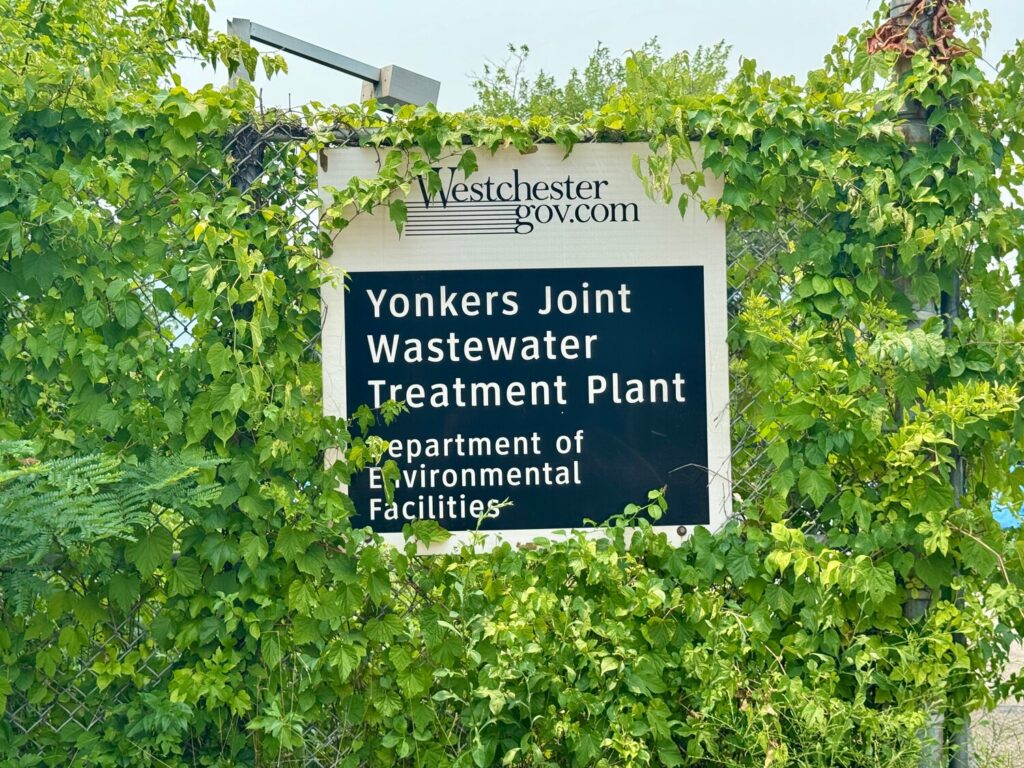
The concern goes beyond keeping the lights on. Electricity powers hospitals, subways, and drinking water and wastewater plants alike. Environmentalists say the July 4 failure at the Yonkers Joint Wastewater Treatment Plant, which sent tens of millions of gallons of partially treated wastewater into the Hudson River, according to Westchester County, showed what happens when that infrastructure is pushed to its limits.
Robert Fanuzzi, president of the Bronx Council for Environmental Quality, called it a warning, saying hotter summers and a growing population mean demand for power increasingly tests the systems everyone depends on. He believes New York is entering an era in which rising demand for power could increasingly test the resilience of its infrastructure.
Con Edison appears to be preparing for that future, announcing a $3.9 billion investment in May to strengthen its electric delivery system in New York City and Westchester County. Demand is expected to reach 12,690 megawatts next summer, the utility said, nearing its all-time record of 13,322 megawatts set during the 2013 heat wave.
Demand is rising even without hotter summers, said Karen Argenti, a Bronx Council for Environmental Quality member. The department of city planning said the city’s population is projected to approach nine million by 2055, putting significant strain on existing energy systems. The Bronx alone is projected to reach roughly 1.65 million people, according to the department.
“The problem is the bad weather, crazy weather, very hot, extremely hot weather, and the high need for electricity,” Argenti said. “You do have to bring in more electricity because you have more people. So there’s a double thing.”
Fanuzzi called it a “growing the pie” problem, citing nearly 50 proposed AI data centers statewide totaling 12 gigawatts — enough energy to power millions of homes — which prompted a new one-year moratorium on permits for large-scale data centers.
“I’m terrified of the future that is driven by an energy-based economy,” he said. “We’re increasing electric demand and hoping that somewhere somebody will pull out a renewable energy source to replace carbon-emitting plants. We’re attempting to air-condition ourselves out of a heat dome that scientists have said is virtually impossible without climate change.”
The other side, Argenti, Fanuzzi and Rae Zimmerman, professor emerita at NYU’s Wagner Graduate School of Public Service, argue, is needing less power by cooling the city down. More electricity treats the symptom, not the cause.
“You could do something that would make it better, which is to figure out a way to capture the carbon that’s creating the greenhouse gases,” Argenti said. “And you do that by making sure you have more green.”
The idea, she continued, is a city with more trees, wetlands and green roofs that needs less electricity to cool down.
Zimmerman’s research treats parks and rain gardens as infrastructure, not amenities. Trees shade streets, wetlands soak up stormwater, rain gardens cool the ground, all easing pressure on the grid.
A green roof’s surface can run up to 56 degrees cooler than a regular one, per the U.S. Environmental Protection Agency, lowering nearby air by up to 20 degrees and cutting cooling loads by up to 70 percent. A mapping study by The Nature Conservancy, Columbia University and the Wildlife Conservation Society, however, found the South Bronx combines high heat vulnerability with some of the city’s lowest concentrations of green roofs.
Zimmerman said the real obstacle isn’t building this infrastructure, but maintaining it.
“The financing for capitalization is one thing for green infrastructure, but maintenance is another,” she said. “That’s a big deal.”
Her research argues green infrastructure should be a permanent complement to “gray” infrastructure, a point Argenti’s own council research echoes.
Fanuzzi said greening public buildings, including plants like the one in Yonkers, could cut their own energy use and ease strains such as that which caused the July 4 failure.
“Maybe New York State will start to rethink its renewable energy policy and start investing in nature-based solutions that lower temperature naturally,” he said.
Keywords
New York power grid,
climate change,
Con Edison,
Bronx Council for Environmental Quality,
Robert Fanuzzi,
Karen Argenti,
Rae Zimmerman,
green infrastructure,
heat wave,
electricity demand,
Hudson River sewage spill,
Yonkers Joint Wastewater Treatment Plant,
renewable energy,
urban heat island,
green roofs,
climate resilience