

The creator economy is worth an estimated $250 billion. More than half the people working inside it earn under $15,000 a year. Those two facts belong in the same sentence.
The platform layer gets most of the coverage and most of the money: YouTube deals, Substack subscribers, brand partnerships. What gets almost none of either is the infrastructure layer, the part that determines whether a creative professional can build a sustainable career before the algorithm changes or the sponsorship dries up. That’s a design problem, and Nneka Onyima is treating it like one.
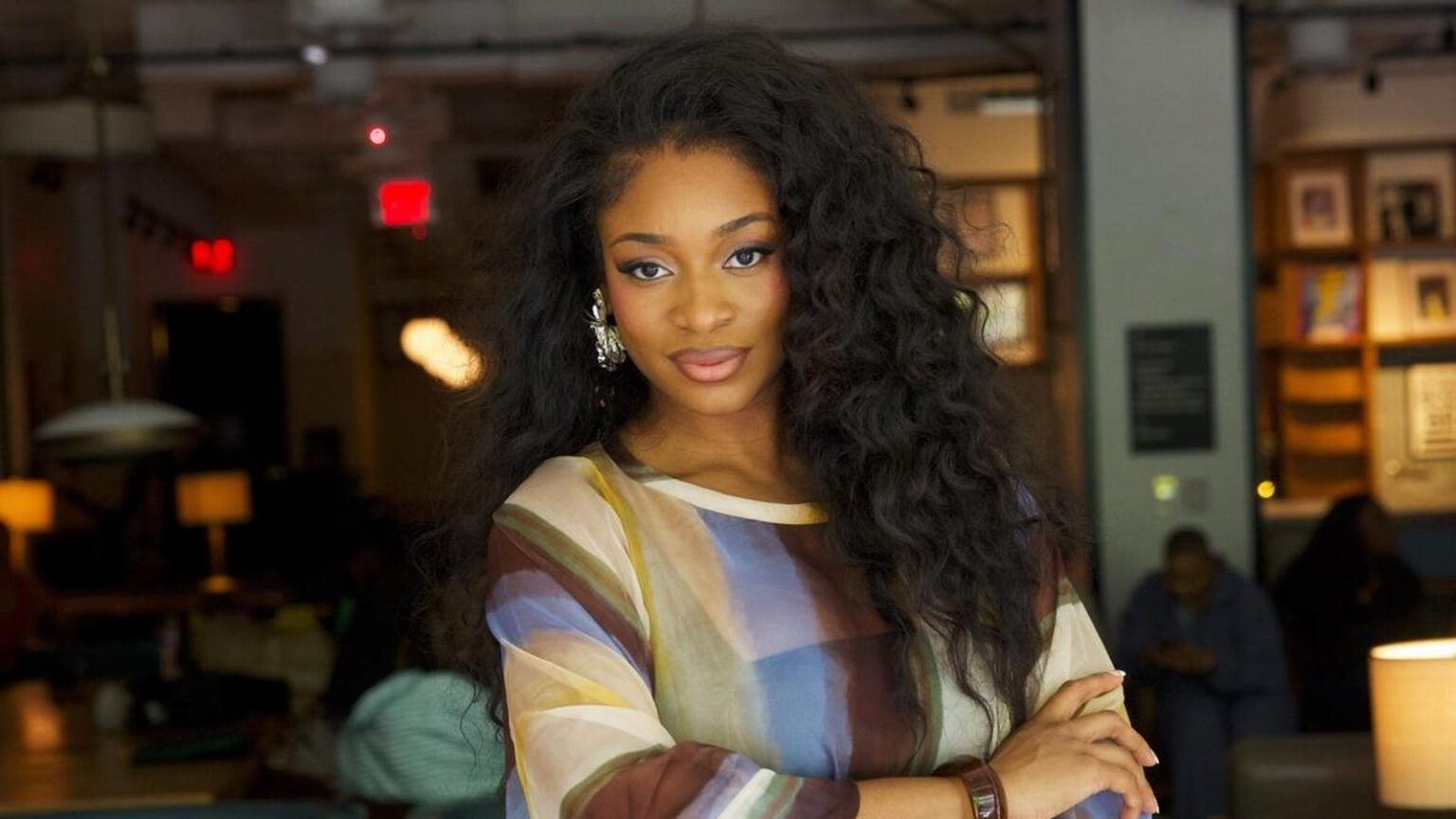
In March 2026, Onyima left her program manager role at Exelon, where she had spent nearly two years overseeing an $18 million solar energy portfolio across Maryland and D.C., to go full-time with NNEXUS the multidisciplinary creative studio she founded. The studio runs discipline-specific incubator cohorts for artists, capped at 40 participants, with a curriculum built in reverse.
“I start with what I want you to walk away with,” she tells me over coffee in Brooklyn. “Then I build the breakdown.”
From Fashion Weeks to Corporate America
Onyima holds a finance and dance dual degree from the University of Maryland. She graduated into COVID, which is to say she graduated into free fall.
Before that, structure was the thing she ran on: 22 credits a semester, pre-dawn makeup calls, Laura Edwards Dance Company rehearsals. She thrived in all of it. Then the scaffolding lifted, and nobody handed her a blueprint for what came next.
She put her chips on beauty. She had started doing makeup at 15, and by her senior year of college one of her publications landed in Vogue. She moved to New York on 11 days’ notice after a conviction she describes as unlike anything she had felt before, cold-emailed every publication she could find with her portfolio, and landed a spot on a Fashion Week team whose creative director also ran crews in London, Milan, and Paris. She went under his tutelage. More than 45 shows across all four cities followed: summers dancing in Greece, a month-long residency performing on a shipwreck site lit by an Emmy-winning designer who had previously lit the Acropolis, a network of Afrobeat dancers built across London and Barcelona.
Every time she came home to Maryland, the world shrank back.
“You might get this big moment,” she says, “and it feels like, ‘Finally, things are gonna happen from it.’ And then they don’t, not the way you think. And you start to realize you’re gonna have to continuously work for your success, and maybe it’s a little easier if you’re just focused on one thing.”
By 2022 she was at her lowest point. She had the body of work, the drive, and what she calls “a grand impactful ecosystem” living in her head with no name to put to it. She didn’t want to push something she couldn’t fully commit to. “I’m all or nothing,” she says. So she took the corporate job, managing renewable energy applications by day and building the NNEXUS framework in the background.
“Gig to gig to gig,” she says, “is not enough infrastructure to sustain a young adult.”
The name came in 2024 while she was creative-directing a three-day music video shoot for Empire Records. Nexus: Latin for intersection. She added a second N for Nneka. Once she had the name, everything moved.
The Framework
NNEXUS launched its first incubator wave, photography and film, in partnership with Eaton Hotel. The partnership did not begin with a pitch deck. The hotel found the incubator flyer on Instagram and reached out.
Fashion and design is the current cohort. Movement is next. Each wave runs three to four weeks, capped at 40 artists, with labs that move from craft and technical skill toward brand development and the business behind the artistry. The final lab in the photography and film wave was led by Paul George, founder of Creative Theory Agency, who opened with a direct premise: every creative is a salesman, whether they like it or not. Accepting that, and learning to work from it rather than against it, is where most artists fall short.
But the most useful frame NNEXUS has built didn’t come from the incubator. It came from last year’s pilot summit, and it breaks creative professionals into four zones: Visionary, Polisher, Builder, and Connector. Visionaries operate in big picture. Polishers refine. Builders execute. Connectors create reach and impact.
“Most artists are strong in one and stuck in another,” Onyima says. “You might be a visionary who can’t build. You come up with new ideas constantly, but you can’t get them across the line. Or you’re a polisher. Perfectionism is getting in the way of execution. Being a builder is how things actually get done. The visionary is more fun. But fun doesn’t finish things.”
That framework drove the incubator curriculum. Once artists identify where they are stuck, they can build toward balance or figure out who to hire.
Building the Table
The hardest question Onyima puts to incubator participants is about market value. Her answer to it is precise.
“I think they come to understand what their value is,” she says. “I don’t know if they come to understand their market value. To know your market value, you have to understand the market first. You have to know how much money is on the table in your industry.”
Only 12% of full-time creators make more than $50,000 a year. The gap between what a creative professional believes their work is worth and what they know how to charge for it is not a talent problem. It is an information problem. And it compounds when no one in the room is teaching the math.
The traditional path for a creative is to wait for someone to pull up the chair: a label, an agency, a brand deal that handles the business side so the artist can stay in the work. Onyima’s answer to that is direct.
“Then you gotta wait for somebody to pull up the seat,” she says. “Or you can build your own table. And then they’re gonna be knocking on your door.”
NNEXUS is not structured around equity investment. Onyima is open to partnerships where both sides bring genuine value to a shared audience, but ownership stays with her. That position reflects how she built the studio and how she wants artists coming through the program to think about their own work.
NNEXUS creative incubator
NNEXUS
Battle of the Threads, the first major NNEXUS immersive experience, opens at Arena Theater in Brooklyn on August 15. 680 seats. Four Afro diasporic designers each paired with a choreographer whose task is to interpret the brand through movement. Battle culture, rooted in Black urban tradition and street style, brought to a theater stage. The audience can influence the outcome.
Incubator cohorts are running or planned in the U.S., London, and Nigeria. Those were in the founding model, not a later phase.
The creator economy will keep measuring itself in platform payouts and market projections. What it has not built at scale is what NNEXUS is trying to build: the part that comes before any of that is possible.
“Figuring it out is hard,” Onyima says. “It can feel really, really lonely. And I don’t think anybody is meant to carry that weight solo.”
She landed the plane, cleaned out the cabin, and fueled it back up. The incubator exists so other people know they can do the same.