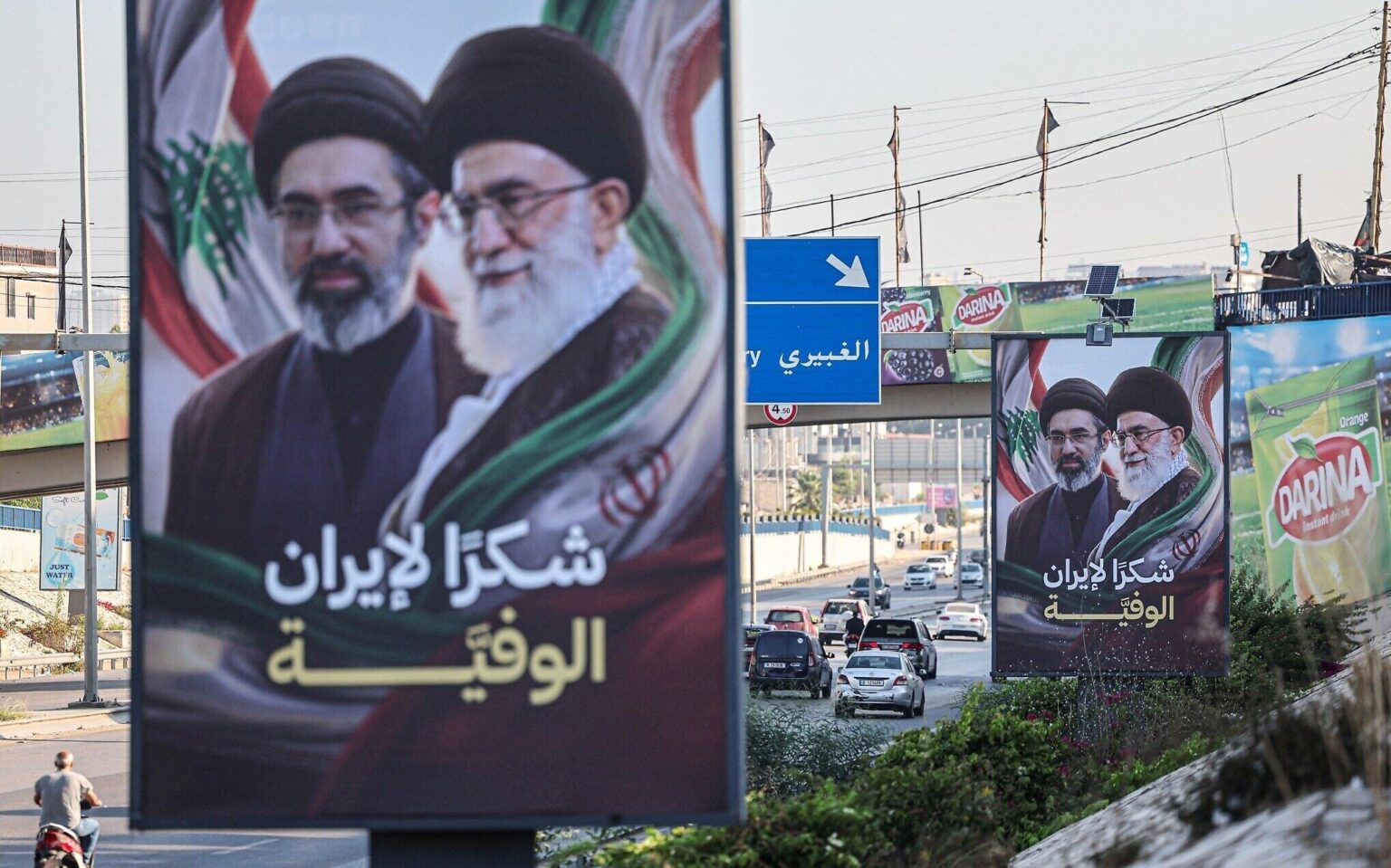
US intelligence assesses that Iran’s new Supreme Leader Mojtaba Khamenei is “far more” inclined to seek the development of nuclear weapons than his father was, according to a New York Times report on Friday.
The report, citing officials who have been briefed on the issue, said that based on intercepted conversations and information gathered prior to the current war, Khamenei is thought to be less hesitant than predecessor Ali Khamanei about building nukes. The elder Khamenei was killed by Israeli strikes at the opening of the war on February 28.
The Times noted that this assessment was not based on new information gathered since the start of the war, or since Mojtaba’s ascension as leader, but on previously collected information.
Though Western intelligence agencies reject Iran’s assertion that it never sought to develop nuclear weapons, and Israel has argued Tehran took steps toward weaponization in recent years, Ali Khamenei is broadly believed to have been at least ambivalent over pursuing the matter.
But the American intelligence report assesses that those within the regime seeking nuclear bombs have now seen their position strengthened, as they argue such weapons are necessary to protect the Islamic Republic from future attacks.
Earlier this week, The Wall Street Journal, citing US and Israeli officials, reported that Israeli intelligence assesses that Iran has moved thousands of nuclear centrifuges into a site in the Natanz area known as Pickaxe Mountain, burying them deep underground and making them harder to target in aerial strikes.

A Hezbollah supporter flashes a victory sign while holding a poster of Iranian Supreme Leader Mojtaba Khamenei during a gathering against the US-Israeli military operation with Iran and its allies in Dahiyeh, Lebanon, Wednesday, June 10, 2026. (AP Photo/Bilal Hussein)
It is not clear where the centrifuges that Israel warned about had come from, the report said, noting they may have been brought from other Iranian nuclear sites.
Iran has not allowed the UN’s International Atomic Energy Agency to access the site and has not given any specific details about its operations. IAEA Director General Rafael Grossi said in March that back in 2021, Iran said it intended “to have nuclear activity” at Pickaxe, the report said.
The NY Times report said Iranian officials are confident American strike will not be able to penetrate deep into the mountain, and have sent forces to reinforce the site to protect it from any potential US commando raid.
The recent fighting with Iran was halted by a temporary US-Iran ceasefire in April and then a memorandum of understanding in June aimed at reaching a permanent end to the war. Trump made limitations of Iran’s nuclear program a central plank of any final agreement, but fighting has now flared up again, with both sides saying the MOU is dead. Israel, which was not a party to the MOU and balked at its concessions to Iran, has not been involved in the recent fighting.
As the US has ramped up airstrikes while Iran fires missiles and drones at US bases in the Middle East, President Donald Trump said last week that “Pickaxe is a possible target for a nice big fat shot right near the front door.”
In 2025, the US bombed Iran’s nuclear sites at Fordo, Isfahan and Natanz. All three had conducted uranium enrichment.
At the time of the 2025 war and the recent Iran war, both Israel and the US said they aimed to stop Iran from ever being able to build a nuclear weapon.
Iran, which vows to destroy Israel, has consistently denied seeking to acquire an atomic bomb, but it has enriched uranium to levels far beyond those necessary for any civilian purpose, and has obstructed international inspectors from visiting its nuclear sites.

This handout satellite image courtesy of Vantor shows an overview of the Pickaxe Mountain tunnel complex adjacent to the Natanz Nuclear Facility near Natanz, Isfahan province, in central Iran on March 7, 2026. (Satellite image ©2026 Vantor / AFP)
The International Atomic Energy Agency estimates Iran had 440.9 kilograms (972 pounds) of uranium enriched to up to 60 percent before the latest conflict began, now believed to be buried in bomb-battered underground nuclear facilities.
That is close to the 90% enrichment needed to make a bomb and would be enough for 10 nuclear weapons, according to an IAEA yardstick.
Even before the recent wars, Iranian officials have increasingly threatened to pursue an atomic bomb.
To build a usable weapon, Iran would first need to enrich uranium up to 90% purity. It would then need to build an actual bomb, and then likely also need to miniaturize it and mount it on a ballistic missile. That process would take months or years, and would face the risk of discovery by Israeli or US intelligence in the meantime.