
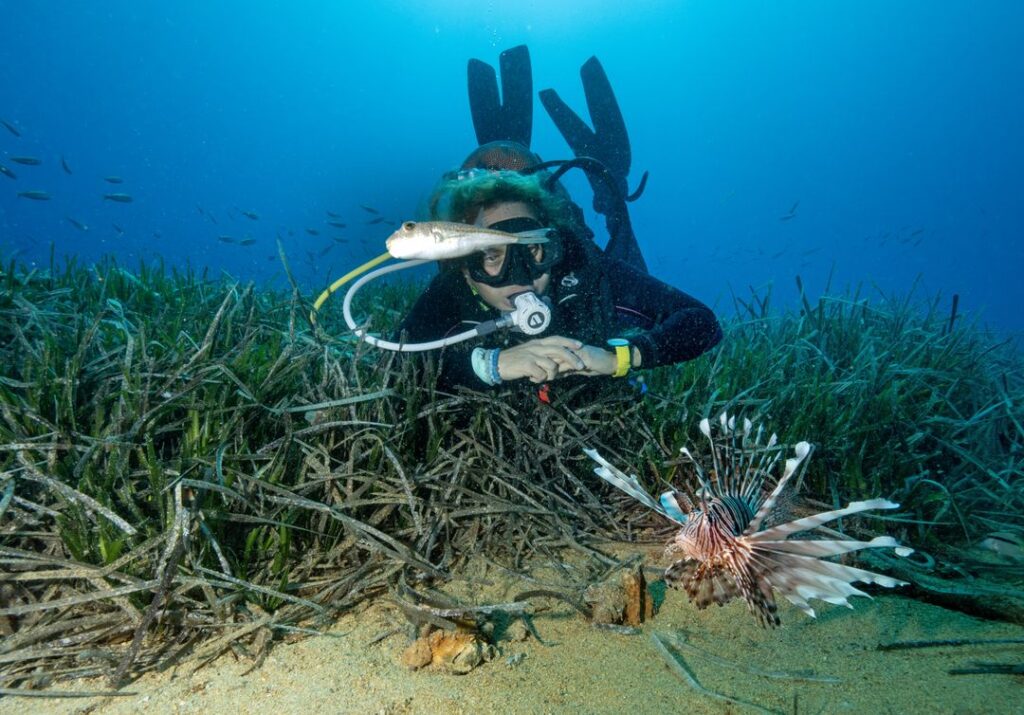
Scientists say climate crisis is warming the Mediterranean Sea, allowing hundreds of invasive fish species to spread while displacing native marine life.
As biodiversity declines, scientists warn that coastal communities dependent on fishing will struggle to sustain livelihoods that have endured for generations.
Scientists have identified the Mediterranean as a climate crisis “hot spot,” with sea temperatures projected to rise by 2 to 6°C by 2100.
Marine heatwaves are also expected to become more frequent and intense, according to the Mediterranean Experts on Climate and Environmental Change, an independent network of scientists.
Ronan McAdam, an oceanographer at the Euro-Mediterranean Center on Climate Change, said the sea’s enclosed basin traps heat, preventing it from dissipating as it would in the open ocean.
Warmer waters have created favourable conditions for invasive species such as the spotted pufferfish, which marine ecologist Ernesto Azzurro described as the Mediterranean’s “worst invader.”
Many of these species entered through the Suez Canal and are now spreading westward towards France and Spain.
The UN Food and Agriculture Organization’s General Fisheries Commission for the Mediterranean said invasive species have been present for decades, but their spread accelerated after the early 2000s as sea temperatures rose. Lionfish, first recorded in the eastern Mediterranean in 2012, have since expanded rapidly westward.
“The Mediterranean will be even poorer, even with less species, simply because climate change is really making this part of the Mediterranean, especially the eastern part, really unsuitable for native species,” Azzurro said.
The island of Cyprus, because of its proximity to the Suez Canal, was among the first to experience the impact. Lionfish have displaced native species such as red mullet, while rabbitfish strip algae from the seabed, destroying habitats used by indigenous marine life.