
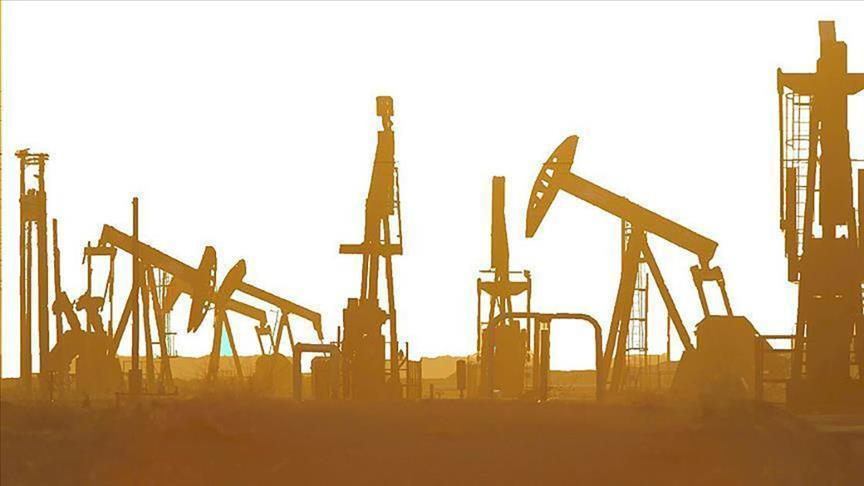
Türkiye is broadcasting its oil strategy beyond transportation by combining diversified crude imports, rising domestic production and new international and new international upstream investments, with TPAO’s entry into Iraq’s Kirkuk oil fields marking a significant step toward its ambition of becoming a regional energy hub.
Türkiye’s supply security strategy has gained a new dimension with Turkish Petroleum Corporation’s (TPAO) acquisition of a stake in Iraq’s Kirkuk oil fields, as the country seeks to diversify its oil sources in line with its goal of becoming a global energy hub.
TPAO’s acquisition of a 15% stake in the consortium developing Kirkuk’s oil fields alongside bp and ConocoPhillips marks a strategic step that positions Türkiye not only as a transporter of crude oil but also as a direct participant in production.
Already serving as a key transit route through the Baku-Tbilisi-Ceyhan (BTC) pipeline and the Iraq-Türkiye Crude Oil Pipeline, Türkiye is seeking to strengthen its position across the entire oil value chain, including production, transportation and trade.
– Rising domestic production supports energy strategy
Growing domestic oil production has become one of the main pillars of Türkiye’s strategy to enhance energy security and establish itself as a regional energy hub.
Production remains concentrated largely in southeastern Türkiye, where the rapid development of the Gabar oil field in Sirnak has significantly reshaped the country’s upstream sector.
With Gabar, described as Türkiye’s largest onshore oil discovery, entering production, Sırnak has become the country’s leading oil-producing province. Batman, Diyarbakir, Mardin and Siirt also continue to account for a significant share of national output.
According to data from Türkiye’s Ministry of Energy and Natural Resources, Gabar produces around 81,000 barrels per day(bpd), while the four provinces under the responsibility of TPAO’s Batman Regional Directorate produce a combined 35,085 bpd.
– Diversified import portfolio strengthens supply security
Alongside higher domestic production, Türkiye continues to reinforce its energy security through a diversified crude oil import portfolio.
According to May data from the Energy Market Regulatory Authority (EMRA), Türkiye imported approximately 2.67 million metric tons of crude oil. Kazakhstan was the country’s largest supplier, followed by Russia, the United States, Iraq and Guyana.
Much of these imports arrive by sea, while the Ceyhan Energy Terminal remains one of the region’s most important oil export and trading hubs.
The BTC pipeline transports Azerbaijani crude to Ceyhan while also carrying Kazakh and, depending on availability, Turkmen crude. The Iraq-Türkiye Crude Oil Pipeline also remains a vital export route for Iraqi oil.
According to state pipeline operator BOTAS, around 96.9 million barrels of crude oil were transported through the BTC pipeline during the first half of the year. The pipeline has an annual capacity of 50 million metric tons.
The route continues to serve as one of the strategic corridors connecting Caspian oil resources with global markets while bypassing Russia and Iran.
– Kirkuk investment expands Türkiye’s upstream role
Alongside higher domestic production, Türkiye continues to reinforce its energy security through a diversified crude oil import portfolio.
According to May data from the Energy Market Regulatory Authority (EMRA), Türkiye imported approximately 2.67 million metric tons of crude oil. Kazakhstan was the country’s largest supplier, followed by Russia, the United States, Iraq and Guyana.
Much of these imports arrive by sea, while the Ceyhan Energy Terminal remains one of the region’s most important oil export and trading hubs.
The BTC pipeline transports Azerbaijani crude to Ceyhan while also carrying Kazakh and, depending on availability, Turkmen crude. The Iraq-Türkiye Crude Oil Pipeline also remains a vital export route for Iraqi oil.
Türkiye has said it prepared to allocate sufficient capacity to enable Iraqi exports to reach around 750,000 bpd.
The new framework is expected to deepen energy cooperation between the two countries through higher shipment volumes over the longer term.
Against this backdrop, TPAO’s entry into the Kirkuk consortium alongside bp and ConocoPhillips represents a strategic milestone that expands Türkiye’s presence beyond energy transit into upstream oil production.
The partnership is also expected to strengthen Ankara’s position in regional energy diplomacy while supporting its long-term ambition of becoming a regional energy hub.
Turkish President Recep Tayyip Erdogan also said Iraqi Prime Minister Ali al-Zaidi had indicated Iraq could eventually supply Türkiye with up to 1 million bpd, underscoring both countries’ willingness to deepen bilateral energy cooperation.
Higher Iraqi export volumes through Ceyhan would further reinforce the terminal’s strategic importance and strengthen Türkiye’s role in regional and international oil markets.
By Duygu Alhan
Anadolu Agency
energy@aa.com.tr
related news