
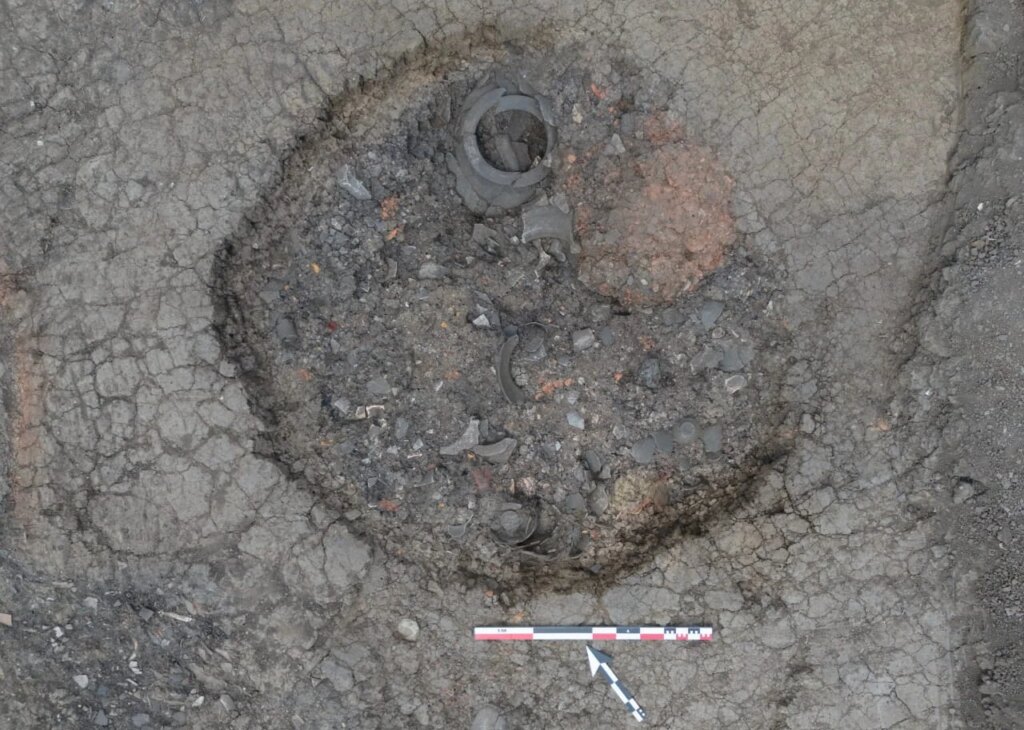
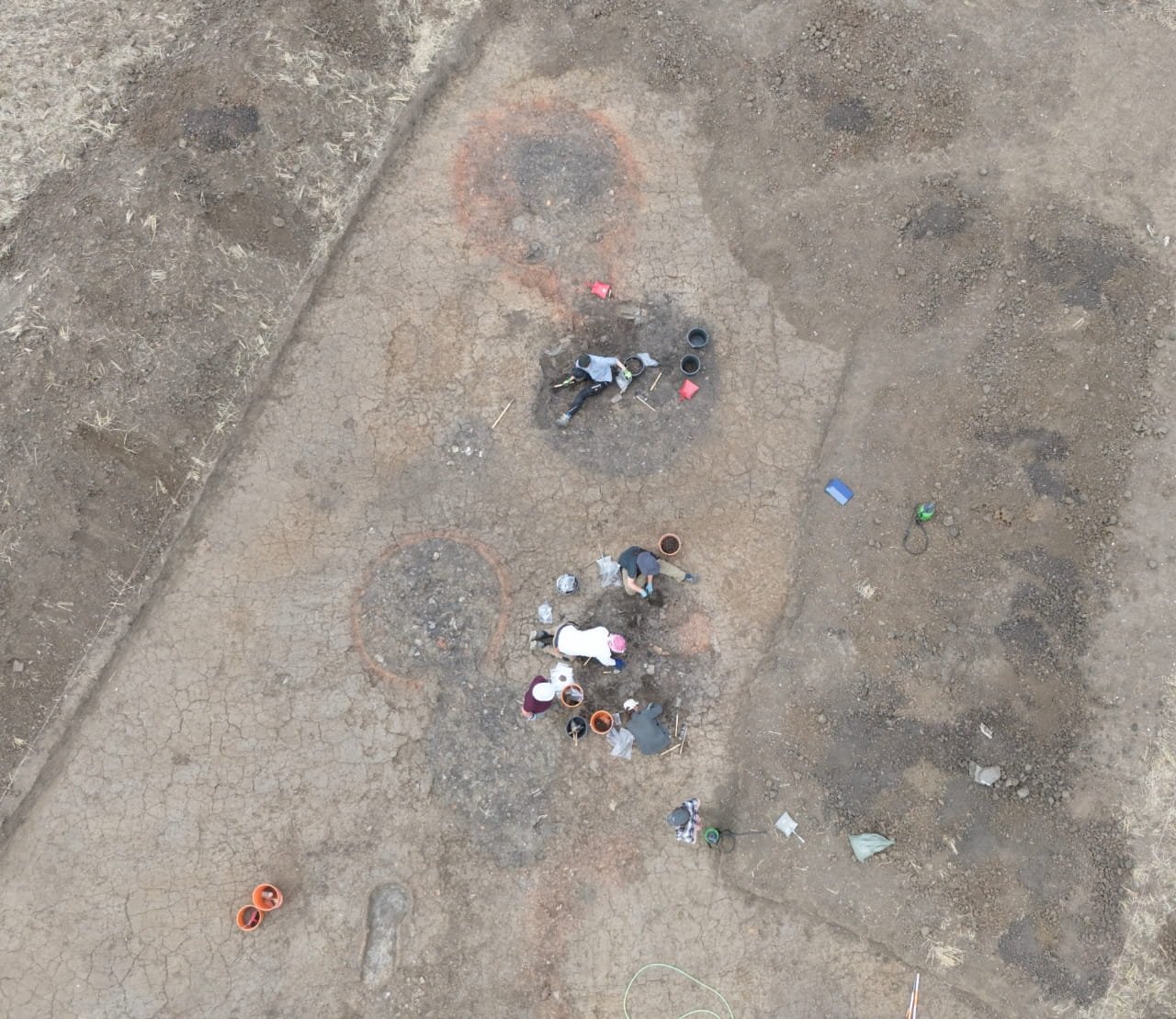
Archaeologists have uncovered what looks like one of the largest Roman pottery production sites ever found in the region of present-day Austria. Excavations in Burg, part of the municipality of Hannersdorf in Burgenland, have already revealed two pottery kilns, while geophysical surveys suggest about 100 more still lie beneath nearby farmland.
 Remains of a Roman-era pottery kiln from the ceramic production site. Credit: IKA_Burg_2026, Photo by L. Schlamp
The site dates from the middle of the first century CE to the middle of the second century CE. Early pottery fragments first came to light during road construction several years ago. Later geomagnetic surveys mapped a dense group of buried features, including kilns, buildings, and flattened burial mounds. A teaching excavation led by Basema Hamarneh from the University of Vienna has now started to test those results, and the first weeks have produced far more than expected.
The remains of two pottery kilns appeared only about 40 centimeters below the surface. Archaeologists also uncovered working pits, clay extraction pits, and waste pits packed with pottery. Together, the finds point to a large workshop where everyday ceramic goods were made. The products included bowls, cups, serving dishes, and storage vessels used in daily life across the Roman world.
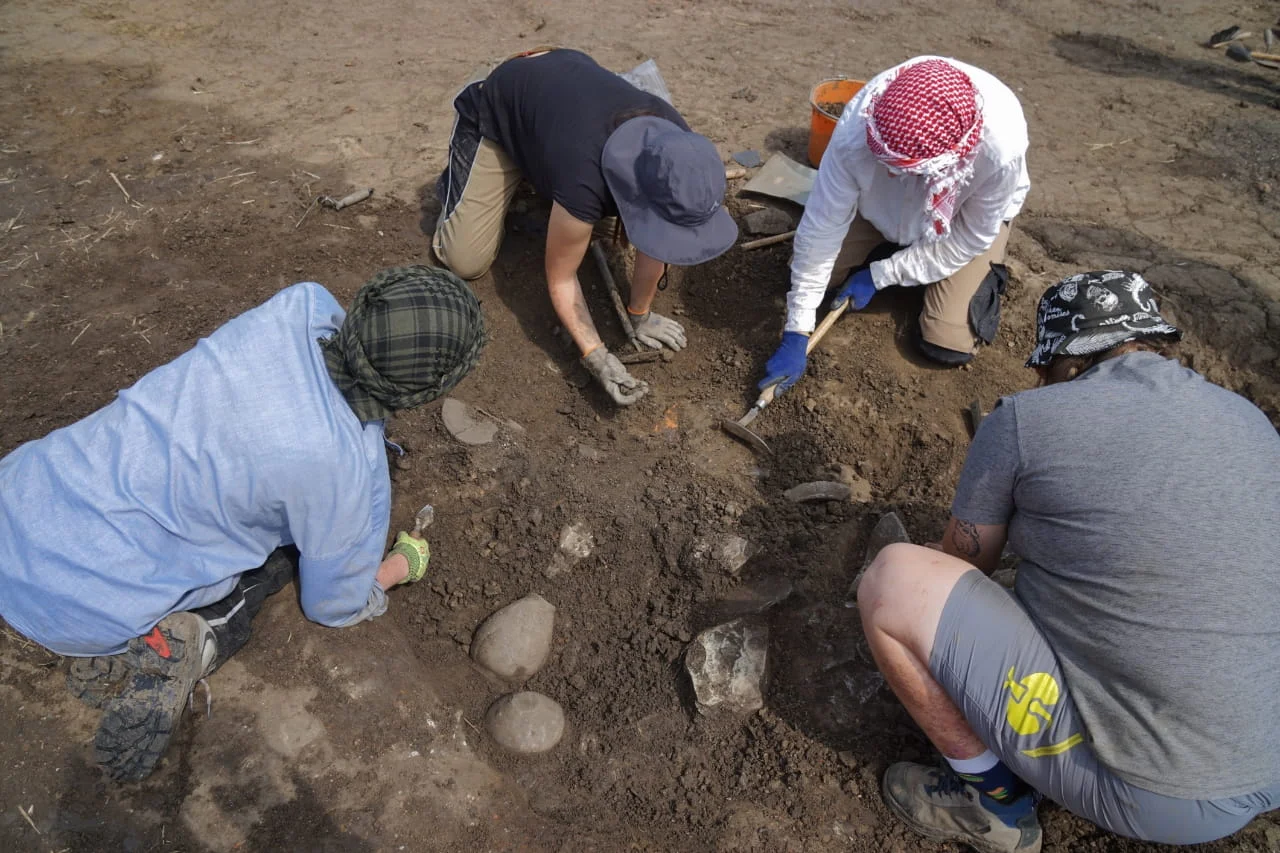 Students from the University of Vienna excavating Roman-era features in Area F1. Credit: IKA_Burg_2026, Photo by L. Schlamp
One of the most unusual parts of the excavation is the high number of complete pottery vessels. Whole examples rarely survive at production sites. Researchers also found many wasters, pottery damaged during firing and discarded before reaching customers. These failed pieces offer a close look at how Roman potters worked, showing firing problems and production methods that finished products often hide.
 The two excavation areas, F1 and F2. The village of Burg and its lake are visible in the background. Credit: IKA_Burg_2026, Photo by Th. Leutgeb
Imported Roman tableware known as Terra Sigillata also appeared at the site. The presence of imported ceramics alongside locally made pottery supports the idea of a busy manufacturing center with links to wider trade networks.
The location raises another question. No large Roman settlement stands nearby to explain such a large output. The closest known urban center was the Roman city of Savaria, founded during the early first century CE and located about 16 kilometers away in what is now Szombathely, Hungary. The distance suggests the pottery reached customers across a much wider area instead of serving only nearby communities.
 Students from the University of Vienna excavating Roman-era features in Area F1. Credit: IKA_Burg_2026, Photo by L. Schlamp
Evidence from a much earlier period adds another layer to the story. Surface finds from the sixth millennium BCE include Neolithic pottery fragments and traces of longhouses built with wooden posts. The Roman workshops and Neolithic settlement are unrelated in time, yet both groups chose the same location. Archaeologists believe the area offered favorable conditions for settlement and pottery production over thousands of years.
Geomagnetic surveys have also identified features about 1.5 kilometers away linked to the well-known Schandorf burial mound cemetery, used during both the Hallstatt and Roman periods. Together with the newly uncovered workshops, these remains suggest the surrounding landscape stayed an important center of human activity for many centuries.
Excavations will continue through August 7, and the team expects many more finds. With every kiln, complete vessel, firing failure, and imported ceramic fragment, researchers are building a clearer picture of Roman industry in Burgenland. The growing evidence shows the region played an active role in production and trade rather than standing on the edge of the Roman Empire.
More information: University of Vienna