
Co-director of the AUT Centre for Active Ageing, associate professor Dr Richard Wright, helped bring Sporting Memories to New Zealand from the UK, where there are more than 150 clubs.
He said sport and leisure are crucially important for people’s mental, social and physical health, bringing people together in a unique way.
“It’s not just about sport. It’s about belonging. It’s about identity, laughter, and being seen. These moments fight loneliness. They spark joy. They build whānau,” he said.
Wright said social isolation can be as bad for your health as smoking 15 cigarettes a day.
“Research suggests that staying socially connected can reduce the risk of early death by up to 50% and add an estimated seven years to your life expectancy.”
To get the Sporting Memories Clubs established in New Zealand, Wright found a group of local people was needed to help drive them.
In Kerikeri, the club was started by Dementia Tai Tokerau community advisor Philippa Cooper, who noticed people in the early stages of cognitive decline were socially isolated but too anxious to join an existing club.
She was supported by chief executive Trudi Bridges, who knew Wright and his quest to bring Sporting Memories to New Zealand.
Cooper pulled in volunteers, including club captain Chris Sicely, whose wife has dementia and progressed from needing care at home to needing to be in permanent care.
Cooper said while people with cognitive impairment were the initial focus of the club, it soon became important for their caregivers to also connect and join in the fun.
“It’s something that they can achieve and enjoy, when they’re living with something that’s not easy for them.”
The fortnightly club days include a morning tea – provided by sponsors Feast Cafe, Good Bitches Baking and Calypso Takeaways – followed by an activity such as competing in round-robin challenges, learning tai chi or listening to a guest speaker.
On alternate weeks, club members meet in Kerikeri for a walk, with the need for walking sticks, walkers and even motorised scooters no barrier to taking part.
Cooper said the success of the club could be measured in the joy exhibited by club members.
“It is a lot of fun and it just puts a smile on their faces.”
Sicely said he enjoyed seeing members take part in activities, despite physical limitations he thought would stop them.
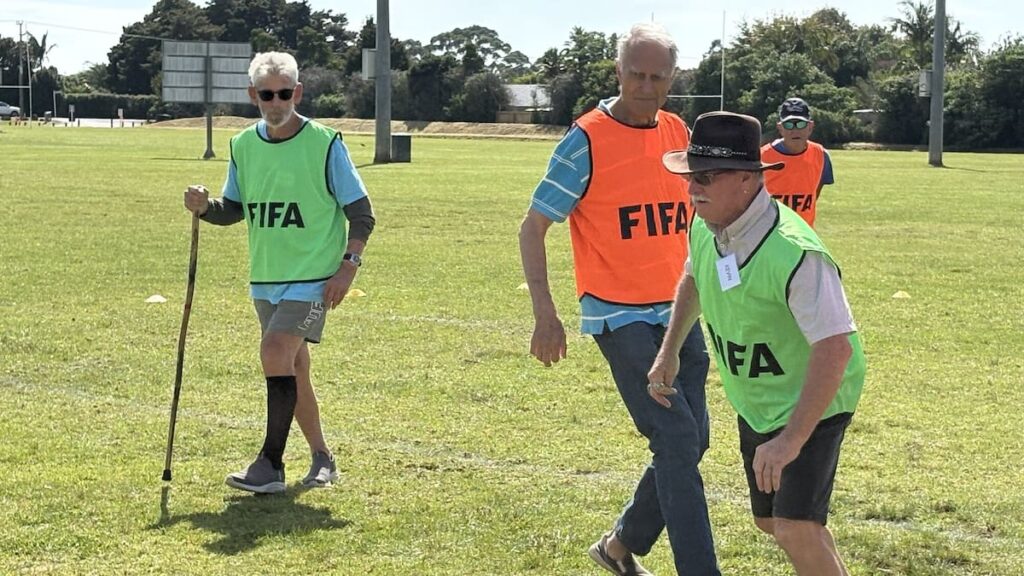
He gave the example of walking football, an adaptation of the beautiful game where no running or high kicks are allowed.
Some club members needed walking sticks to play, but the games have still ended up being very competitive and highly enjoyed, Sicely said.
“I didn’t think half of them could still walk, let alone play … I’ve come to understand that you can’t pigeon-hole people.”
Wright, who helped set up Sporting Memories Aotearoa New Zealand as a charitable trust, now wants other communities to be inspired by Kerikeri and set up clubs in their area.
A second club, in Auckland’s Birkenhead, has just held its first meeting and Wright thought there was plenty of potential in other areas.
Denise Piper is a news reporter for the Northern Advocate, focusing on health and business. She has more than 20 years in journalism and is passionate about covering stories that make a difference.