

Bronze Age tools buried in an ancient wetland near Kojetín in the Czech Republic are giving archaeologists a rare look at ritual practices from more than 3,000 years ago. The collection, uncovered during work along the Brno to Přerov railway modernization project, includes damaged bronze tools and other objects that appear to have been placed in the marsh on purpose rather than hidden for later use.
 Collection of artifacts from the hoard before laboratory processing. Credit: Archaeological Center Olomouc
The hoard was found during ongoing archaeological monitoring led by the Olomouc Archaeological Center. The project follows earlier rescue excavations that uncovered a large prehistoric settlement at the same site. Since archaeologists already knew the area held ancient remains, they used metal detector surveys alongside regular fieldwork. That approach led to the discovery of the bronze cache at the end of May in ground that had recently been covered by floodwater.
Researchers identified the collection as a bronze fragment hoard from the Urnfield culture, a Late Bronze Age society that spread across much of Central Europe. What makes the find unusual is both its location and the condition of the objects.
The hoard contains eight bent bronze sickles, one complete sickle, part of a sword blade, fragments of ornaments, three bronze ingots, two unfinished metal objects, and several other bronze pieces. Most of the items are worn tools that had already seen regular use before they were buried.
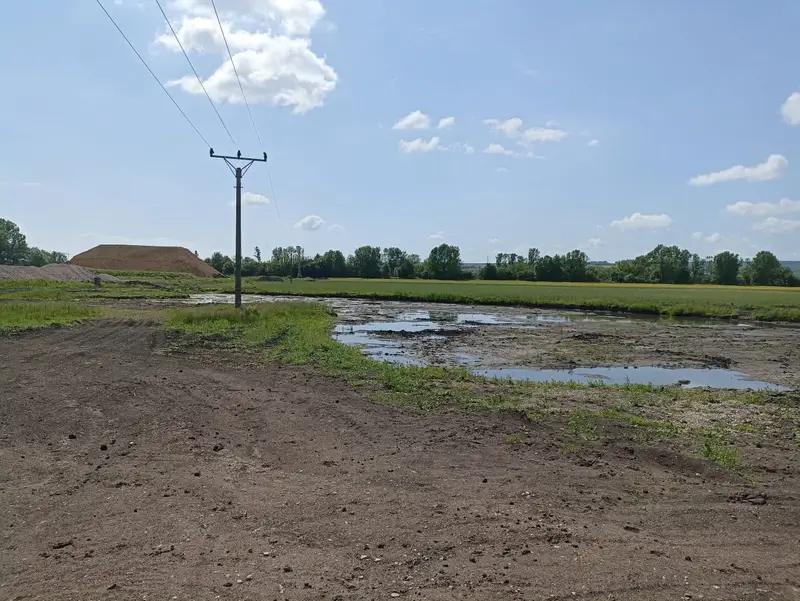 Discovery site of the Bronze Age hoard near Kojetín during archaeological monitoring. Credit: Archaeological Center Olomouc
A detailed use-wear study of the artifacts found marks left during everyday work, along with clear signs of deliberate damage. The sword blade had been broken off with a single heavy blow, likely from a chisel or an axe. Several sickles were bent on purpose before they entered the ground. Researchers say these marks did not come from normal use and instead appeared during the final stage before burial.
Those findings support the idea that the collection was part of a ritual act instead of a hidden supply of metal. The former wetland setting adds weight to that view. Bronze Age people across Europe often placed valuable objects in rivers, lakes, and marshes, and archaeologists have linked many of those deposits to ceremonial practices.
 Close-up of the blade edge of the bronze sword from the Kojetín hoard, showing sharpening marks. Credit: Archaeological Center Olomouc
The Kojetín discovery is not the first metal hoard from the site. Earlier excavations uncovered an early medieval iron hoard inside a workshop building. That group of objects appears connected to everyday work and storage. The newly found bronze collection comes from a much earlier period and tells a very different story about how people treated important objects.
The artifacts are now going through conservation and detailed documentation. Further laboratory studies will help archaeologists determine why the tools were damaged before burial and whether the Kojetín hoard fits the same ritual tradition seen at other Bronze Age wetland sites. The results should also add to what researchers know about the beliefs and daily life of Bronze Age communities in central Moravia.
More information: Archaeological Center Olomouc