
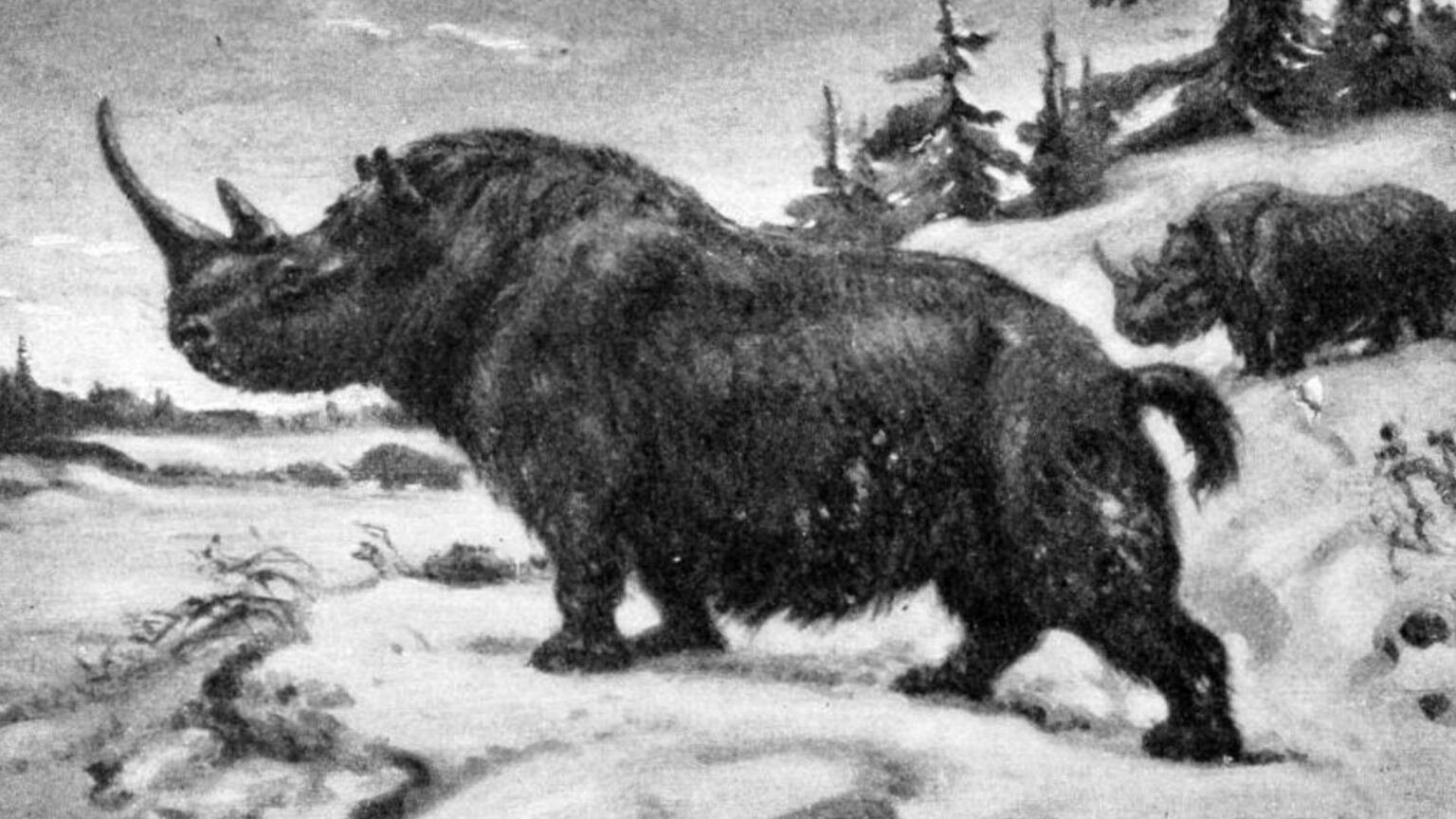
Long before cities and roads transformed its landscape, Europe supported animals comparable with Africa’s largest living creatures.
Elephants weighing over 10 tonnes, armored rhinoceroses, towering bison, and deer carrying record-breaking antlers once occupied its forests, grasslands, rivers, and vast frozen steppes.
Their fossils have been recovered from Britain and the Iberian Peninsula to Italy, Germany, Poland, Romania, and European Russia.
Although several species also reached Asia, these 10 giants are supported by fossils found within geographical Europe.
1. Straight-tusked elephant
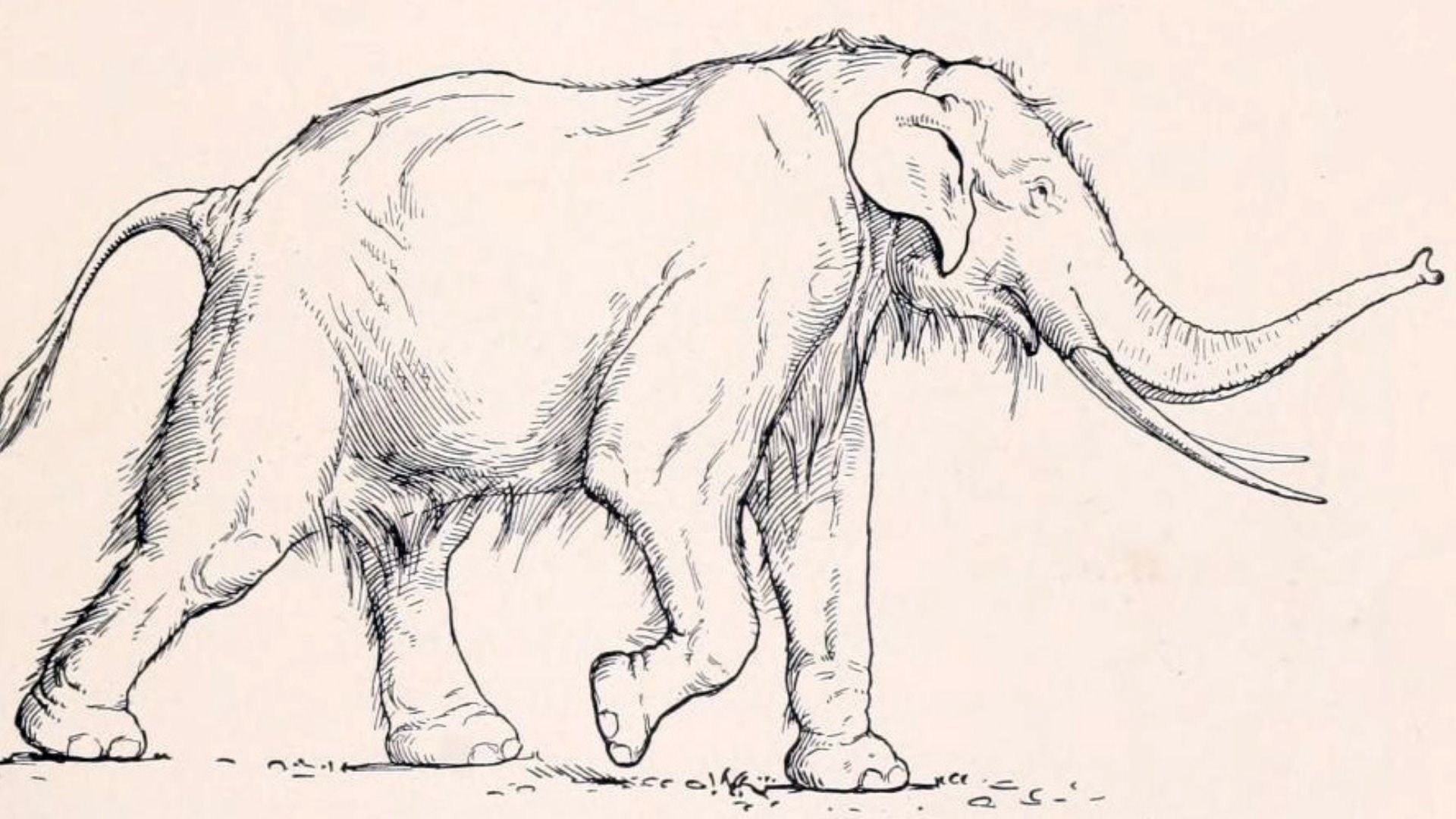
The straight-tusked elephant, or Palaeoloxodon antiquus, was among prehistoric Europe’s largest mammals. Mature males could approach four meters in shoulder height and weigh approximately 10 to 13 tonnes, exceeding most living elephants.
It favored warm woodland and mixed environments rather than the frozen plains associated with mammoths.
Fossils found across Britain, Germany, Italy, Spain, and Greece demonstrate its continental distribution, while butchered remains from Germany indicate Neanderthals processed them around 125,000 years ago.
2. Steppe mammoth
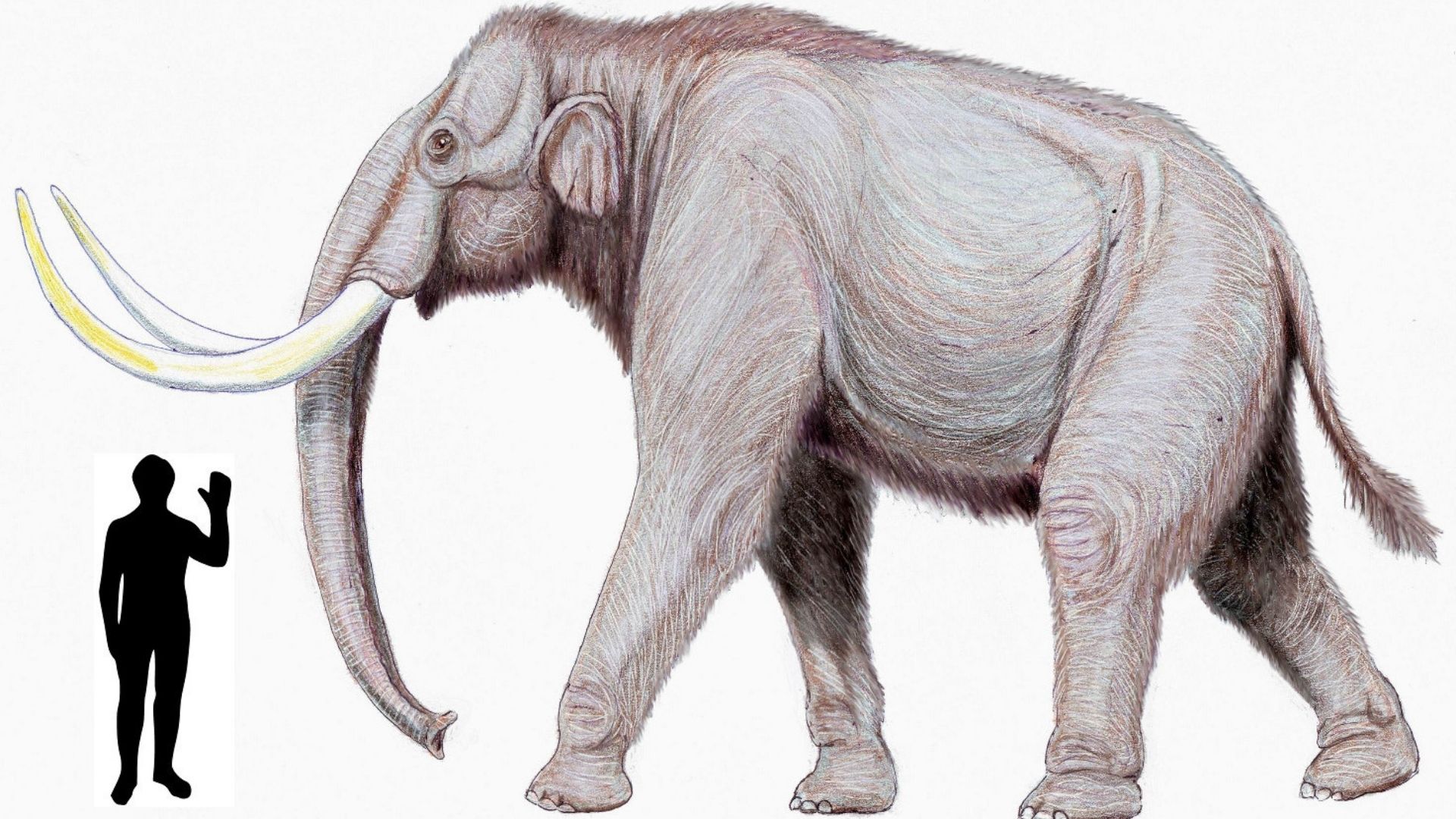
Before woolly mammoths became Europe’s defining Ice Age elephants, the continent was inhabited by the larger steppe mammoth, Mammuthus trogontherii. Exceptional males may have stood around 4.5 meters tall and weighed more than 10 tonnes.
The animal emerged in the Early Pleistocene and spread across Europe’s open grassland environments. Fossils discovered in Britain, Germany, Serbia, and elsewhere show it formed an evolutionary link between earlier southern mammoths and later woolly mammoths.
3. Woolly mammoth
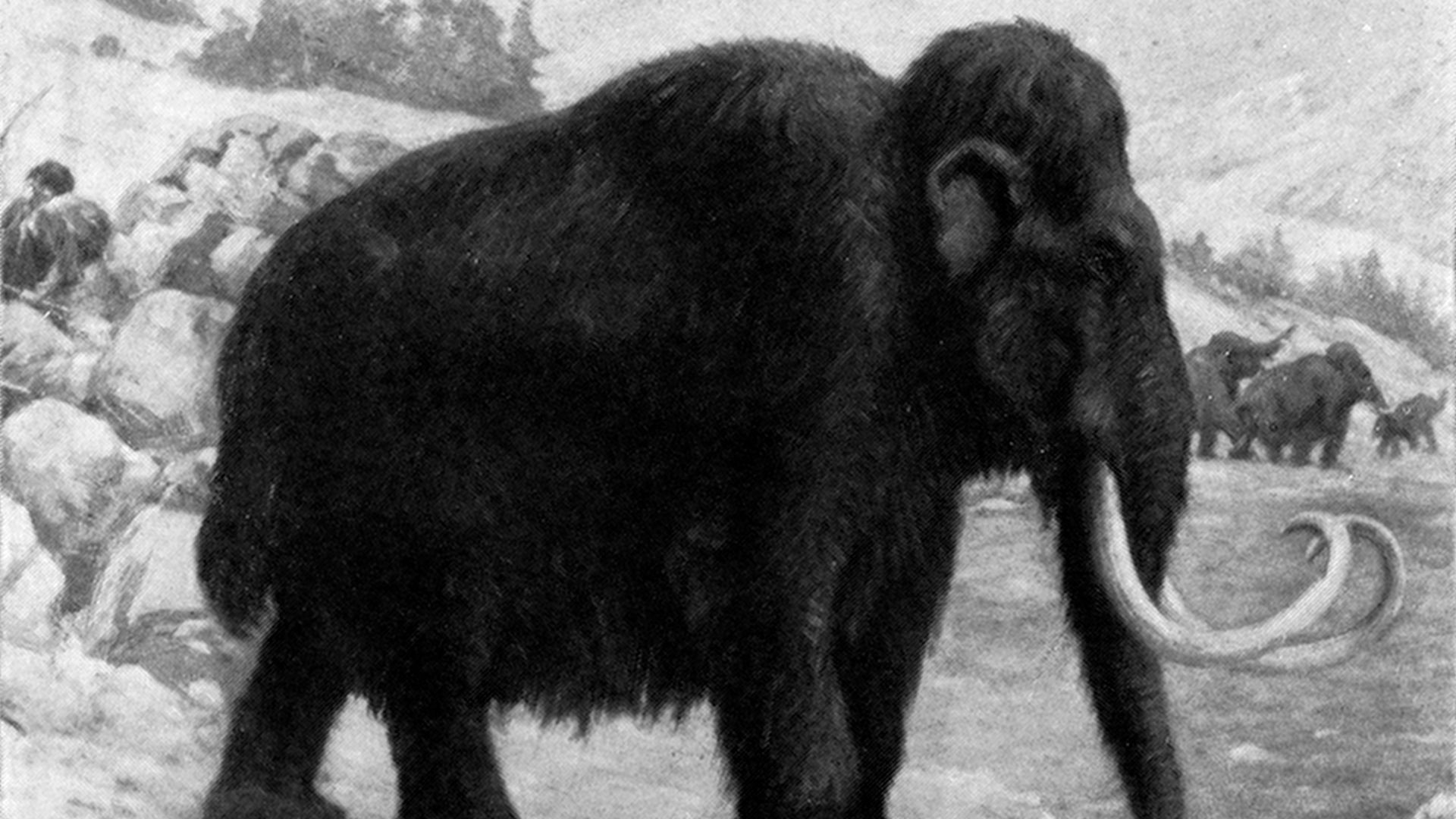
The woolly mammoth, Mammuthus primigenius, was smaller than earlier European elephants but remained physically imposing. Adult males commonly weighed around six tonnes, protected against extreme cold by dense hair, insulating fat, small ears, and a compact body.
These mammoths grazed across the mammoth steppe through northern, central, and eastern Europe. Fossils, preserved material, human tools, and prehistoric art show people repeatedly encountered them before European populations disappeared near the Pleistocene’s end.
4. Southern Mammoth

Mammuthus meridionalis, the southern mammoth, reached Europe more than two million years ago. Large individuals stood close to four meters at the shoulder and may have weighed approximately 10 tonnes.
Unlike the cold-adapted woolly mammoth, this species occupied temperate woodland and open landscapes. Remains from Italy, Spain, France, Romania, and Britain reveal how widely these mammoths travelled as environmental conditions changed.
5. European deinothere

The European deinothere, Deinotherium giganteum, resembled an elephant but carried two downward-curving tusks in its lower jaw. Some specimens may have weighed between 10 and 12 tonnes, although incomplete fossils make precise reconstruction difficult.
Deinotheres lived in Europe during the Miocene and Pliocene, before familiar Ice Age fauna. Their remains have been found in Germany, France, Portugal, Austria, Greece, Bulgaria, Romania, and Spain, confirming a broad continental range.
6. European giant hippopotamus
The extinct Hippopotamus antiquus was substantially larger than the modern common hippopotamus. A three-dimensional reconstruction produced an estimate near 3.2 tonnes, although bone measurements generate estimates reaching roughly 4.7 tonnes.
It inhabited rivers and lakes in warmer Pleistocene intervals, when Europe’s climate differed dramatically from stereotypical Ice Age conditions.
Fossils from Britain, France, Germany, Spain, Italy, and Greece document its presence across southern and western Europe.
7. Merck’s rhinoceros
Merck’s rhinoceros, Stephanorhinus kirchbergensis, is also called the woodland rhinoceros. Large individuals possibly exceeded three tonnes and carried two horns, although horn tissue rarely survives fossilization.
The species preferred temperate wooded habitats and lived alongside straight-tusked elephants.
Remains recovered in Britain, Germany, France, Italy, Poland, and Greece reveal a range that expanded and contracted as glacial and interglacial climates reshaped habitat.
8. Woolly rhinoceros
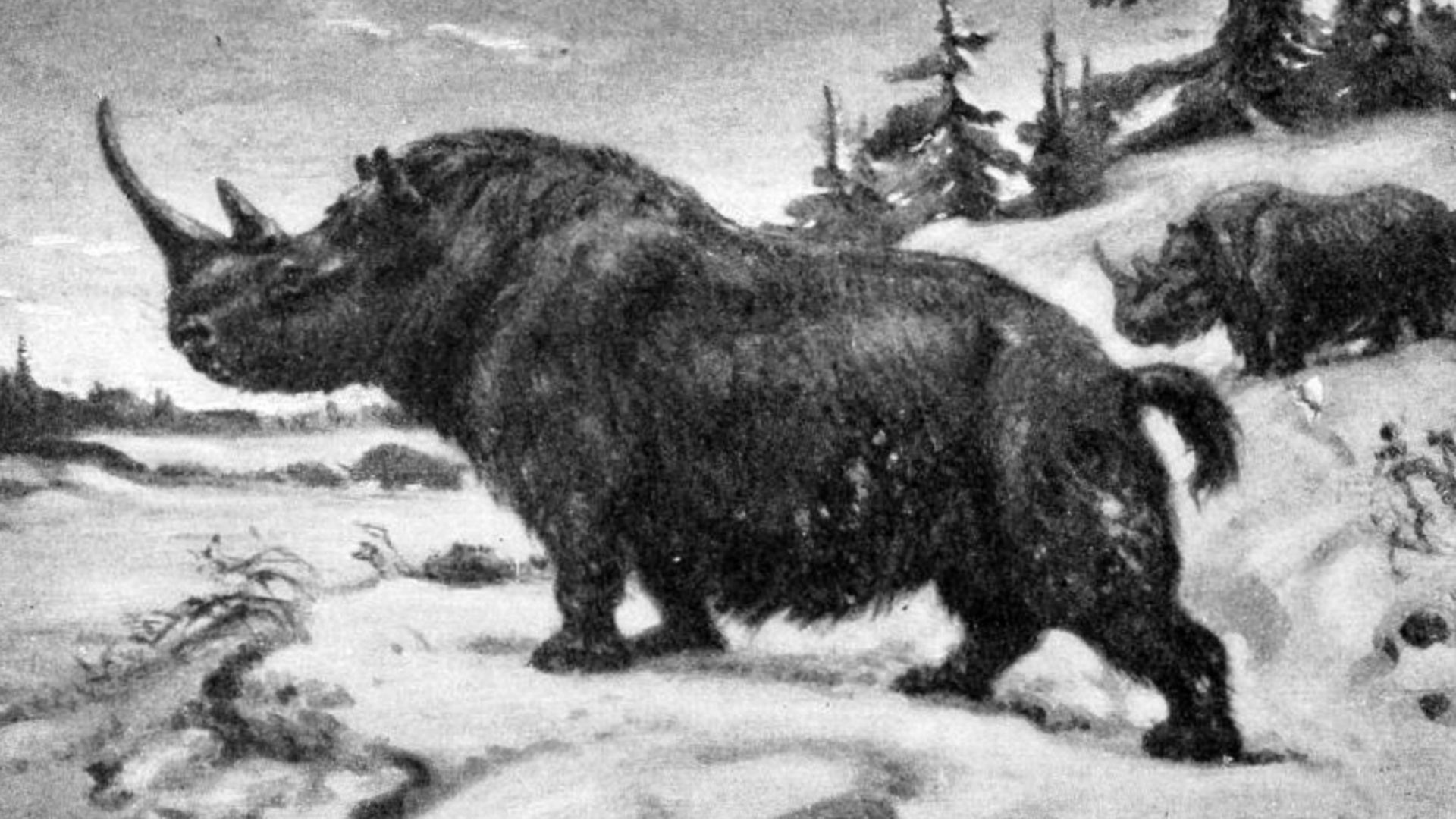
The woolly rhinoceros, Coelodonta antiquitatis, was adapted to freezing environments.
It stood around two meters at the shoulder, weighed roughly two to three tonnes, and possessed a broad front horn possibly helping clear snow from vegetation.
Its thick coat and compact proportions reduced heat loss on Europe’s treeless steppe.
Fossils and cave paintings confirm its presence in Britain, France, Germany, Poland, Czechia, and European Russia before it vanished during the Late Pleistocene.
9. Steppe bison
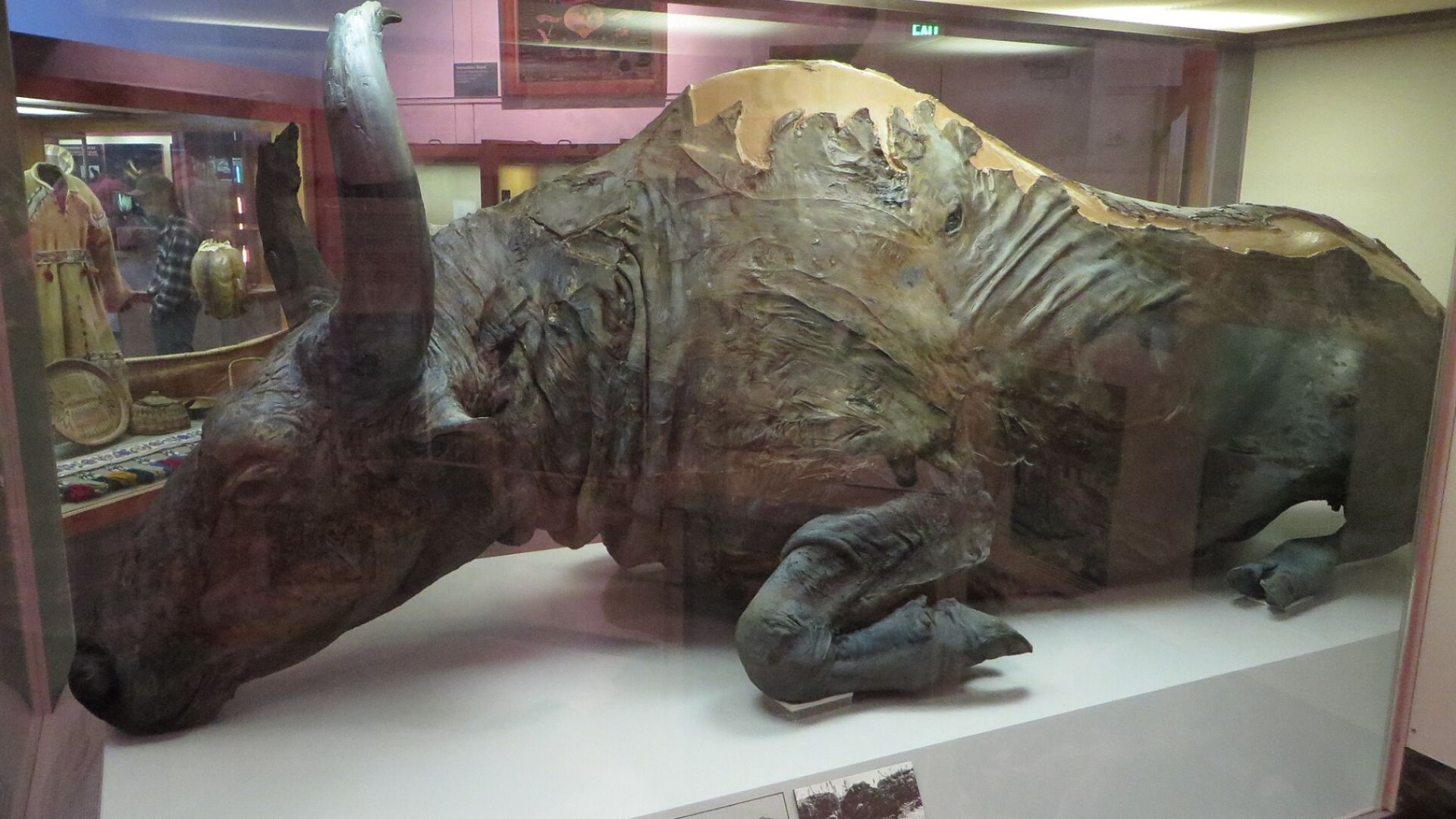
The steppe bison, Bison priscus, was a powerful relative of living bison. Large males could stand around two meters at the shoulder and probably weighed around one tonne.
It inhabited grasslands from western Europe into Eurasia and became a recognizable subject in Paleolithic cave art. Bones found across Britain, Spain, France, Germany, and Poland show it was important prey for large carnivores and humans.
10. Giant deer
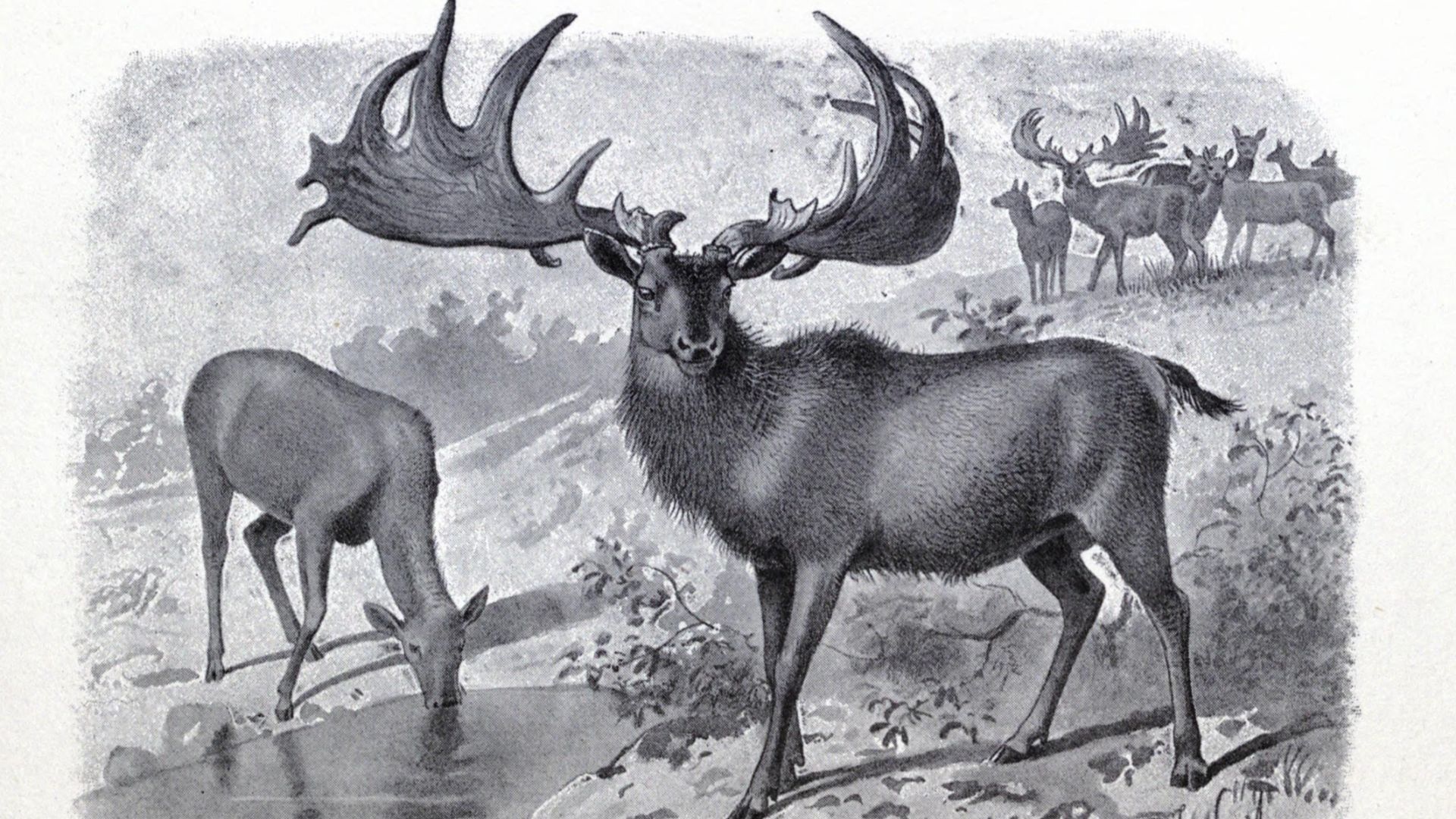
Despite being called the Irish elk, Megaloceros giganteus was neither an elk nor restricted to Ireland. Males weighed roughly 600 to 700 kilograms, but their defining feature was antlers spanning as much as 3.5 meters.
The species lived in Europe for hundreds of millennia, occupying open woodland and grassland. Its fossils are abundant in Irish lake deposits, while finds elsewhere show this deer ranged across much of the continent before disappearing around 8,000 years ago.
Conclusion
Europe’s prehistoric landscapes once supported an extraordinary collection of giants, from 13-tonne elephants and towering mammoths to heavily built rhinoceroses and enormous deer.
Their fossils reveal a continent repeatedly transformed by shifting climates, changing habitats, and the arrival of human hunters.
Although many of these animals also inhabited parts of Asia, fossil evidence confirms that each one lived across regions of geographical Europe.
Their disappearance permanently changed European ecosystems, leaving bones, cave art, and archaeological sites as evidence of a much wilder past.