

Archaeologists at the Tava Tepe site in western Azerbaijan have found evidence of a Late Bronze Age ceremonial kitchen rebuilt and used for centuries. The find changes earlier ideas about the site and points to a place where shared meals helped shape community life across the Caucasus more than 3,000 years ago.
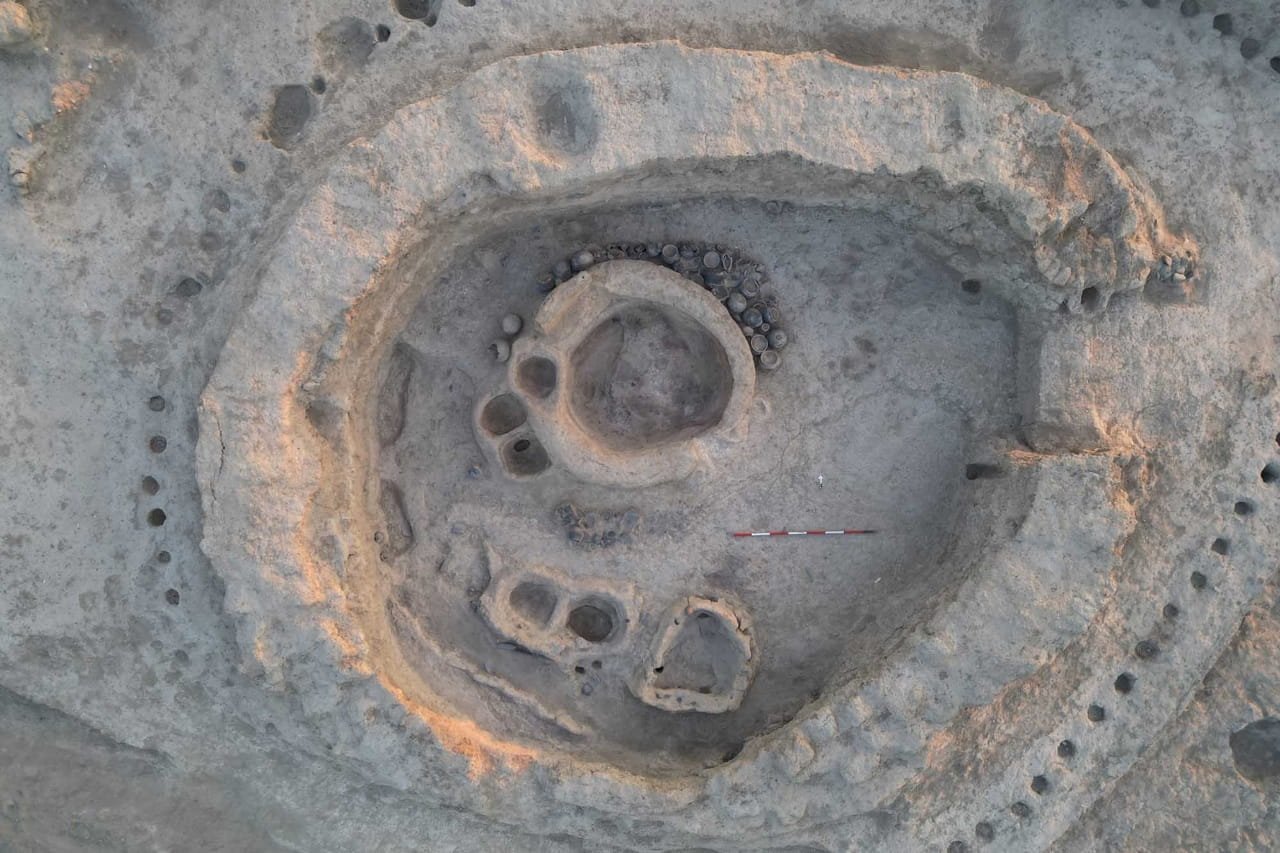 Aerial view of the Late Bronze Age ceremonial kitchen at Tava Tepe, Azerbaijan. Credit: University of Catania
The work, led by the University of Catania with the Azerbaijan National Academy of Sciences, first brought the kitchen to light in 2024. At first, researchers thought the building dated from about 1300 to 1000 BCE and stood alone. Fresh excavations showed a much longer story. The kitchen from 2024 formed the latest stage of a structure rebuilt again and again in the same spot. Each new phase kept older ovens, pottery, and food remains buried inside.
This repeated rebuilding points to a long tradition of gathering around food. The site served far more than daily cooking. People returned to the same place over many generations, keeping older remains as part of each new building.
The oldest level found this season held a raised earthen terrace with a large circular brazier at the center. Several cooking areas stood around the fire. Pots used for cooking sat close to the hearth. Archaeologists found many bowls inside an oven filled with ash. Their placement suggests people left these objects where they were after each gathering instead of clearing the space.
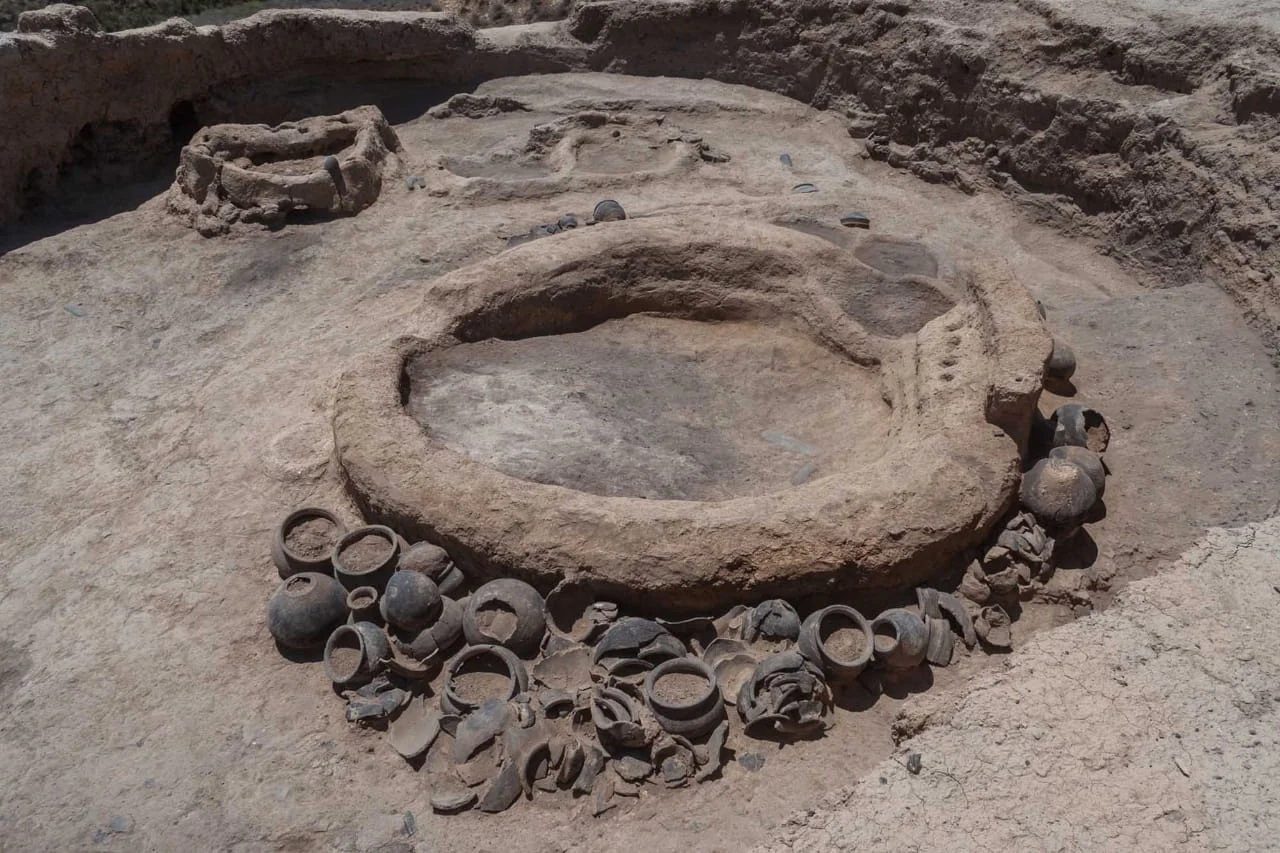 The Late Bronze Age ceremonial kitchen with pottery uncovered during the excavation. Credit: University of Catania
The kitchen itself stands apart from other sites in the region. Builders raised the structure on a packed earth platform. A roof made from wood and brush likely covered the space. The raised design made the building easy to spot from far away. No similar ceremonial kitchen has been found anywhere in the Caucasus.
Around the kitchen, the team uncovered small huts with packed limestone floors, wooden features, and work areas linked to food preparation. Archaeologists also recovered decorated clay stamps called pintaderas. These objects likely pressed geometric patterns into bread or marked loaves before baking.
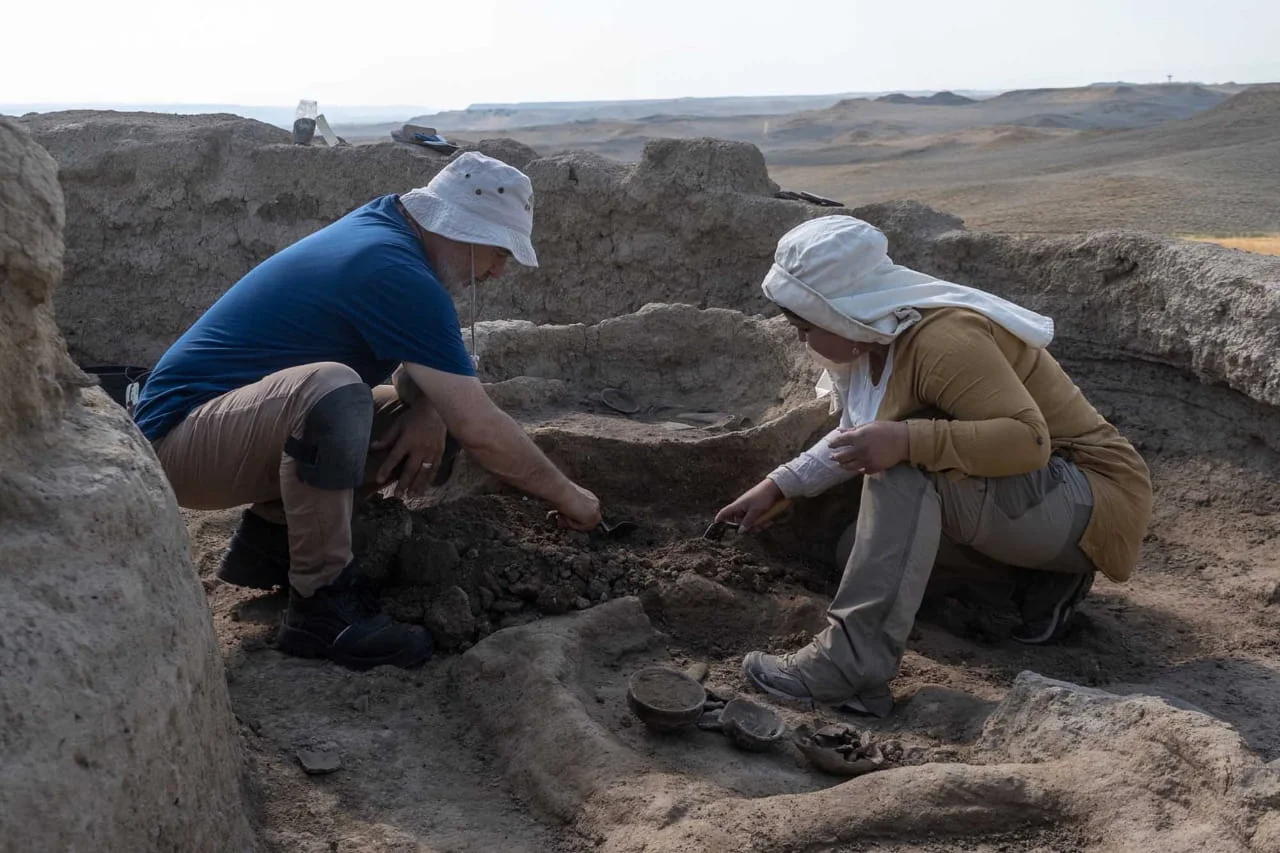 Archaeologists excavate the circular ceremonial kitchen at Tava Tepe. Credit: University of Catania
Scientists are studying food traces left inside the pottery. Early results point to a meal made from millet mixed with honey, similar to porridge, served with beef. Studies of animal bones, plant remains, and food residue aim to build a fuller picture of meals shared at the site.
The findings suggest Tava Tepe served as a meeting place for groups traveling along the Kura River during the Late Bronze Age. Families and communities likely gathered there at regular times to cook, eat, and strengthen social ties through shared meals.
Project leader Nicola Laneri said the repeated rebuilding of the kitchen shows a tradition lasting across many generations. Ongoing studies of animal, plant, and food remains are expected to provide a clearer picture of what people ate during these communal gatherings.
The finds add a new chapter to Bronze Age life in the Caucasus. Instead of showing a simple cooking area, Tava Tepe reveals a place where food, ritual, and community came together over hundreds of years.
More information: University of Catania