

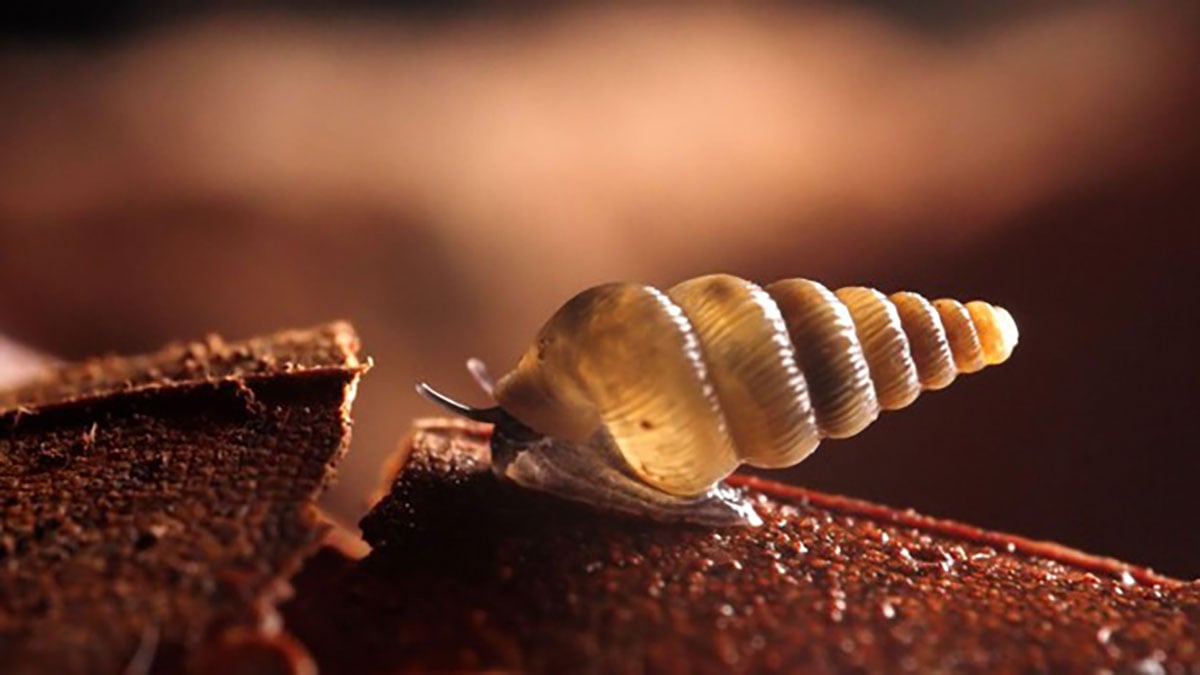
 A Cochlostoma snail crawling in Montenegro. Credit: Roman Willi | Wildreach Productions
Scientists and citizen volunteers discovered two new snail species in northwestern Montenegro, revealing the region’s hidden biodiversity and strengthening calls to protect Komarnica Canyon within the Durmitor World Heritage Site rather than build a hydropower plant.
Two previously unknown snails have been added to Europe’s documented wildlife. Named Cochlostoma komarnica and Cochlostoma dobrido, the species were formally described on July 27, 2026, in the open-access Biodiversity Data Journal.
Neither snail has an English name yet. Both live on limestone rocks and feed on algae and lichens, carrying cone-shaped shells that measure about 6 mm long. Their eyes sit along the sides of the head rather than at the tips of stalks, as they do in most land snails. Each animal also has a circular disk attached to its tail that seals the shell opening like a door.
Citizen expeditions uncover hidden species
The discoveries came from Taxon Expeditions, which organizes scientific fieldwork that members of the public can join. From 2018 to 2025, its expeditions in Montenegro were conducted with the nonprofit Taxon Foundation and local collaborators from the Montenegrin Ecologists Society.
International researchers worked alongside citizen scientists, local students and conservationists to document wildlife in Durmitor National Park and Komarnica Canyon. They collected the snails at several locations across the rugged mountain landscape, but only field laboratory dissections and genetic analyses confirmed that the animals represented previously undescribed species.
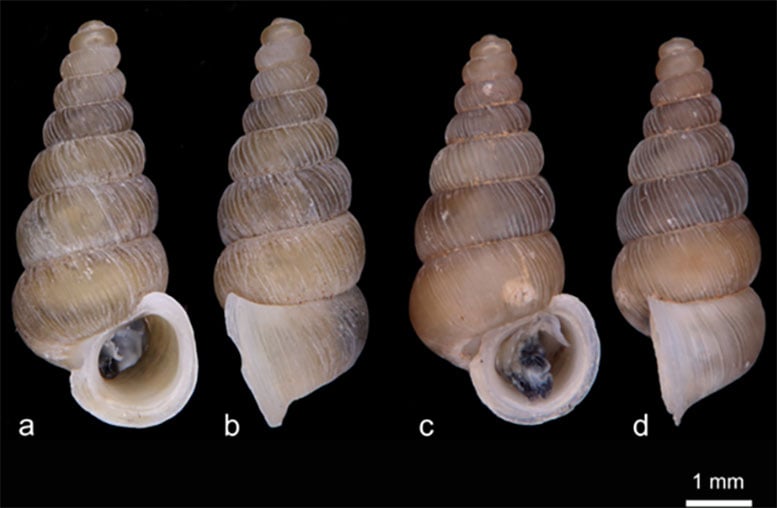 Cochlostoma komarnica (a, b) and Cochlostoma dobrido (c, d). Credit: Enrico Zallot
Participants later voted at camp to name both snails for the places where they were found. “Cochlostoma dobrido” refers to the Dobri Do Plateau between the peaks of Durmitor National Park, while “Cochlostoma komarnica” takes its name from the scenic but unprotected Komarnica Canyon south of Durmitor.
“I was amazed that it is still possible to discover new animal species in Europe,” says musician Janine Buisman from the Netherlands, who joined one of the expeditions and co-authored the paper.
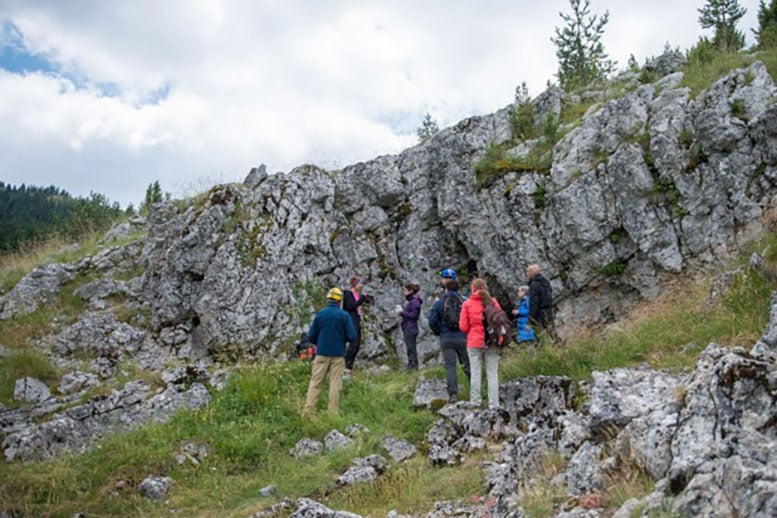 Citizen scientists and researchers from Taxon Expeditions searching for land snails on the Dobri Do Plateau, Durmitor, Montenegro, where Cochlostoma dobrido was discovered. Credit: Pierre Escobas | Taxon ExpeditionsNew species sharpen conservation concerns
Co-author Jovana Đokić, a biologist with the Montenegrin Ecologists Society (MES), said that much of the biological diversity across this part of the Balkans remains undocumented. Its canyons, mountains and gorges may still contain many species unknown to science.
“It is all the more worrying that the Komarnica Canyon is slated to be flooded by a hydropower dam and reservoir. This will destroy this wild river canyon and all the biodiversity in it, including many species still unknown to science,” said Jovana Đokić.
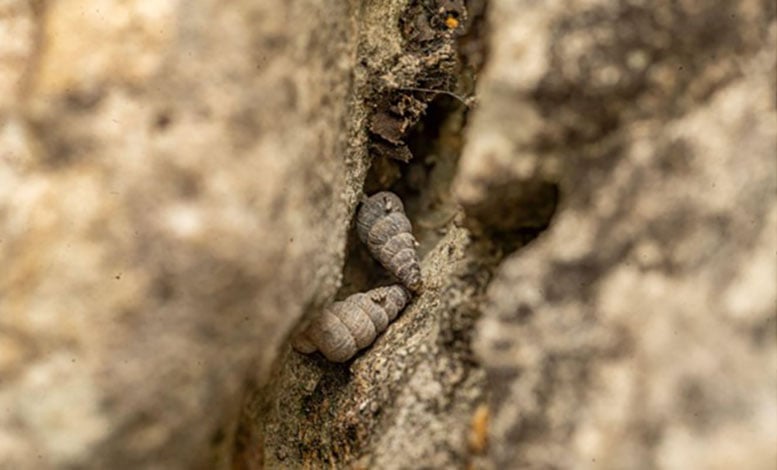 Cochlostoma dobrido. Credit: Sotiris Kountouras | Taxon Expeditions
The proposed development has made Komarnica Canyon a priority for systematic biodiversity surveys intended to strengthen the scientific case for protecting it. MES is calling for the canyon to become part of the UNESCO World Heritage site of Durmitor and for plans for the hydropower project to be abandoned.
“Hydropower is neither green nor sustainable energy when it destroys a unique ecosystem like this,” says Đokić.
Reference: “Two new Cochlostoma species from the Durmitor and Komarnica regions of northern Montenegro (Caenogastropoda, Cochlostomatidae)” by Menno Schilthuizen, Rob Boomsma, Sofie Faes, Marije Jousma, Janine Buisman, Dirk-H. Lankenau, Sotiris Kountouras, Marlijn van den Broek, Elisabeth Hemelaar, Jeroen Noomen, Rick de Vries, Giulia Lopatriello, Antonina Rita Limongi, Simone Maestri, Panche Kamchev, Siebe van Manen, Mohd Zacaery Khalik, Massimo Delledonne, Jovana Đokić, Andrijana Mićanović, Jelena Popović, Iva Njunjić and Enrico Zallot, 27 July 2026, Biodiversity Data Journal.
DOI: 10.3897/BDJ.14.e196955
Never miss a breakthrough: Join the SciTechDaily newsletter.
Follow us on Google and Google News.