
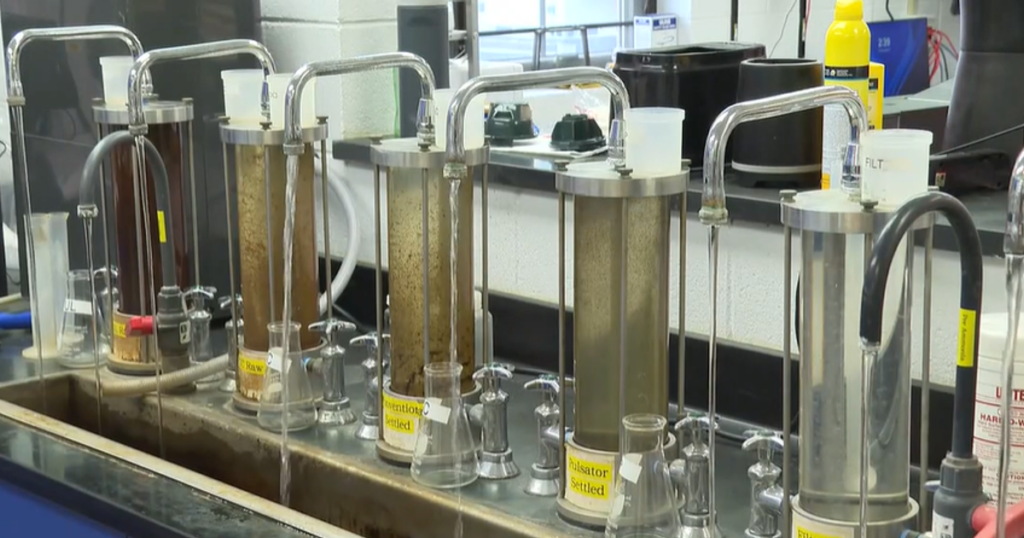
The systems that deliver drinking water to millions of North Carolinians are facing new challenges as climate change brings more extreme weather and utilities contend with growing cybersecurity threats.
Researchers say those risks vary across the state, with smaller water systems often facing greater hurdles because they have fewer resources to prepare. At the same time, larger utilities are rethinking how they plan for droughts, flooding and digital threats to keep water flowing safely.
A new study led by University of North Carolina at Chapel Hill researcher Dr. Zia Lyle projects that 18% of North Carolina’s drinking water systems face a moderate or high risk from climate-related hazards. Nationally, about 120 million people receive drinking water from systems facing similar risks.
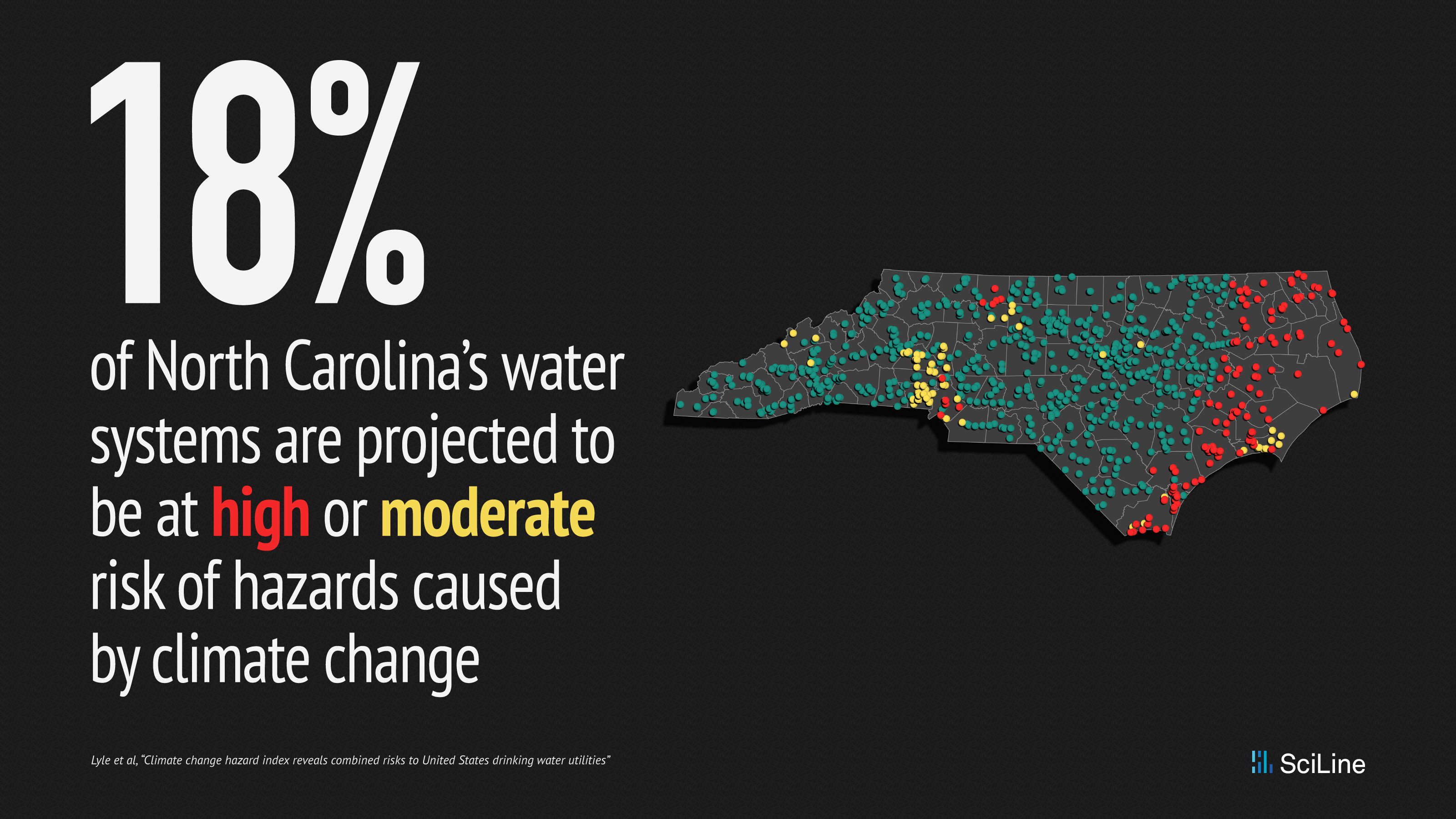 18% of North Carolina’s water systems are projected to be at high or moderate risk of hazards caused by climate change
“It’s really about identifying the specific hazards a system’s exposed to, and then its ability to respond and prepare for those,” Lyle said. “One issue that more rural, smaller systems face is just having less resources, less personnel, less ability to respond to changes and make the needed investments in the system.”
Climate change is changing how utilities plan
For Raleigh Water, preparing for the future means planning for weather patterns that are becoming less predictable.
The utility already accounted for climate change when it updated its drought triggers in 2012, assuming future droughts could be 10% worse than historical conditions. Now, after another dry summer, officials are preparing to revisit those plans.
Ed Buchan, Raleigh Water’s water resources manager, said the utility is modeling what he called a “Frankenstein drought” by combining conditions from the current drought with the historic 2007-08 drought to understand how the system would respond to an even more severe event.
“We’re now looking at combining this drought with the drought we had in 2007, 2008, and just model that and see how we would react,” Buchan said. “And see how our system can be resilient to that sort of event.”
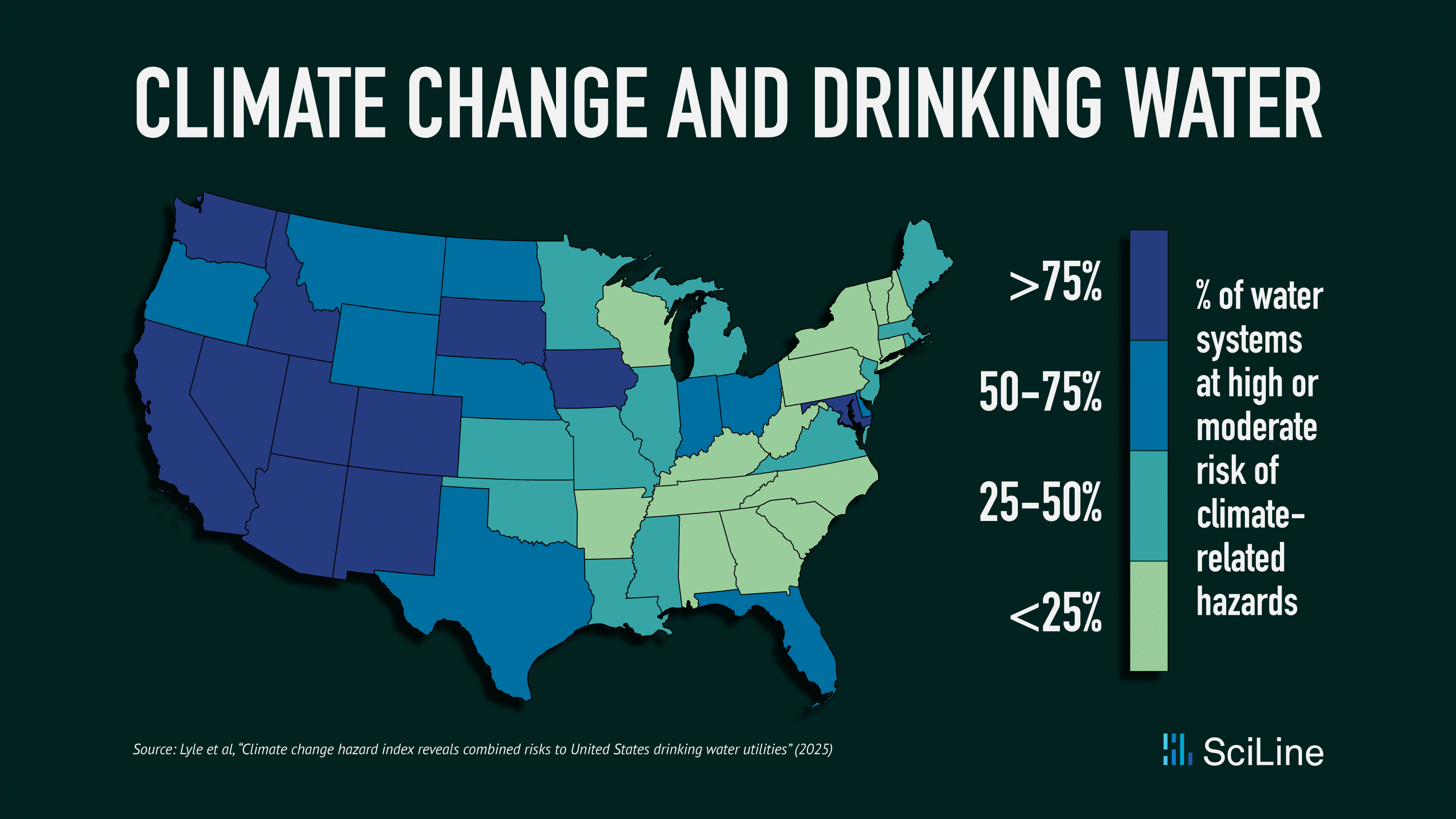 Percent of water systems at high or moderate risk of climate-related hazards by state
Climate change is also changing how utilities think about water treatment.
Longer, hotter summers can increase algae growth, prompting Raleigh Water to invest in ozone treatment and expand its use of powdered activated carbon, which also helps reduce PFAS and improve taste and odor.
Buchan said utilities are also watching how lower water levels could affect contaminants in the future, although Raleigh Water has not seen PFAS concentrations increase during the current drought.
Cybersecurity becomes part of protecting drinking water
Climate is not the only concern.
Water utilities across the country have increased their focus on cybersecurity after a recent cyberattack targeted dozens of water systems in Minnesota, highlighting the growing digital threats facing critical infrastructure.

At the Orange Water and Sewer Authority, cybersecurity is treated as an essential part of operating the utility.
“We have a whole dedicated team to cybersecurity,” said Allison Spinelli, OWASA’s director of water resources. “We work with some really talented integrators as well as IT professionals to make sure that our infrastructure that operates and maintains the facilities that produce the drinking water for this community are safe.”
Spinelli said OWASA separates the computer systems that operate treatment facilities from the utility’s business network to reduce risk.
She said utilities are routinely targeted by ransomware attempts and other cyber threats, making employee training and constant vigilance essential.
“Utilities are one of those areas that are constantly being probed for cybersecurity attacks, ransomware, whatever it may be,” Spinelli said. “So staying vigilant is really important.”
Throughout the treatment plant, sensors continuously monitor water quality and feed information into the utility’s supervisory control and data acquisition, or SCADA, system, allowing operators to track treatment processes in real time.
Preparing for tomorrow’s risks
Researchers say climate change and cybersecurity underscore the growing complexity of delivering safe drinking water.
Lyle said every system faces different hazards depending on its location, size and resources, making preparation just as important as responding when problems arise.
Utilities across the Triangle, including Raleigh Water and OWASA, say they are using climate planning to better identify future risks and help guide investments aimed at strengthening their systems for decades to come.