
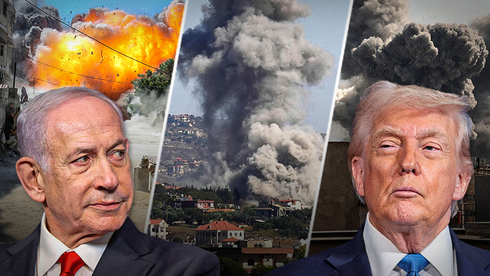

Israel, US settle on strategic pause as Iran pressure campaign shifts from war to economy
(Photo: Ahmad Hasaballah/REUTERS, Stringer/Getty Images, Majid Asgaripour/WANA via REUTERS, JOE RAEDLE/AFP, REUTERS/Jonathan Ernst)
Rather than intensify military pressure or continue what Washington increasingly views as futile talks, Trump has opted for a pause in both diplomacy and military action while maintaining economic pressure on Iran.
That pressure is expected to continue through enforcement of existing sanctions and, above all, the naval blockade imposed by U.S. forces on Iranian ports.
According to sources, the pause is expected to last until after the U.S. midterm elections on Nov. 8, and likely somewhat beyond them. The administration would then conduct a fresh assessment, possibly alongside a new Israeli government, before deciding whether to resume military action against Iran or pursue another course.
There is one significant exception: the Strait of Hormuz.
The United States is prepared to allow crude oil and natural gas to leave the Middle East by any available route, including through an agreement between Iran and Oman aimed at reopening the strait. Washington has been involved behind the scenes in those talks and is now allowing Tehran and Muscat to reach whatever arrangement they can accept, with one condition: ships passing through Hormuz must not pay transit fees to Iran. Vessels that do so could face U.S. sanctions.
The broader terms are being negotiated directly between Iran and Oman.
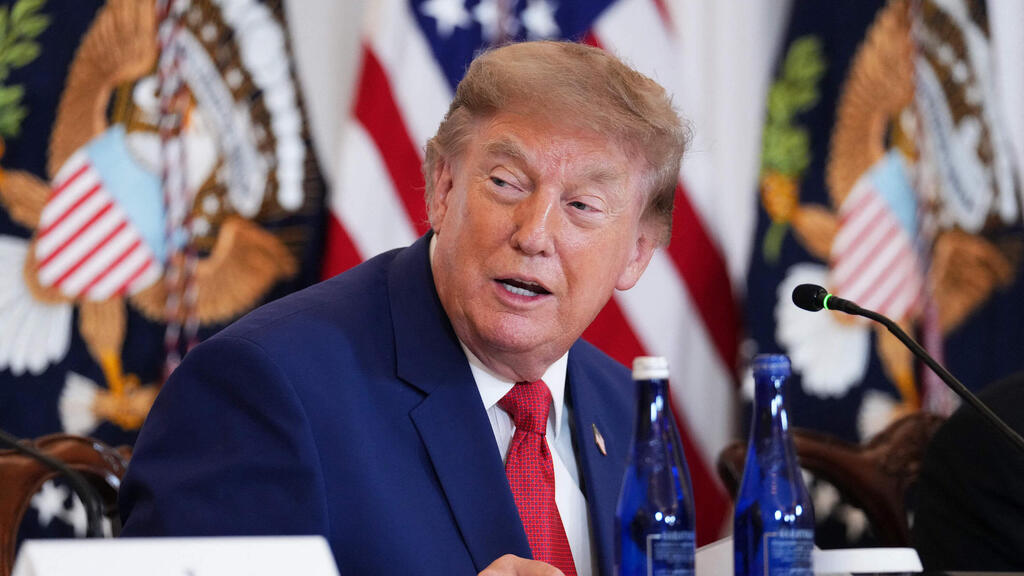
US President Donald Trump
(Photo: Eric Lee / GETTY IMAGES NORTH AMERICA / AFP)
Such an arrangement could benefit Tehran because Washington would not prevent ships carrying Iranian oil and gas from traveling westward through Hormuz on their way to China, Pakistan and India. At the same time, the U.S. Navy would continue enforcing its blockade in the Indian Ocean and at the entrance to the strait against vessels carrying cargo into Iranian ports.
Washington hopes that even a partial reopening of Hormuz would ease the global oil-price crisis, which is also affecting the U.S. market.
Four main considerations appear to have driven the change in strategy.
The first is domestic politics. Trump wants to preserve the Republican majority in both chambers of Congress in the November midterms. That majority gives him broad freedom of action, including the option of returning to war with Iran. Losing control of either the Senate or the House would significantly constrain him.
The war is unpopular among the American public, including among some Trump supporters. Fuel prices could also affect voting behavior, and Trump wants to get through the next three months without more American soldiers returning home in coffins and without gasoline prices climbing above four dollars a gallon.

The second factor is Washington’s conclusion that hard-line factions in the Islamic Revolutionary Guard Corps and allied clerics have hardened their negotiating positions because they believe Trump is unwilling to follow through on threats of renewed military escalation.
As a result, Tehran has been raising its demands almost daily and presenting conditions that Washington views as humiliating and tantamount to capitulation.
Given that approach, even strong advocates of negotiations, including Vice President JD Vance, have concluded that there is little prospect of reaching an agreement with the current Iranian leadership, whether on the nuclear issue or even on reopening Hormuz.
The third factor is Iran’s worsening economic situation.
Following advice from Israel, Washington wants to give economic pressure time to threaten the regime’s stability. Within several months, that could make negotiations more realistic or, potentially, contribute to the government’s collapse.
Despite the economic crisis, large numbers of Iranians have not taken to the streets. One central reason is that the country remains officially at war, a situation that tends to rally populations around their governments or at least keep people at home.
The fourth consideration is the need to rebuild U.S. weapons stockpiles depleted during the two previous rounds of fighting with Iran.
The Pentagon is moving to accelerate production of interceptors and strike missiles in case Washington decides to escalate again. That would allow the United States to defend its own forces and Gulf states without reducing strategic reserves to a level that could weaken its ability to respond to China if Beijing tried to exploit U.S. involvement in the Middle East to move against Taiwan.
Those four considerations have led Trump and his administration to favor a military pause lasting at least until the end of November.
Contrary to some reports in the United States, Trump does not appear to be preparing to declare victory and end the war. Instead, he is tightening economic pressure while keeping the military option hanging over Tehran ahead of a future diplomatic or military move.
One indication is that the United States continues to maintain its substantial naval and air presence in the Middle East at its current level rather than drawing forces down.
For Israel, the development is broadly convenient.
It ensures that Washington will not lift sanctions on Iran and will continue its economic and maritime pressure. Under those conditions, Tehran will struggle to rebuild its ballistic missile production capacity, let alone restart its nuclear drive.
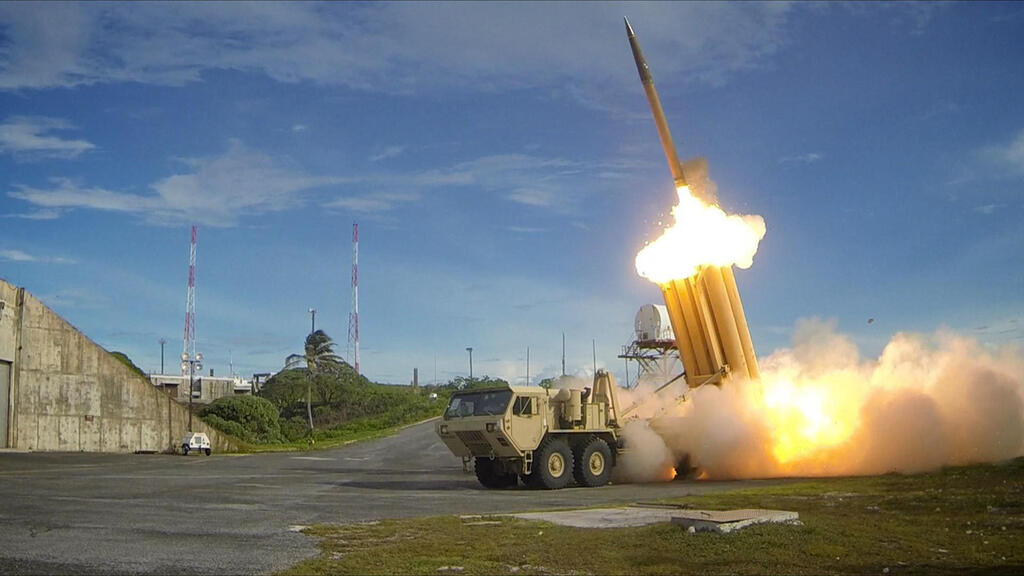
THAAD interceptor launch; stockpile down at least 38% since war began
With the United States and Israel watching closely, and with economic conditions continuing to deteriorate, Iran also has less ability to support its proxies, including Hezbollah and the Houthis.
That approach closely matches recommendations from Israel’s defense establishment and intelligence community, which helps explain why Prime Minister Benjamin Netanyahu and his government have largely remained silent.
In Gaza, much of the current uncertainty stems from confusion between two separate processes.
The first is taking place in full coordination between the United States and Israel, more specifically between the U.S. military, the Board of Peace and the IDF, and involves preparations for future steps under Trump’s original 20-point plan.
On the ground, work is underway on a pilot residential neighborhood in an open area between Khan Younis and Rafah. Palestinians currently living in territory controlled by Hamas would be able to move there if they choose to live in the Israeli-controlled area east of the Yellow Line.

US troops at the Board of Peace logistics support center at Kerem Shalom
(Photo: REUTERS/Amir Cohen)
The temporary neighborhood would serve as an interim stage before permanent housing is built as part of Gaza’s reconstruction. Residents would undergo screening intended to ensure they are not Hamas members.
A second project involves construction of a camp for the multinational stabilization force in an open area of northern Rafah. Those forces are supposed eventually to enter Gaza and separate Hamas from the IDF while the terror group disarms and Israeli forces withdraw.
Both projects are being built behind the Yellow Line, inside territory controlled by the IDF, and there is currently no intention for Israel to withdraw from that area, even if Palestinians begin moving into the new neighborhood.
The work is being coordinated among the IDF, the U.S. command center in Kiryat Gat and the Board of Peace.
It is not, however, the implementation of the Board of Peace’s 15-point roadmap announced last week.
That roadmap is still being discussed at the political level between the Israeli government and the Board of Peace, with a fundamental disagreement remaining unresolved.
Israel is conditioning the start of any withdrawal to an interim line outlined in the original 20-point plan on Hamas first surrendering all of its weapons. Israel also opposes storing those weapons under the authority of the new Palestinian administration in Gaza, arguing that Hamas could later seize them again.
The Board of Peace, led by Bulgarian diplomat Nikolay Mladenov, is proposing a phased process in which Hamas disarms area by area and Israel withdraws from those areas accordingly. Mladenov has urged Israel to rely on a U.S.-led verification mechanism.
Netanyahu made clear Sunday that the proposal is unacceptable to his government.
Significantly, Washington has not publicly responded.
It is possible that Trump and his administration understand that Netanyahu cannot accept a framework Israel believes could allow Hamas to rebuild, particularly on the eve of a politically charged Israeli election.
The likely conclusion is that until both Israel’s election and the U.S. midterms are over, there will be little meaningful movement on the Iranian front, in Gaza or in Lebanon.