
After almost three decades, the Nato-led KFOR presence at Kosovo’s most sensitive security flashpoints is beginning to change.
KFOR has announced that it is gradually handing over security responsibilities at two locations that carry enormous political and symbolic weight: the Serbian Deçan Monastery and the main bridge over the Ibar River in Mitrovica, Koha.net reported on August 10.
The move comes against the backdrop of the unresolved Kosovo-Serbia conflict, with tensions over northern Kosovo, the status of the Serb community and competing claims over sovereignty continuing to shape the region’s security environment.
The changes are being presented as a gradual adjustment to an improving security situation, rather than a withdrawal. But in a place where security arrangements are deeply intertwined with politics, identity and trust, even a carefully managed reduction in international troops is bound to attract attention.
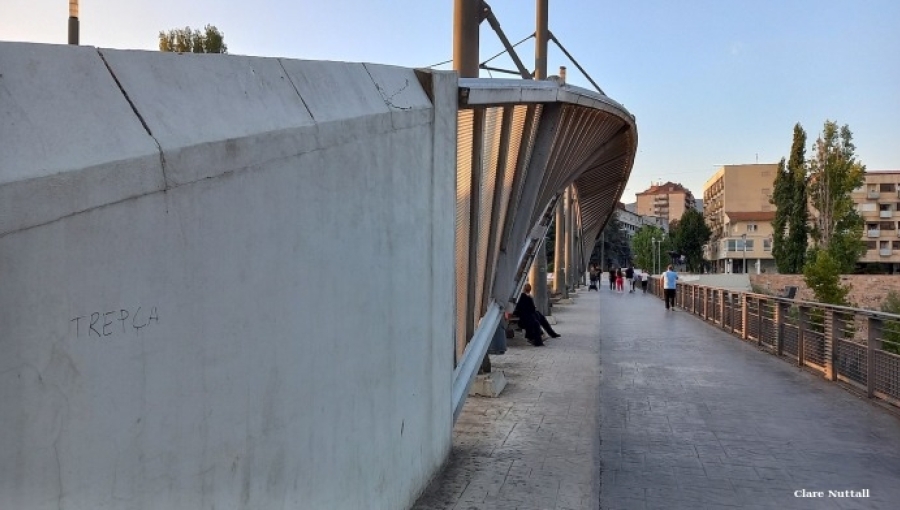
At the Ibar Bridge, the change is particularly significant. After 27 years, the Kosovo police is beginning to assume responsibility for security at the main bridge, while KFOR is gradually moving away from its permanent presence there.
KFOR insists that this does not mean it is leaving Mitrovica or northern Kosovo.
Its troops will continue to maintain a visible presence on both sides of the city and across northern Kosovo, with personnel positioned to respond to any deterioration in the security situation.
The mission says the changes are part of an effort to “optimise” the positioning of its forces in response to improved security conditions. The process will be gradual and coordinated with Kosovo institutions, the Kosovo police, EULEX and other international actors.
KFOR also says its commander remains in close contact not only with Kosovo institutions but also with representatives of Serbia.
But the security situation in northern Kosovo remains an issue where decisions cannot easily be separated from relations between Belgrade and Pristina.
The KFOR mission has been deployed in Kosovo since 1999, following the Kosovo conflict to maintain a safe and secure environment and freedom of movement, in line with its UN mandate.
A bridge that is more than a bridge
For 27 years, the main bridge over the Ibar has been one of the most visible symbols of Kosovo’s division.
The river physically separates the predominantly Albanian south of Mitrovica from the predominantly Serb north, while the bridge itself has repeatedly been at the centre of political disputes and security concerns.
For Kosovo’s authorities, reducing the international military presence is being presented as evidence that institutions are becoming capable of taking greater responsibility for security.
Kosovo acting Interior Minister Xhelal Sveçla welcomed the beginning of the process, describing it as good news.
He also suggested that, as the security situation improves, the presence of the Kosovo police itself could eventually be reduced.
His message was clearly aimed at turning the bridge from a symbol of division into something more ordinary. But the reaction from Kosovo Serbs shows why the transition will be sensitive.
The Serbian List, the largest Serb political party in Kosovo, has strongly opposed any reduction in KFOR’s presence at the bridge and has requested an urgent meeting with KFOR commander General Özkan Ulutaş, Serbian broadcaster RTS reported.
The party argues that the bridge has been the scene of serious tensions and conflicts between Serbs and Albanians for decades and that any change to the security arrangements must be handled with extreme caution.
The Serbian List argues that the Kosovo police has not earned the confidence of the Serb community and that KFOR’s presence provides an important sense of security and stability.
That means the practical question of who guards the bridge is also a political question about whom local communities trust.
The same gradual approach is being applied at the Deçan Monastery.
KFOR has begun integrating the Kosovo police into the security arrangements around the Serbian Orthodox monastery in Decani, near Gjakova, another highly sensitive location in Kosovo.
But here, too, KFOR is stressing continuity rather than withdrawal. “KFOR’s commitment to the security of the Deçan Monastery and the safety of all local communities is unwavering,” the mission said, adding that it remains the first responder for the monastery’s security.
From security to water
Ibar has also appeared in another political dispute between Belgrade and Pristina — this time not because of the bridge, but because of the river itself.
Serbian President Aleksandar Vučić’s remarks about the possibility of changing the course of the Ibar triggered strong reactions in Kosovo and Albania.
Albanian officials raised concerns about any intervention affecting a transboundary waterway, arguing that such a decision could not simply be made unilaterally.
Serbian Foreign Minister Marko Djurić, however, rejected Albania’s involvement, arguing that Albania has no basis for a role in decisions concerning Serbia’s management of water resources on its own territory.
Serbia, the foreign minister stressed, is a sovereign state and will decide for itself how to manage its natural resources, with such decisions to be made by Serbia, not Albania or any other country.
“We will continue to protect the rights of our people, the integrity of our territory and our legitimate national interests. Attempts to divert attention from the situation on the ground or to assume a role in matters outside Albania’s jurisdiction will not succeed,” the minister said.