
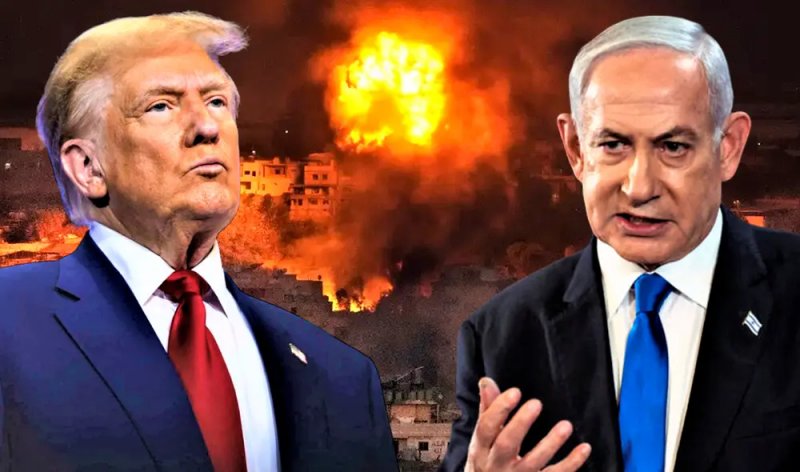
Disagreements between Israel and the United States over the Gaza peace initiative centre primarily on the sequencing of Hamas’s disarmament and the withdrawal of Israeli forces.
Israel does not appear to reject the US initiative outright but insists that Hamas must demonstrate verifiable progress towards disarmament before further Israeli withdrawals. Israeli officials fear that withdrawing troops prematurely could allow Hamas to rebuild its military capabilities.
A potential compromise could involve phased, internationally verified demilitarisation followed by synchronised Israeli withdrawals from specific areas. The core dispute therefore concerns security guarantees and which side should take the first largely irreversible step.
In an interview with News.Az, Israeli political analyst Yuri Bocharov said that Israel’s position should not be interpreted as a complete rejection of the US initiative on Gaza.
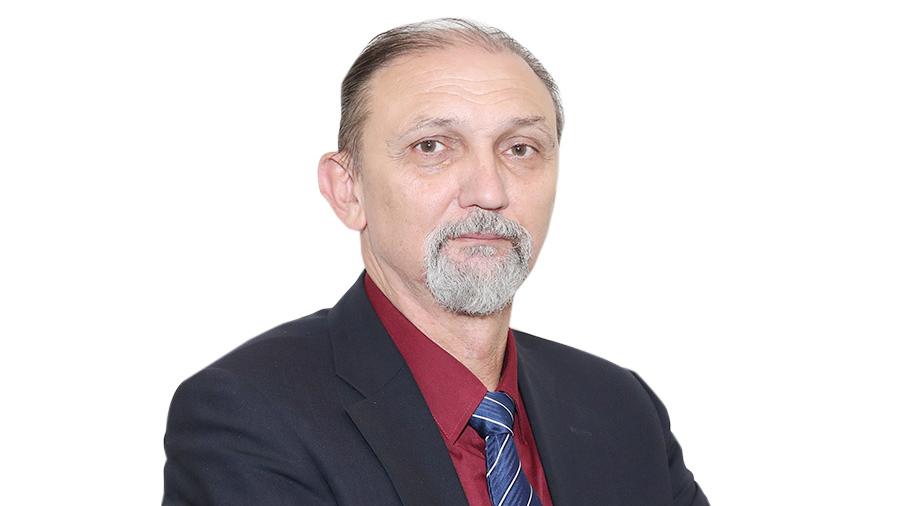
Rather, he said, the disagreement concerns the sequencing of the proposed steps and the mechanism for their implementation.
“I would not describe Israel’s position as a complete rejection of the US initiative itself. Rather, it is a rejection of the current sequencing and implementation mechanism. Netanyahu has explicitly stated that Israel continues to discuss the American proposals but is not prepared to withdraw its troops from Gaza until the genuine, rather than merely declarative, disarmament of Hamas is ensured,” Bocharov said.
According to the analyst, Israel considers the withdrawal of its troops an almost irreversible step, while a commitment to disarm could remain merely a political declaration. He stressed that the American plan envisages a phased approach under which a designated area would be demilitarised, an international mechanism would verify the process, and Israeli forces would subsequently withdraw from that area.
Bocharov said the Israeli leadership fears that such a process could gradually reduce Israel’s military presence without guaranteeing the complete dismantling of Hamas’s military infrastructure.
“In this context, Israel’s accumulated experience in dealing with Hamas and Hezbollah must also be taken into account. Israel’s experience in both Lebanon and the Gaza Strip suggests that international resolutions and guarantees do not in themselves constitute an effective security mechanism as long as weapons, military infrastructure and the organisational capacity of an armed group to rebuild its forces remain in place,” he said.
The analyst also noted that Hamas’s participation in negotiations does not necessarily indicate a fundamental change in its position towards Israel. He said Hamas continues to reject recognition of Israel and views Palestine as a territory on which an Islamic state should be established.
Therefore, Bocharov said, policymakers in Jerusalem are guided less by statements made during negotiations and more by the need to prevent Hamas from rebuilding an armed structure and returning to military confrontation.
In his view, the sequencing of Hamas’s disarmament and the withdrawal of Israeli troops is now the central issue in the negotiations.
“The logic of the American mediators is understandable: disarmament and troop withdrawal should be interconnected and proceed simultaneously, in stages. The proposed mechanism does indeed envisage a ‘sector-by-sector’ process: once the demilitarisation of a particular area has been verified, Israel withdraws its troops from that territory,” Bocharov said.
However, he noted, Israel views the potential risks differently.
“The main question for the Israeli side is what would happen if it fulfilled its obligations and withdrew its troops, but the disarmament process subsequently came to a halt,” the expert said.
According to Bocharov, restoring military control in such circumstances would require a new operation, potentially leading to further casualties, international pressure and accusations that Israel had violated the agreement.
“The Israeli position can therefore essentially be summarised as follows: first, the verifiable fulfilment of Hamas’s commitments; then, irreversible concessions by Israel. That is precisely why the dispute over sequencing cannot be regarded as merely technical. It is a dispute over the very architecture of security guarantees,” he said.
At the same time, Bocharov believes a compromise remains possible. He stressed that the problem is not the principle of a phased Israeli withdrawal itself, but the conditions attached to each stage.
Under a potential compromise, a designated area could first be demilitarised, weapons surrendered or destroyed, and military infrastructure dismantled. An international mechanism would then verify that these measures had been completed before the Israel Defense Forces (IDF) withdrew to the next agreed line.
“The formula does not necessarily have to be: ‘First disarm completely, and only then will we begin withdrawing at all.’ It could instead be: ‘Disarmament — verification — withdrawal; the next stage of disarmament — the next verification — the next withdrawal,’” Bocharov explained.
The analyst also said it would be wrong to explain Netanyahu’s current position exclusively through domestic political considerations.
He recalled that the original American plan proposed more than a year ago envisaged the release of Israeli hostages, an end to the fighting, the beginning of Hamas’s disarmament, the dismantling of its military infrastructure and the phased withdrawal of Israeli troops.
“Hamas’s disarmament was not an additional demand introduced by Netanyahu; it was one of the key elements of the agreement itself from the outset,” Bocharov said.
According to the analyst, a year has passed since then, but Hamas has not disarmed. Instead, he said, the group has almost completely restored its military capabilities in the part of the Gaza Strip under its control and continues to govern the territory without transferring authority to the so-called Palestinian technocratic leadership.
“This naturally raises a question in Israel: if Israeli troops are withdrawn before Hamas is genuinely disarmed, what would prevent the group from rebuilding its forces throughout the Gaza Strip?” he said.
Bocharov argued that Israel’s position should therefore primarily be understood in terms of security concerns and the lessons the country has drawn from its own experience.
He acknowledged, however, that domestic politics also plays a role. Netanyahu has to consider the position of his coalition, Israeli public opinion and the country’s internal political struggle, all of which contribute to a tougher position.

Source: Reuters
“But they do not create the underlying problem. The security issue exists independently of Netanyahu’s political future; domestic politics merely reinforces Israel’s demands for credible guarantees regarding Hamas’s disarmament,” Bocharov said.
According to the analyst, a compromise could be achieved by modifying the implementation mechanism rather than requiring either side to abandon its fundamental demands.
He suggested that the process could involve phased, territorially defined and verifiable disarmament of Hamas in exchange for a synchronised, phased withdrawal of the IDF, with each withdrawal taking place only after the corresponding stage of demilitarisation had been completed.
Bocharov said three elements would be essential: an international verification mechanism, physical oversight of the surrender and destruction of weapons, and the ability to suspend the next stage of troop withdrawal if the agreement were violated.
“This differs substantially from a scenario in which Israel withdraws first and then waits for Hamas to fulfil its commitments,” he said.
The analyst also pointed out that Israel has already implemented what he described as a significant part of the American requirements from the previous stage. He said the intensity of military operations had been sharply reduced and the IDF had withdrawn to the agreed Yellow Lines, maintaining control primarily over key strategic positions.
According to Bocharov, the current disagreement is therefore no longer about whether Israel should withdraw from Gaza at all, but about how much further it should withdraw and what Hamas should provide before Israel takes the next step.
“For this reason, I would speak neither of the failure of Trump’s initiative nor of the inevitability of an imminent agreement. Rather, the parties have reached the most difficult stage: they must transform the political declaration on Hamas’s disarmament into a technical mechanism that Israel is prepared to trust with its own security,” he said.
Bocharov stressed that Israel wants evidence that the disarmament mechanism is functioning effectively before giving up what it regards as its main instrument of leverage — its military presence in Gaza.
“In other words, the current disagreement between Washington and Jerusalem concerns the sequencing of steps more than the ultimate objective. Both the United States and Israel speak of the demilitarisation of Gaza. The dispute is over which side should take first the step that would subsequently be difficult, or perhaps impossible, to reverse,” Bocharov concluded.