

KIBBUTZ NIR OZ — Former hostage Sagui Dekel-Chen took to the stage Monday night to sing nine songs he composed in his head during 498 days of Hamas captivity in Gaza.
There were songs about his wife and daughters, one of whom was born while he was in captivity. He wrote about his fear that his young family hadn’t survived the October 7 Hamas onslaught — in fact, he didn’t know they were alive until mere days before his release on February 15, 2025.
An audience of 3,000 people sat in near silence, often softly weeping, as Dekel-Chen, now 38, spoke about his love of music and how songs carried him through his ordeal from his first days in a hospital in Khan Younis. His desire to relate his saga through the music he composed made for a concert like no other.
Onstage, he dubbed the performance “Captivity in Lyrics.”
“I’m not a singer,” Dekel-Chen said with a grin at the start of the show. “Let’s lower expectations.”
He informed the audience that not all the songs were sad, and to expect some funny moments and opportunities to dance.
That was all true.
Dekel-Chen and a band of eight musicians and three backup singers were joined by several household names from Israel’s music scene, including Idan Raichel, Hativka 6 and Marina Maximilian — musicians who helped Dekel-Chen bring his songs to life over the year and a half since his release.
Throughout, however, it was Dekel-Chen — a slim, bearded young father in jeans, a man who worked in the nonprofit world before October 7, and reportedly often had grease on his hands from tinkering in the kibbutz garage — who led the show.
The lyrics of each song were displayed on a giant screen at the back of the stage, interspersed with photos of Dekel-Chen and his family, both before and after October 7.
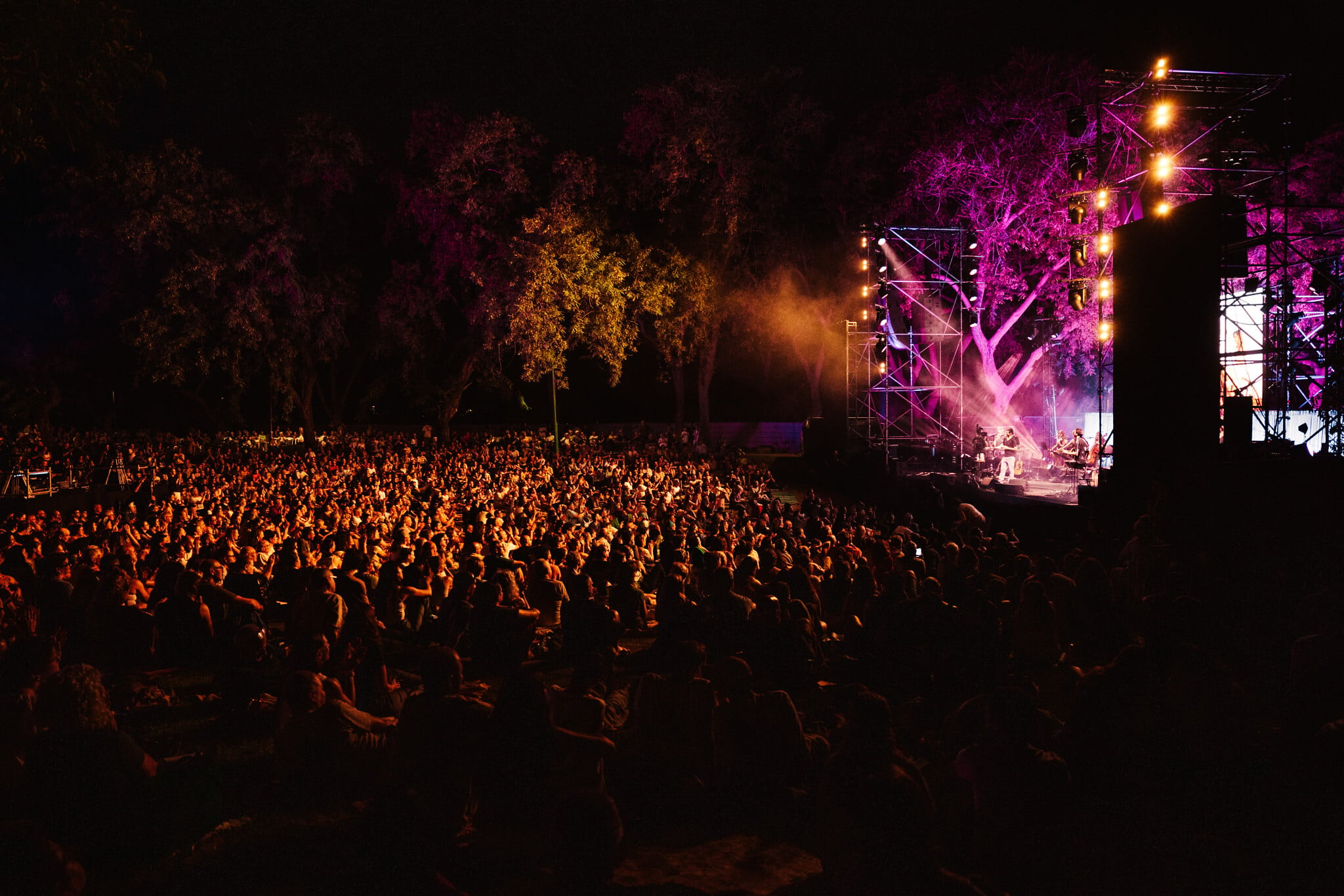
Former hostage Sagui Dekel-Chen performs the songs he composed in captivity, on the lawn of Kibbutz Nir Oz, as part of the Israel Festival on August 10, 2026 (Orit Pnini)
Dekel-Chen spoke frankly about the Shabbat morning of October 7, 2023, when Hamas terrorists invaded Kibbutz Nir Oz, a community of 400, burning and murdering people in their homes, eventually killing 47 people and taking 76 hostage. The wider invasion on October 7 saw thousands of Hamas-led terrorists brutally murder some 1,200 people in southern Israel, most of them civilians, and abduct 251 hostages to the Gaza Strip.
Only six homes on the kibbutz were left unscathed after the onslaught.
Dekel-Chen switched to English when recounting the atrocities, to prevent his young daughters, present at the concert, from understanding everything he was saying.
Dekel-Chen’s family, including his pregnant wife, Avital, and two young daughters, Bar and Gili, were sequestered in their safe room as he armed himself to fight the oncoming terrorists as part of the kibbutz emergency security team.
At some point during the battle, Dekel-Chen said he headed toward his own home and was taken captive.
“I realized it’s game over,” said Dekel-Chen, mentioning the close friends and men he admired who were killed around him that day.

Pictures of victims hang on the outer wall of a Kibbutz Nir Oz home gutted in the Hamas onslaught of October 7, 2023, as seen in the Gaza border community on October 23, 2025. (Chaim Goldberg/Flash90)
Many of Dekel-Chen’s songs sprang from concern over his family.
“I started imagining Mili in labor while I was in the tunnels,” said Dekel-Chen, using his wife’s nickname. “I would hear cries of a newborn.”
In that song, called “I Still Don’t Know Your Name,” Dekel-Chen said he thought of his new baby, Shahar Mazal — whose name he didn’t know until he was freed — as a kind of deposit waiting to be redeemed upon his eventual release. She was born in December 2023.
He asked audience members to raise their hands if they’d held Mazal, the Hebrew word for luck, before he did, thanking them for being there when he couldn’t.
‘Produced in Khan Younis’
After Dekel-Chen’s liberation, while he was still recuperating in the hospital, he used a phone to record the songs that had been in his head for so long.
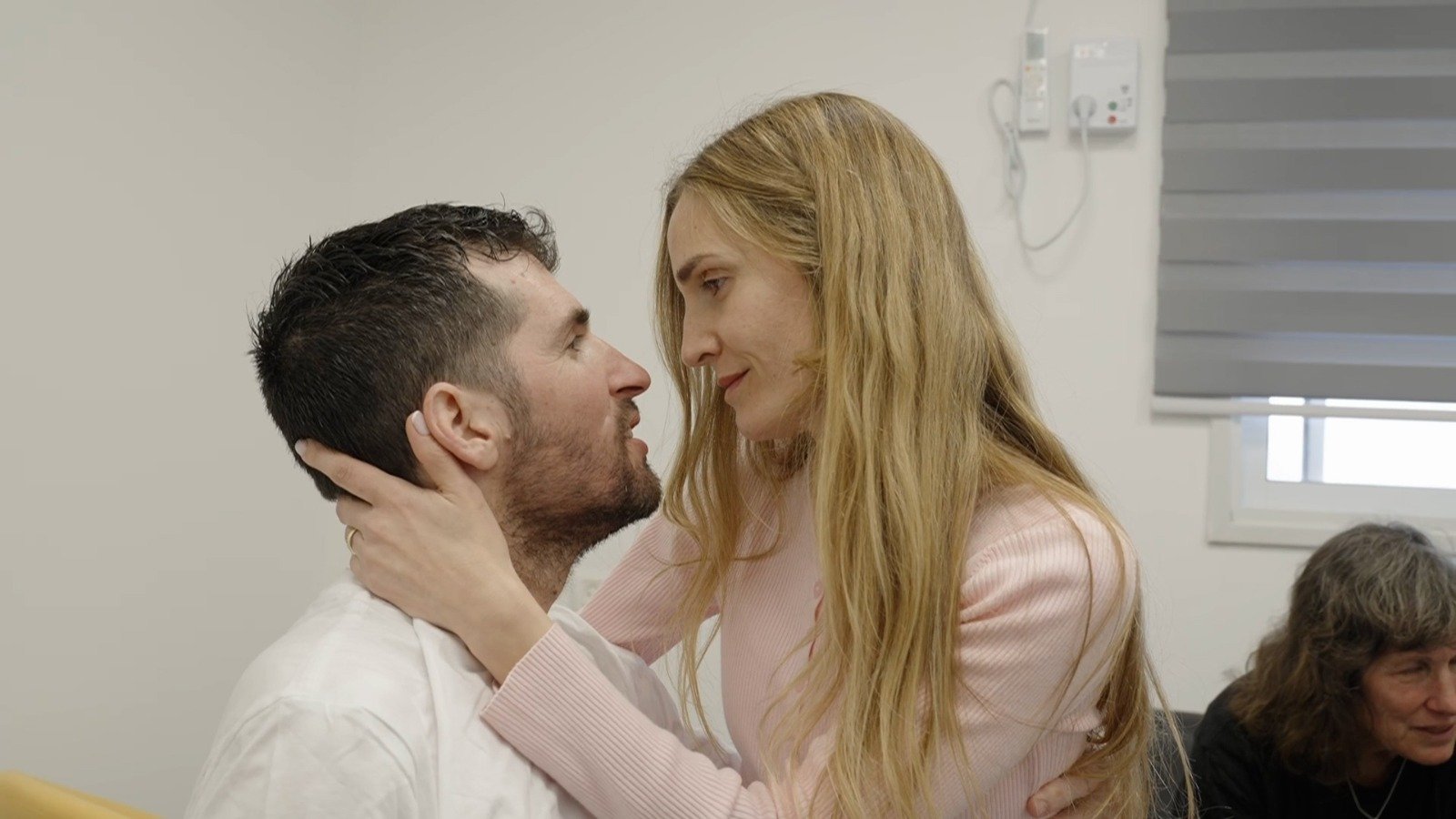
Freed hostage Sagui Dekel-Chen is reunited with his wife Avital on his return to Israel after 498 days in captivity in Gaza, February 15, 2025. (IDF)
Dekel-Chen said that throughout his captivity, he played music in his head — songs by Shlomo Artzi, Bruce Springsteen, Adele and a host of others.
“I got to a total of 44 songs that I know well,” said Dekel-Chen. Over this inner soundtrack, he imagined singing his daughters to sleep each night and going on romantic dates with Avital.
During the show, Avital told the audience that her husband doesn’t easily let go of an idea and he began searching the names of Israeli music producers shortly after his release in the pursuit of making his vision of a show into a reality.
It was a combination of concert promoters, including the legendary Shuki Weiss, who eventually paired Dekel-Chen with the directors of the Israel Festival — an annual monthlong Jerusalem-based cultural event that expanded after October 7 to include additional performances in hard-hit southern and northern Israel. It was agreed that the festival would produce Dekel-Chen’s performance — which it did with tremendous care.
The last months included studio sessions and work with a voice coach ahead of the show, which was “produced in Khan Younis,” quipped Dekel-Chen, referring to the Gaza area where he was held captive.
Israeli stars who assisted Dekel-Chen with the concert appeared throughout: Raichel spoke about meeting Avital two weeks after her husband was abducted and forging a friendship. In a high point of the show, the acclaimed musician and Dekel-Chen together performed “To Wait,” the former captive’s quiet, heartwrenching love song, with wide smiles.
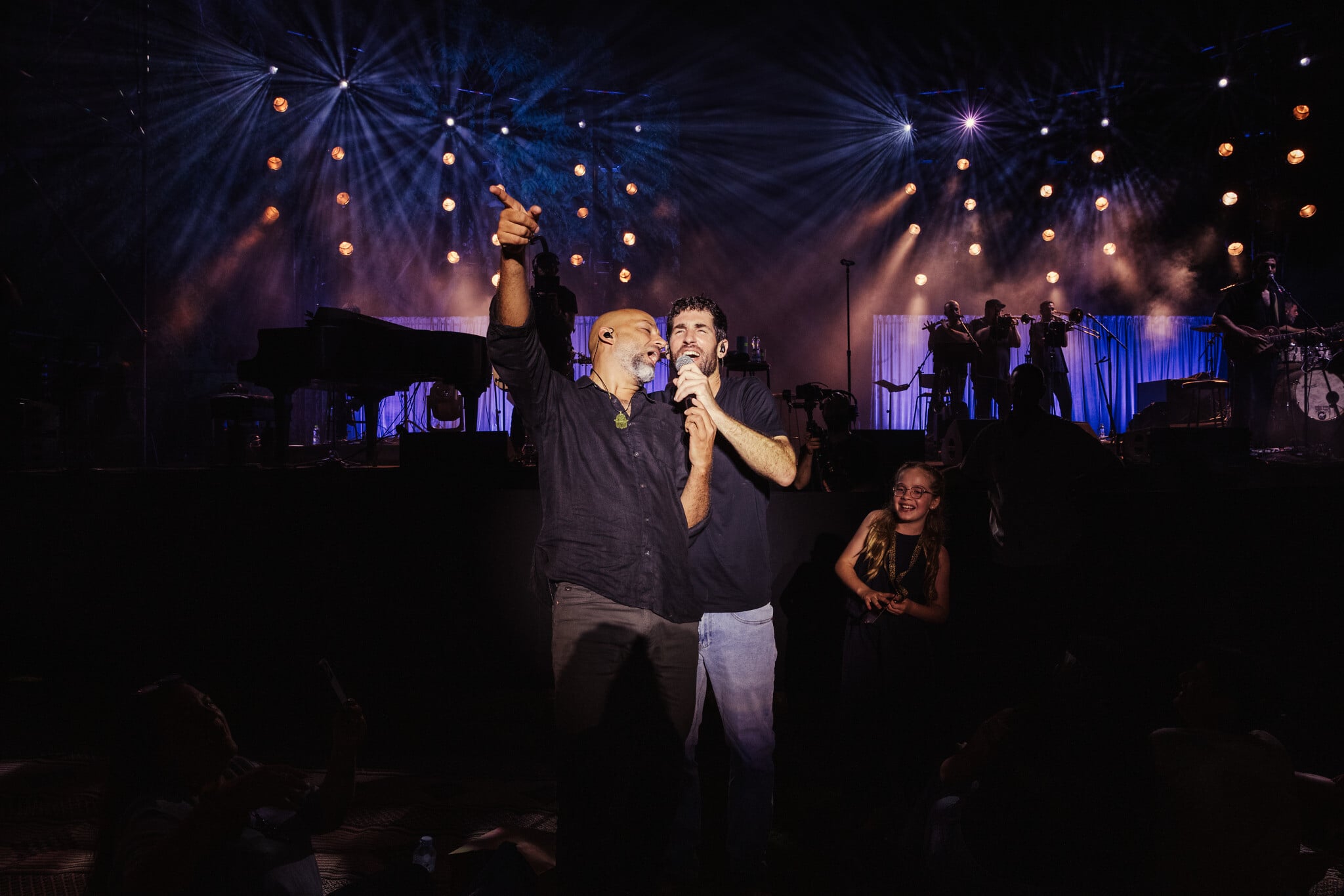
Former hostage Sagui Dekel-Chen and musician Idan Raichel as they perform at a concert of the songs Dekel-Chen composed in captivity, at Kibbutz Nir Oz on August 10, 2026 (Orit Pnini)
Dekel-Chen performed an arrangement of a song he wrote about his imagined dances with his wife Avital while in the corner of his Gaza cell along with a pre-recorded vocal track by diva and actress Rita.
Pop-rock band Hativka 6 also accompanied Dekel-Chen on a reggae version of “Letter to Arik,” a revised version of Arik Einstein’s beloved song, “I Have Love,” composed by Dekel-Chen during his first days of captivity.
The end of the show brought singer-songwriter Maximilian, who duetted with Dekel-Chen on a moving rendition of her song “With You,” which includes the line, “With you, the end of the world doesn’t scare me.”
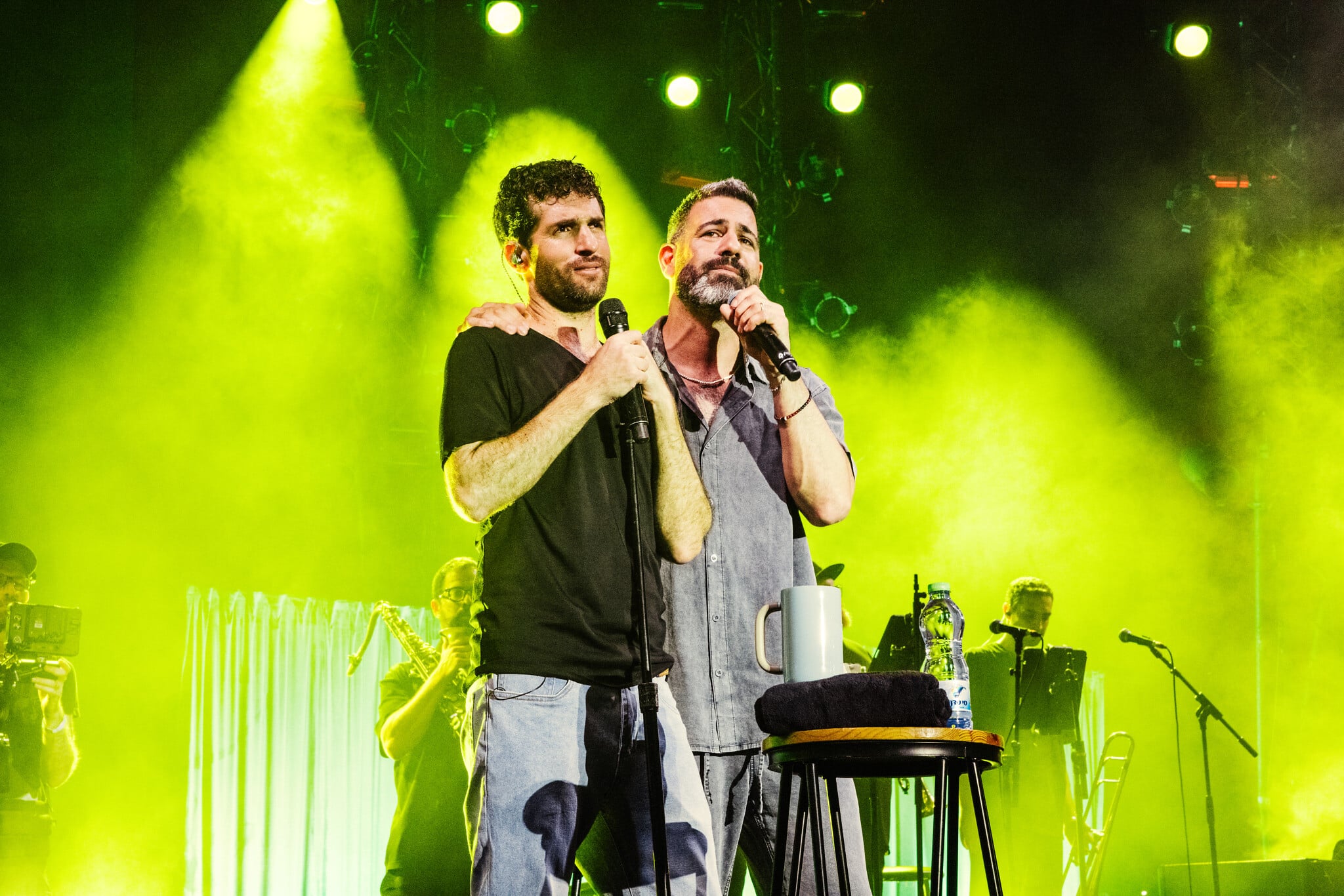
Former hostage Sagui Dekel-Chen (left) and Hativka 6 lead singer Omri Glickman as they perform a song Dekel-Chen composed in captivity in a show on the lawn of Kibbutz Nir Oz as part of the Israel Festival on August 10, 2026 (Orit Pnini)
It was clear that Dekel-Chen, who spoke about his dreams in captivity as well as his nightmares, had decided that every obstacle was surmountable once he was released home, including creating and singing a two-hour show to tell his story.
Moments of reckoning and remembrance
One of his final pieces was “The Song for Me,” with lyrics that Dekel-Chen said took him a long time to write. It considers the possibility of not returning home, or returning home to an empty house.
Dekel-Chen said he convinced himself during captivity that his family was alive and well and waiting for him. But when he was told he was being released with fellow captive Iair Horn, also from Nir Oz, he realized he had to be realistic and began mulling where he would bury his loved ones and what songs he would use at the funeral.
The moment presented an opportunity to think about Yarden Bibas, another Nir Oz member taken captive, whose wife Shiri and young sons, Ariel and Kfir, were murdered in Hamas captivity.
Bibas buried his family on the kibbutz, accompanied by a haunting medley of heavy metal ballads that he and Shiri once listened to together.
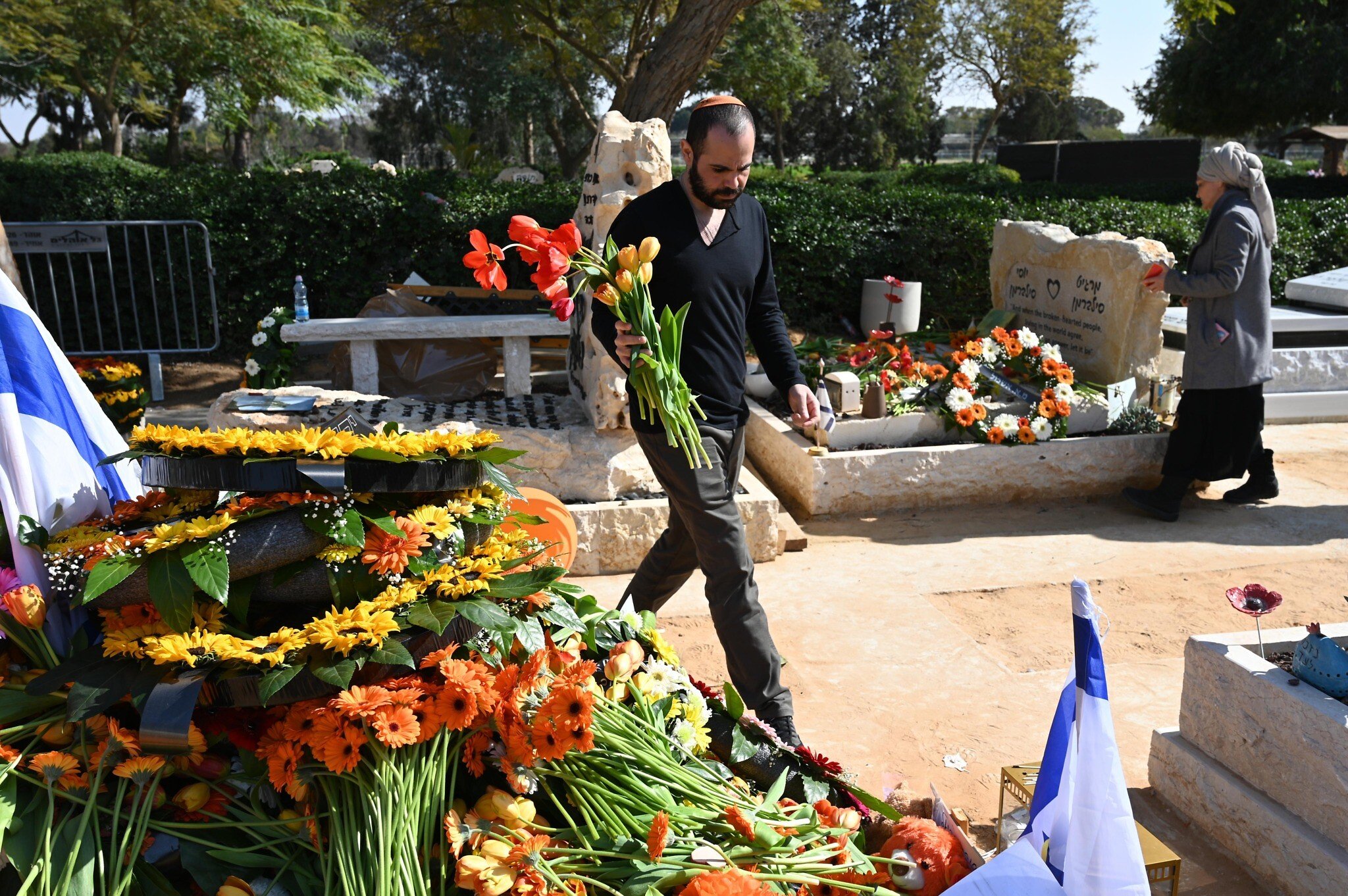
Yarden Bibas carries flowers at the funeral of his wife Shiri and sons Ariel and Kfir, near Kibbutz Nir Oz, February 26, 2025. (Eitan Uner/ Hostages and Missing Families Forum)
Dekel-Chen included his extended kibbutz “family” in the show, referring to the “Nir Oznikim” and speaking about the community’s unshakable support for his wife and children during his captivity and their fierce fight for all those who survived.
He spoke directly to the audience, thanking them for “holding posters, or a gun, or hope,” throughout the two long years until all the hostages were released in October 2025.
“You saved me,” he said. “You’re the reason I’m here.”
Two Nir Oz members sang a final song onstage with Dekel-Chen, as the names of those killed from the kibbutz scrolled on a screen behind them.
Many other members of Nir Oz were in the audience, although most have not yet returned to live on the kibbutz. Dekel-Chen asked them to stand as the rest of the audience applauded them in a standing ovation.
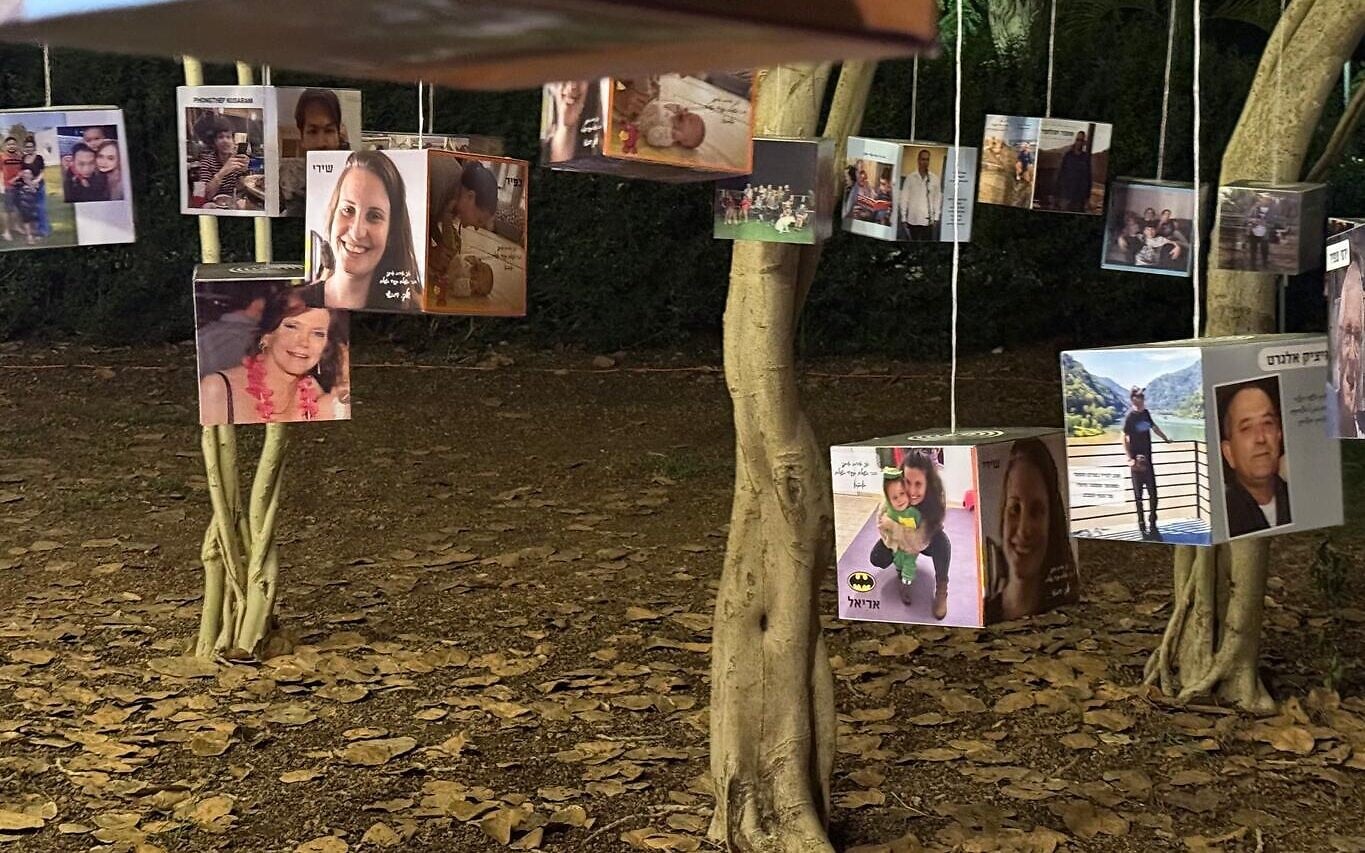
Photos of Kibbutz Nir Oz members killed on October 7, 2023, or in captivity, hung from the giant ficus tree at the center of the kibbutz lawn, during the Sagui Dekel-Chen show on August 10, 2026 (Daniel Laufer)
From the parking lots, the path to the show led viewers through the kibbutz, accompanied by an exhibit called “A House Remains a House,” featuring images of each Nir Oz home as it once appeared, with descriptions of the families who lived there.
Dekel-Chen’s voice was thick with tears at the start of the show as he welcomed the audience to his home, to the lawn with a giant ficus tree at its center where he played as a childand to the spot where he and Avital had their first date as teens.
The same ficus tree was strung with photos and names of each of the Nir Oz members killed on October 7 or in captivity.
“Nothing will be in Nir Oz like it was,” said Dekel-Chen.
“Part of me is rehabilitating slowly,” he said. “Part of me is left in that Shabbat.”